The Sanctuary of the Holy Trinity stands at an altitude of about 700 meters. The area has been inhabited since prehistoric times, as indicated by ancient artifacts found nearby. During the Middle Ages, a watchtower stood on this site, offering strategic views over the valley.
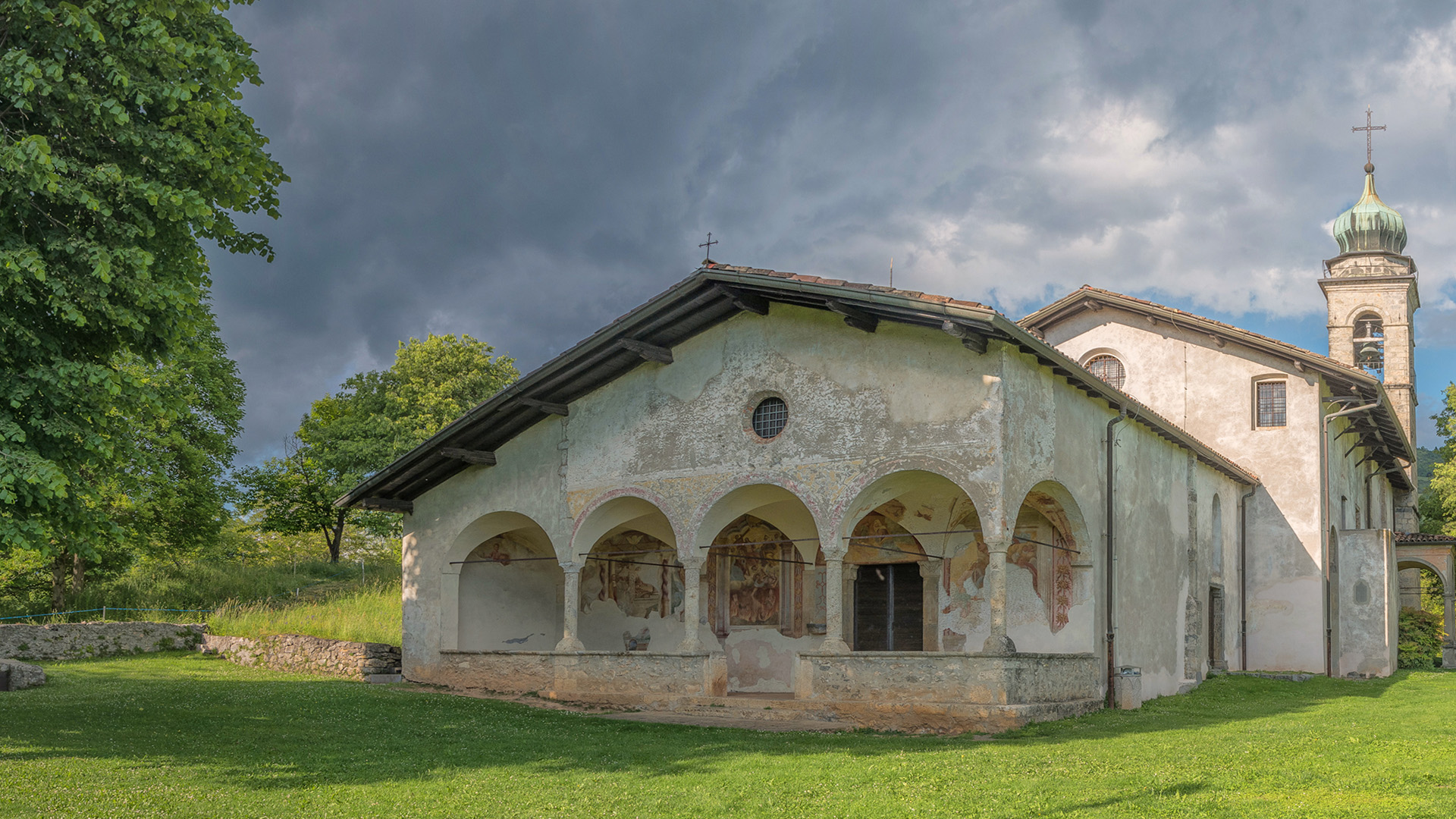
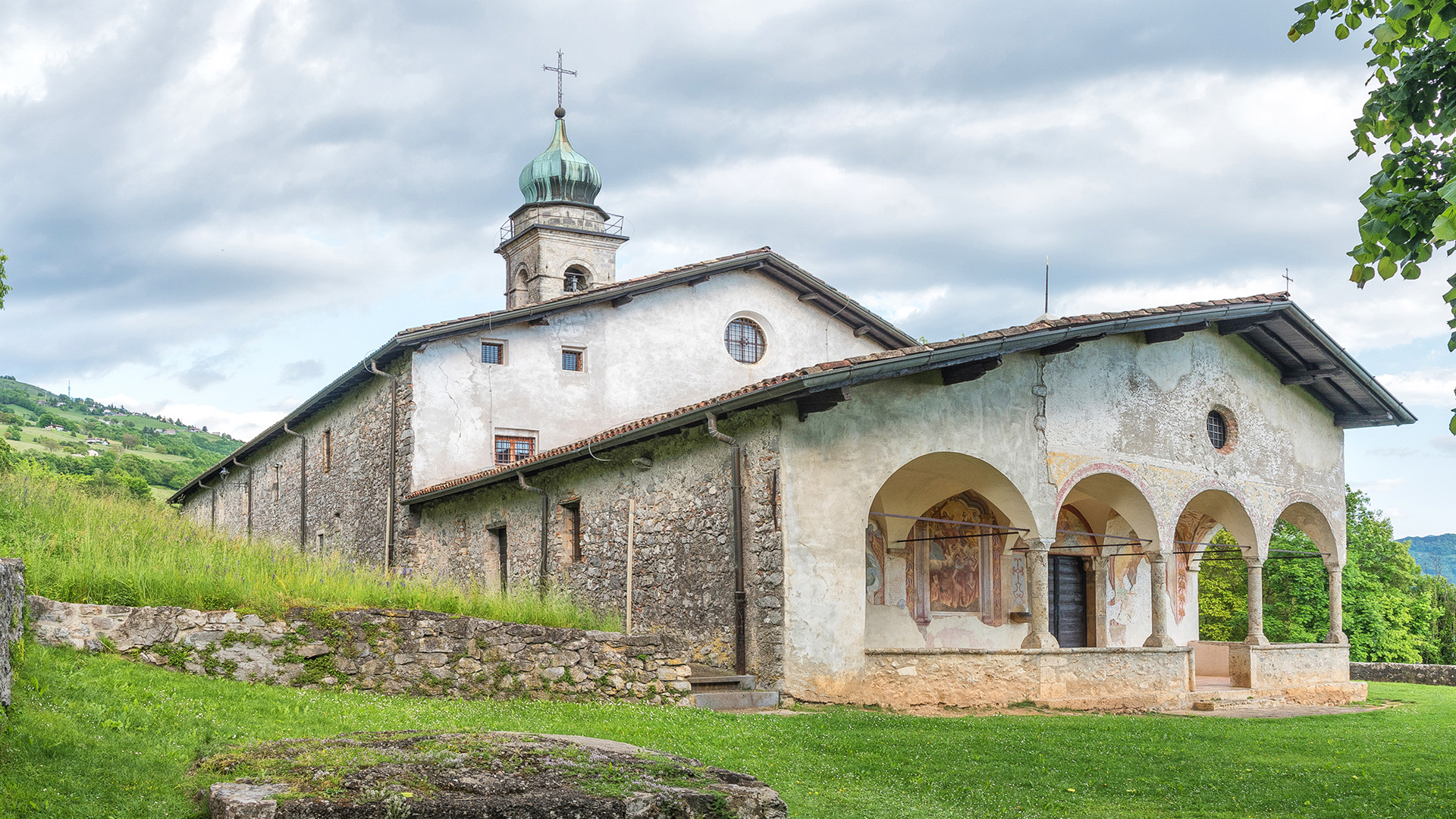
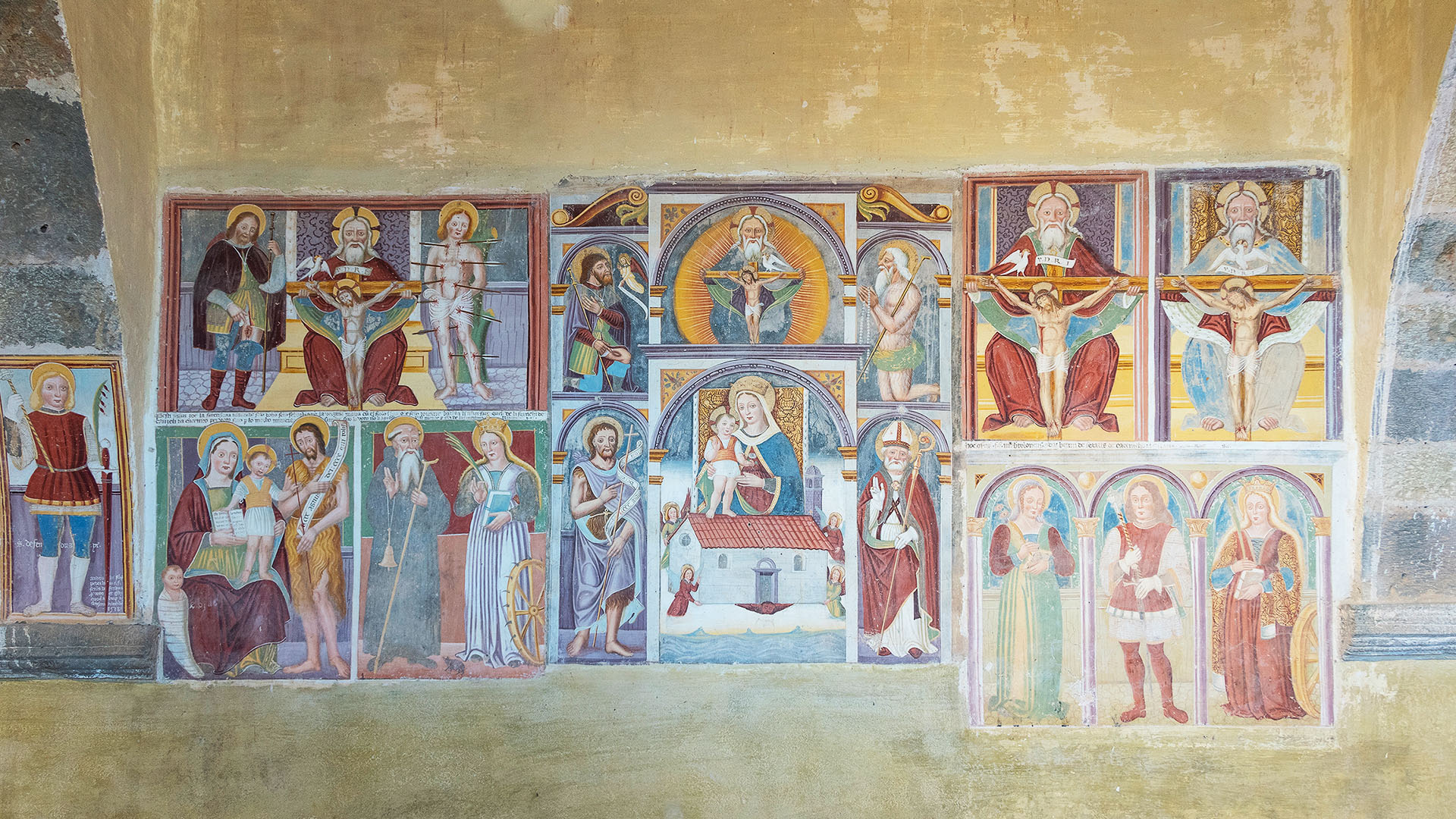
The sanctuary developed in three distinct phases. The oldest part, dating back to before 1491, was a simple chapel that is now incorporated into the portico in front of the main entrance. Later, a nave with frescoes from that period was added. Finally, between 1575 and 1596, a third section was built, featuring a larger hall and the spectacular fresco of the Last Judgment — an impressive work covering 39 square meters. Attributed to Cristoforo Baschenis the Elder, the fresco fills the entire wall above the presbytery.
This extraordinary painting has earned the sanctuary the nickname “the Sistine Chapel of Bergamo.”
The scene is divided into two sections: at the top, Christ the Judge is surrounded by the Virgin Mary, Saint John, and a host of saints; below, the resurrection of the dead is depicted, with the righteous separated from the damned. Particularly striking is the portrayal of Hell, where a monstrous mouth devours the condemned — including figures from the clergy, revealing a bold social critique of the time.
The main altar features a polyptych by Giovanni Marinoni and his son Antonio, made up of six painted panels arranged in two rows.
Another remarkable element is the group of painted clay sculptures depicting the Three Wise Men. This work is tied to a beloved local tradition: every year, on the night of January 5th, the Three Wise Men descend from the sanctuary into the village in a candlelit procession.
The sanctuary also preserves a walnut wood choir dating from the late 17th century, attributed to Ignazio Hillipront — the same sculptor who created the sacristy furnishings of the Church of Saint John the Baptist.





 English
  Italian