
The territory of Chiaverano is crossed by the Via Francigena, the ancient network of pilgrimage routes that once connected Canterbury to Rome and the ports of southern Italy. Along one branch of this road stood Sessano, a small medieval village nestled at the foot of the Serra – the long glacial ridge of the Ivrea Morainic Amphitheatre – in a landscape shaped over millennia by glaciers.
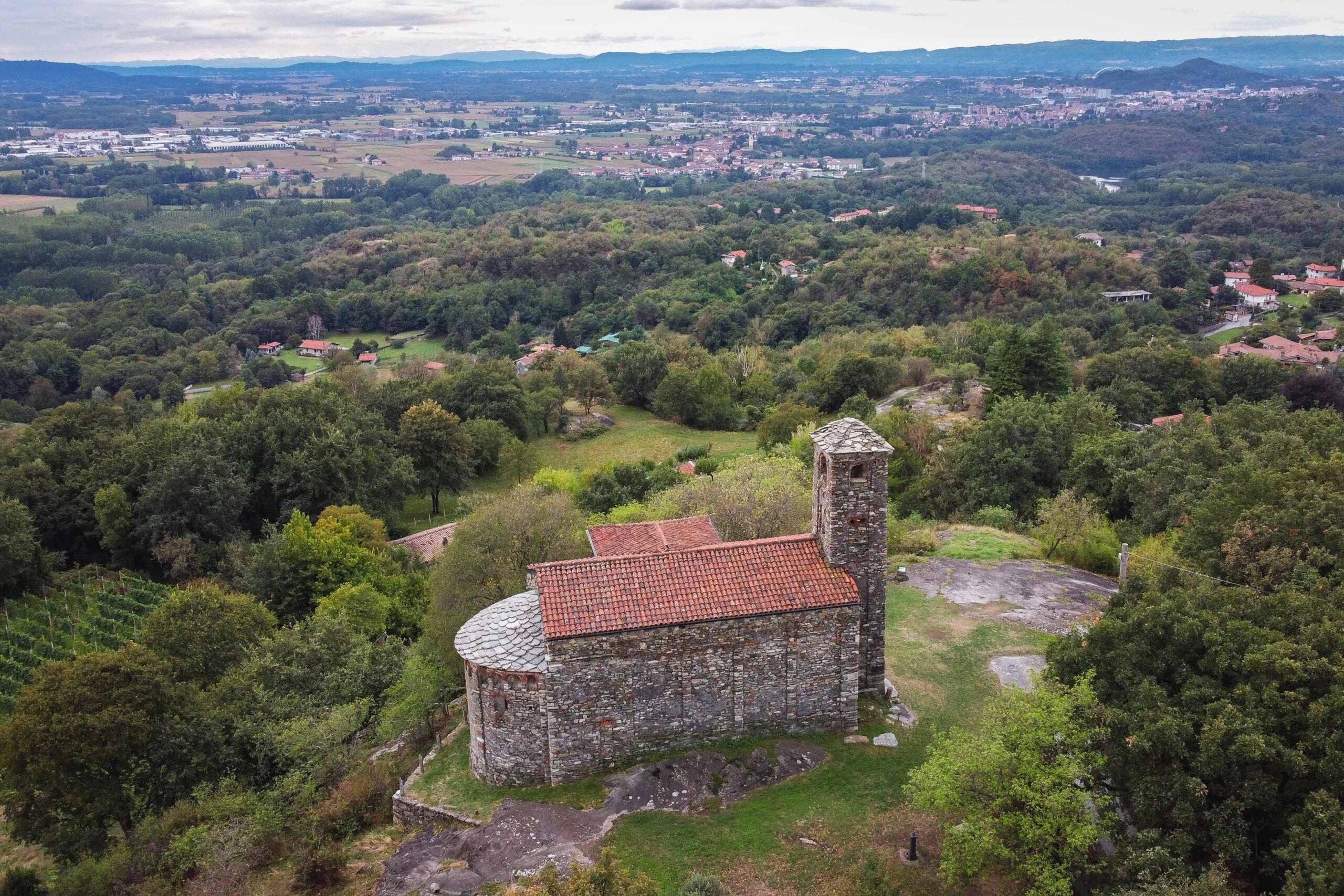
The name Sessano derives from the Latin saxus, meaning "stone", in reference to the large dioritic boulder on which the village was built. Today Sessano no longer exists:a landslide destroyed it entirely, leaving behind only one precious trace – the Romanesque Church of Saint Stephen, which dates back to around the year 1000.
After the disaster, the inhabitants relocated to the newly founded village of Chiaverano, established in 1251 by the bishop of Ivrea.
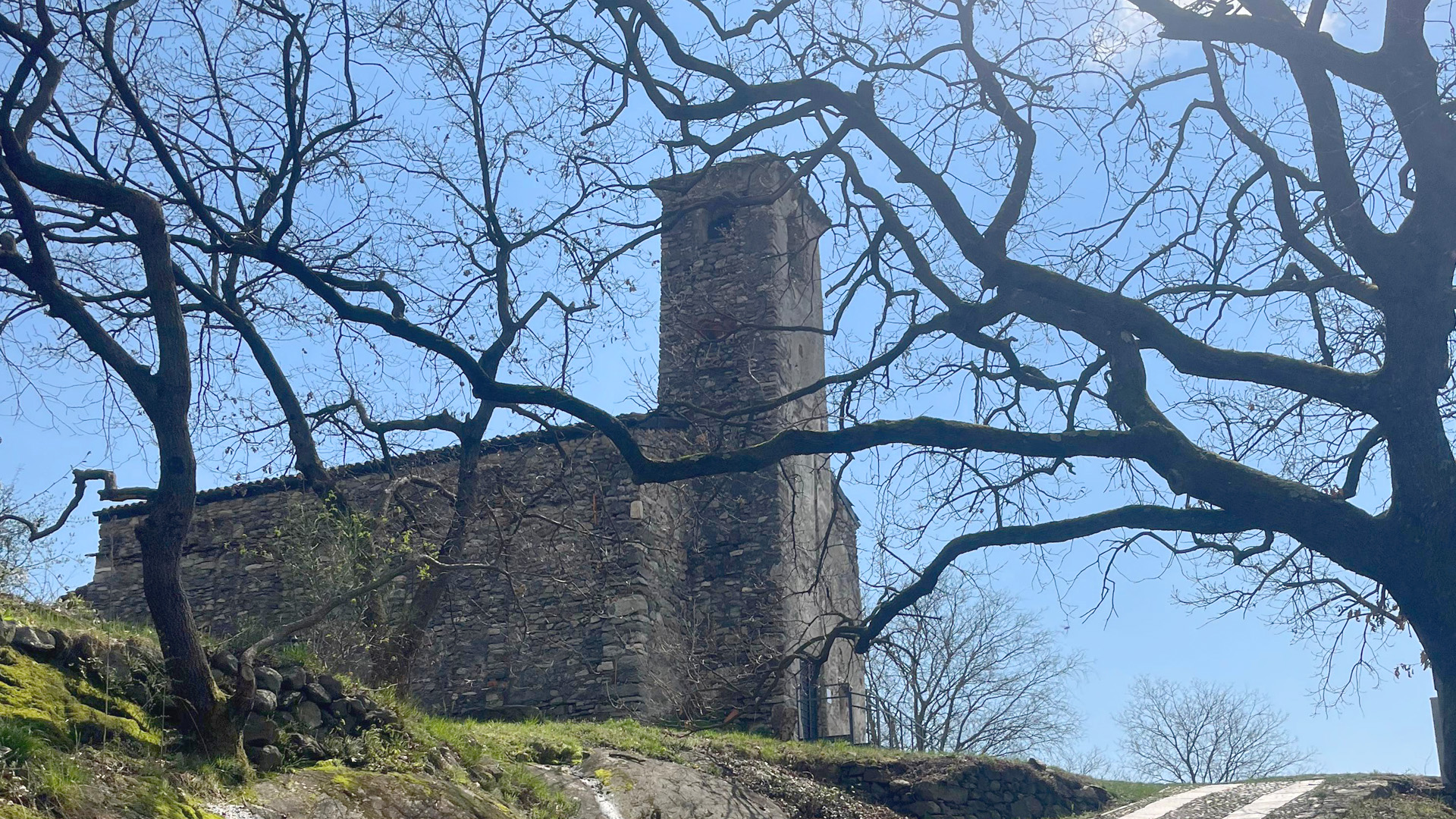
The Church of Saint Stephen is a fine example of Romanesque architecture. Its stone walls, built using local materials with a few brick inserts, blend harmoniously into the surrounding landscape. One of its most striking features is the external view of the apse, facing east in the tradition of early medieval churches so that the altar would be illuminated by the rising sun.
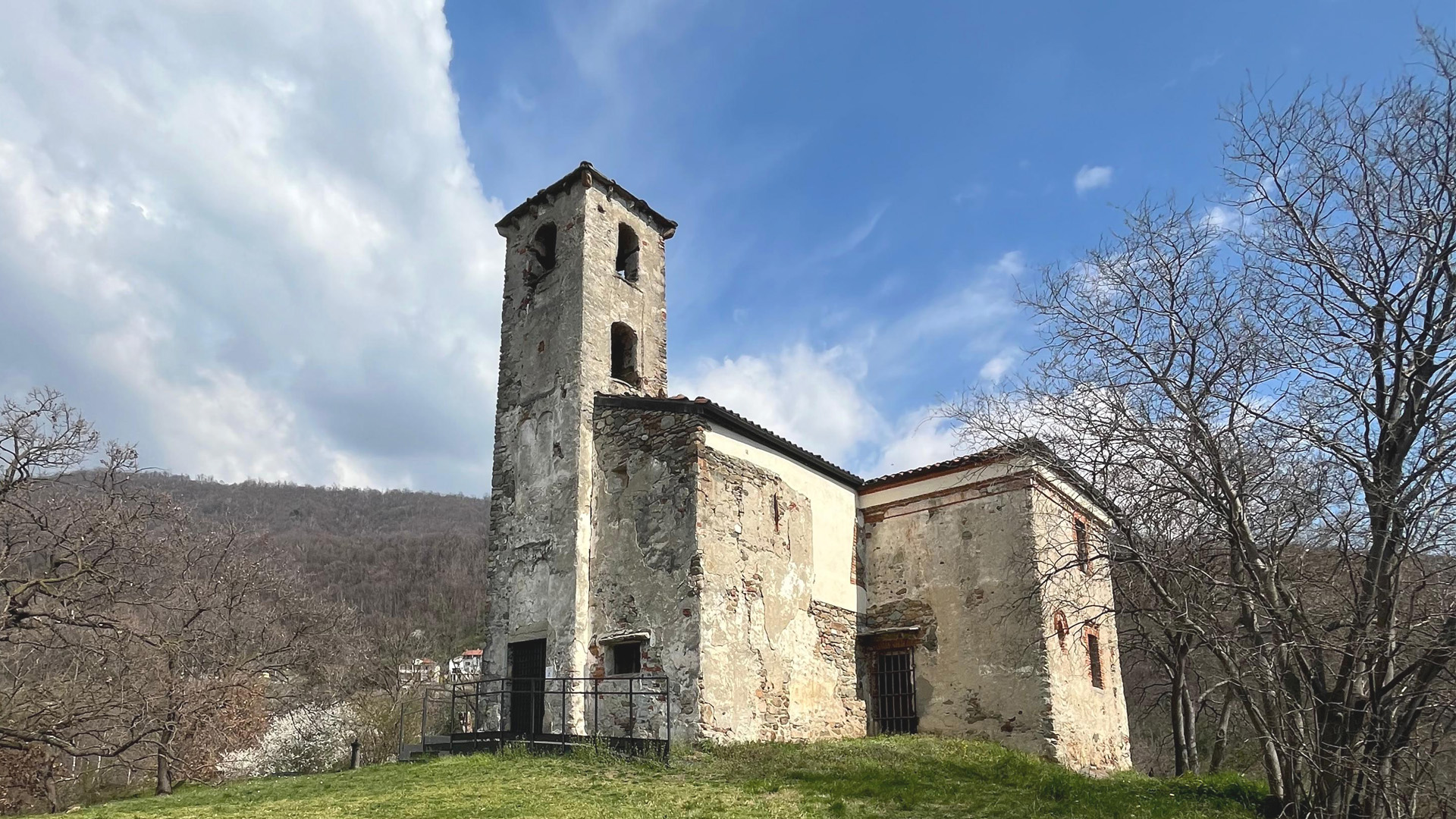
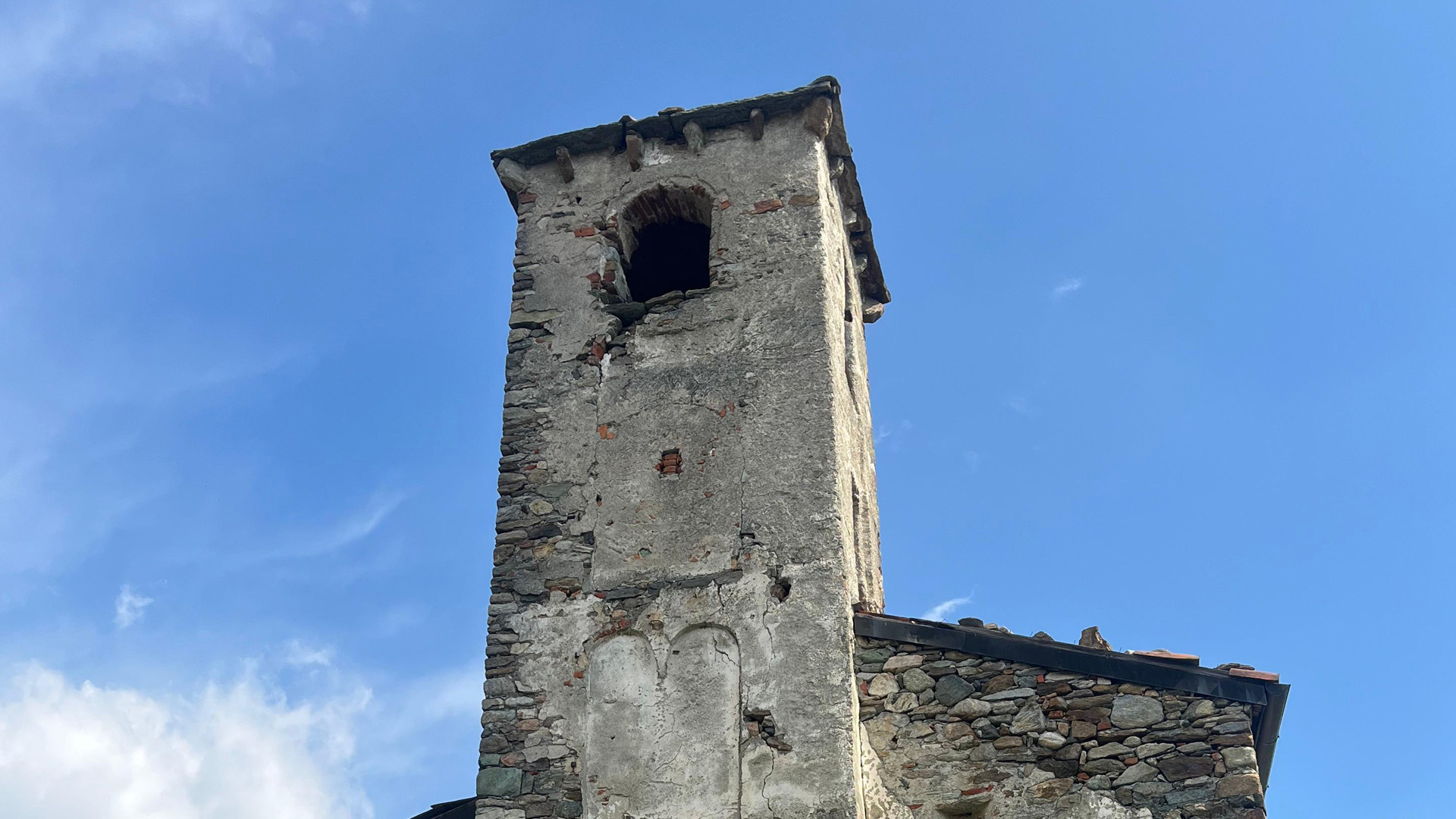
A distinctive architectural element is the bell tower, placed at the center of the front and accessible through a vaulted entrance. In addition to housing the bells, the tower serves as the gateway to the sacred complex – an arrangement typical of French churches from that period. Though rare in Italy, this layout is often found in Romanesque churches of the Canavese area, likely influenced by cultural exchanges along the Via Francigena.
After Sessano was abandoned, the church slowly fell into disrepair, though religious services continued there until the 1930s. In 1985, it became municipal property and underwent structural restoration, allowing it to be preserved and reopened to visitors.
Remarkably large for its time – 15 meters long by 6 meters wide – the church features a single nave divided into three bays. Inside, it houses a remarkable cycle of frescoes painted between the 11th and 12th centuries, considered among the finest examples of Romanesque art in the Canavese region.
The artistic style of Saint Stephen’s frescoes draws inspiration from the Ottonian imperial tradition, which was widespread in the Ivrea area, and from the illuminated manuscripts preserved in the Scriptorium of Bishop Warmondo.
The decoration of the apse recalls themes from late antiquity and Byzantine art, with iconographic schemes that remained unchanged until the late Gothic period. The twelve apostles are depicted in the central register alongside two additional saints. Among them, Saint Stephen is easily recognizable in the center of the apse, just to the right of the central window. He wears the dalmatic and stole, the traditional garments of a deacon. As the first Christian martyr, Saint Stephen gave his life in witness to the Gospel and his faith.
Although time and neglect have damaged parts of the decoration, the frescoes remain an exceptional testament to the Romanesque painting tradition of this region.
Stepping outside the church, visitors are greeted by a magnificent view of the Canavese plain, the Ivrea Morainic Amphitheatre, and the Serra, with its chestnut forests and ancient terraced slopes.
Nearby lies the medieval garden where visitors can admire a dozen flowerbeds of rosemary varieties (in bloom from April to September).The historic vineyard unfolds just beyond, with pergolas made of chestnut wood supported by characteristic stone pillars. Here, ancient native grape varieties grow — living witnesses to the area's deep-rooted winemaking tradition.

Borgo Racconta is a registered trademark of
BweB – PiccolaGrandeItalia.TV
 English
  Italian