
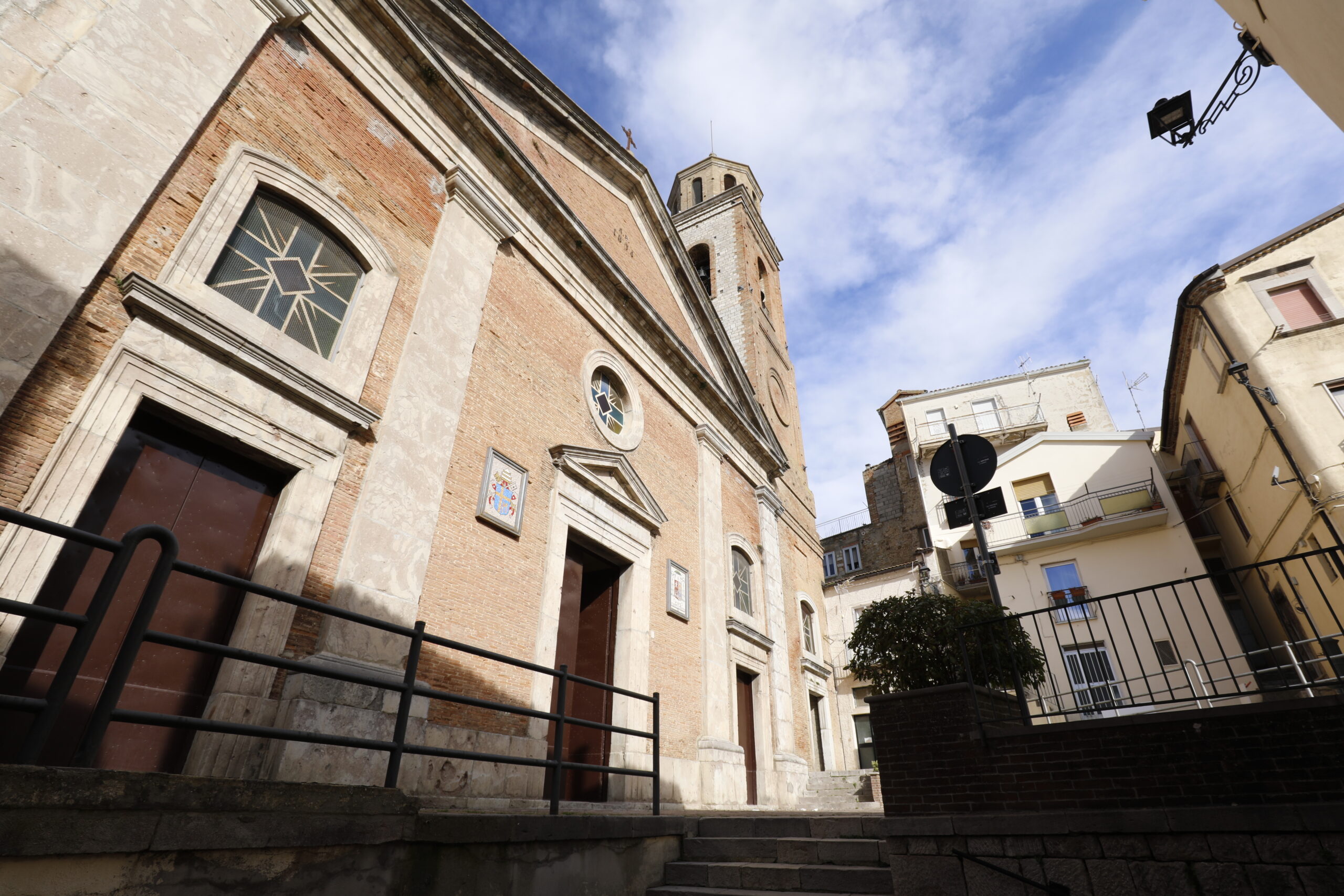
. Pontifical Minor Basilica of St. Mary of Mount Carmel, rebuilt in its present form in the 19th century, boasts a history spanning over a thousand years, with roots in the Roman Imperial era. Stone fragments discovered during reconstruction suggest that this site was once used for pagan burials, particularly for the gens Villiana and other related families. During the Middle Ages, a Christian temple was erected over this ancient burial ground, initially dedicated to Saint Bartholomew and later to Saint Leonard, coinciding with the development of Avigliano.
In 1583, the church was expanded to accommodate the growing population. It already housed two altars dedicated to the Madonna, one of which honored St. Mary of Mount Carmel. The main altar was erected in 1614 and restored in 1630. Over the following decades, local noble families and religious confraternities commissioned additional altars.
Despite ongoing maintenance, it became clear that only a complete reconstruction could meet the town’s growing needs. In 1780, architect Luigi Macrì designed a new structure, but construction was delayed and continued well into the mid-19th century.
By 1814, the church was so precarious that Bishop Bartolomeo De Cesare of Potenza ordered its closure, temporarily relocating religious services to the Church of the Holy Rosary, which was later decommissioned in 1831. In 1848, under the guidance of architect Domenico Berni and engineer Giuseppe D’Errico, work resumed, including demolishing several houses to create a public square in front of the church. By 1854, the exterior was completed except for the bell tower, which was only finished in 1896. The interiors were further enriched in the 1880s with polychrome marble altars adorning the side aisles and transept. The church was finally reopened for worship in 1884 by Bishop Tiberio Durante.
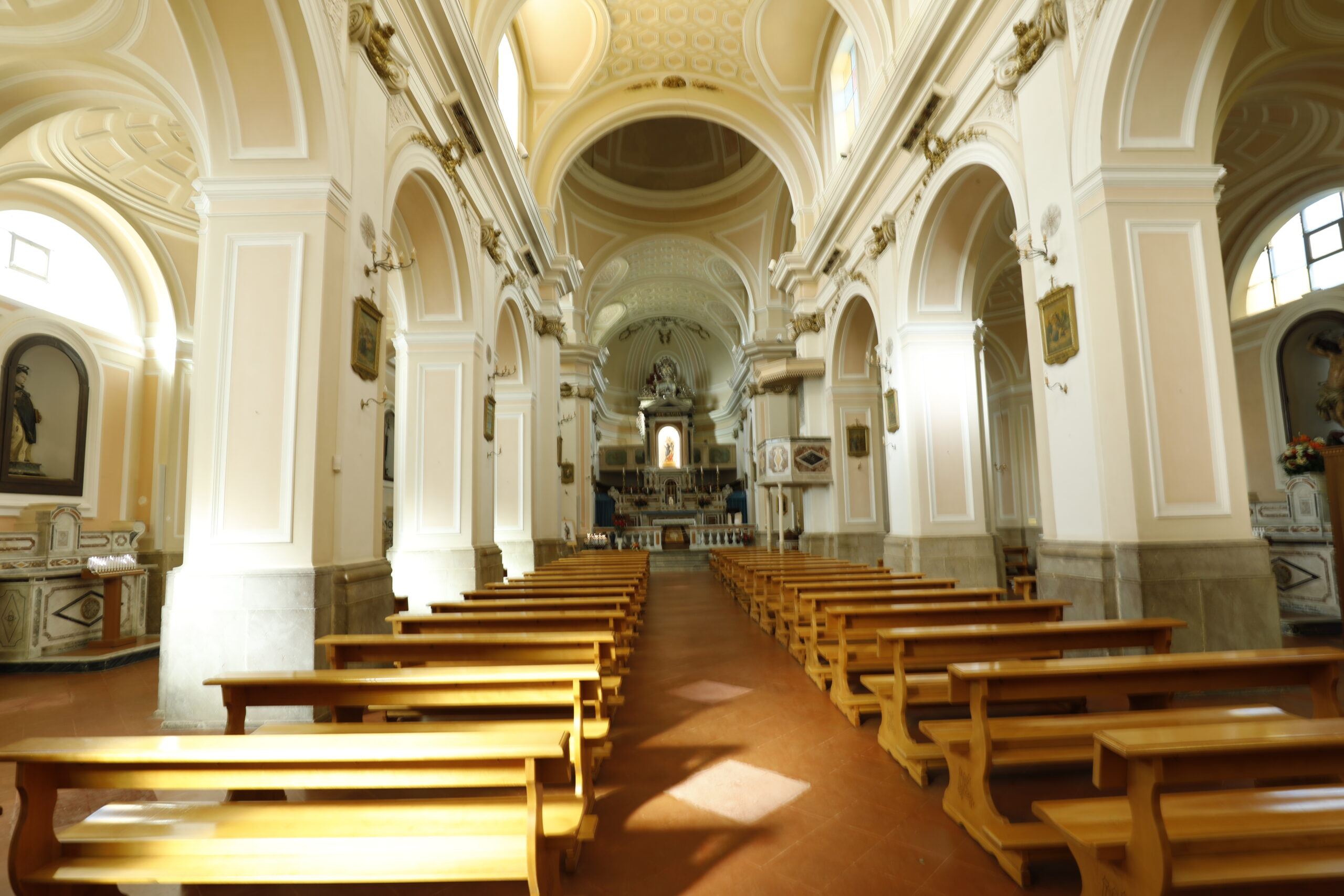
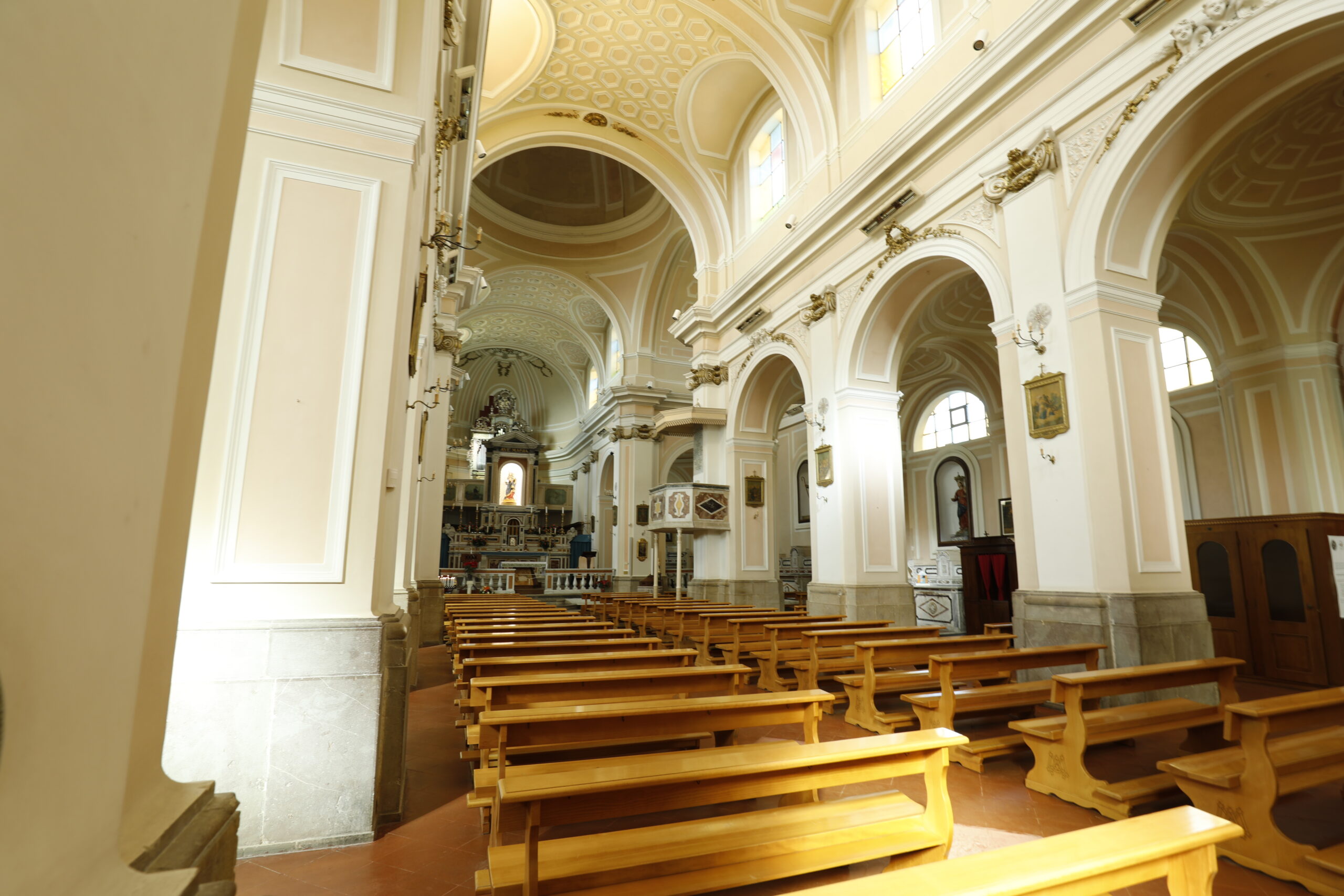
One of the basilica's most remarkable artistic pieces is the marble throne on the main altar, crafted in 1950 to house the 18th-century wooden statue of St. Mary of Mount Carmel, a masterpiece by Avigliano’s sculptors, Michelangelo and Andrea Manfredi. The church also houses two holy water stoups, one of which, dating to 1936, was an ex-voto offering by Salvatore Manfredi and his sons, and an 18th-century baptismal font.
Throughout the basilica, wooden statues of various periods and styles are displayed in niches above the altars. In the left aisle, notable works include a 19th-century Deposed Christ and an 18th-century Madonna of the Purification, later modified in 1913. Further along are statues of Saint Leonard and Saint Vincent Ferrer from the 18th century and a Madonna of the Rosary with Child dating to the early 19th century. Another niche houses an impressive Saint Anthony Abbot from the 17th century.
The right aisle features statues of Saint Roch, Our Lady of Sorrows, Saint, and a Madonna with Child. On the wall of the first bay, a large canvas painted in 1727 depicts Saint Clare repelling the Saracens. Additional paintings adorn the sacristy. The basilica also houses four late 17th-century reliquary busts and an 18th-century wooden crucifix.
Finally, the wooden choir, despite being covered in layers of brown paint, preserves its original painted panels and an impressive pipe organ, which underwent a meticulous restoration in 2024. This grand instrument completes the artistic and historical identity of the Basilica of St. Mary of Mount Carmel, a place where faith, history, and artistry merge in perfect harmony.


Borgo Racconta is a registered trademark of
BweB – PiccolaGrandeItalia.TV
 English
  Italian