
Founded in 1615 the Convent of St. Mary of the Angels, is fundamental to Avigliano’s religious and cultural history. Established during a period of monastic renewal, it brought invaluable spiritual and civic contributions to the local community, thanks to the Franciscan friars who resided there. In addition to serving the needs of the existing parish church, they dedicated themselves to teaching logic and philosophy and offering aid to the most disadvantaged members of society with great devotion.
While many religious orders were suppressed during the Napoleonic era, this convent remained untouched. By 1808, it boasted an impressive collection of artwork and a library of over a thousand volumes, further enriched by Luigi Filippi, a pivotal figure in the monastery’s history. Entering the order at thirteen, Filippi became a philosophy teacher and the first president of the Economic Society of Basilicata. In 1844, as the Provincial Minister of the Order, he transferred the Franciscan provincial headquarters from Potenza to Avigliano, where he established a model school that served as a blueprint for other institutions within the Kingdom of the Two Sicilies. He even created a science cabinet with a mineral collection to support physics instruction.
Under Filippi’s leadership, the convent evolved into a regional cultural hub, hosting literary gatherings and conferences in its library. In 1846, King Ferdinand II of Bourbon even visited. However, following the Unification of Italy, the monastery began to decline. After housing royal troops for several years, it was officially suppressed in 1866, dispersing its vast literary and cultural heritage—once a beacon of knowledge in the region.
Following a long period of abandonment, the convent was repurposed as a Juvenile Reformatory thanks to Emanuele Gianturco's intervention. Renovations began in 1906 but were interrupted by World War I. They resumed in 1932 and were completed in 1935. For nearly fifty years, the convent provided hundreds of young boys with a home, education, and vocational training to help them reintegrate into society.
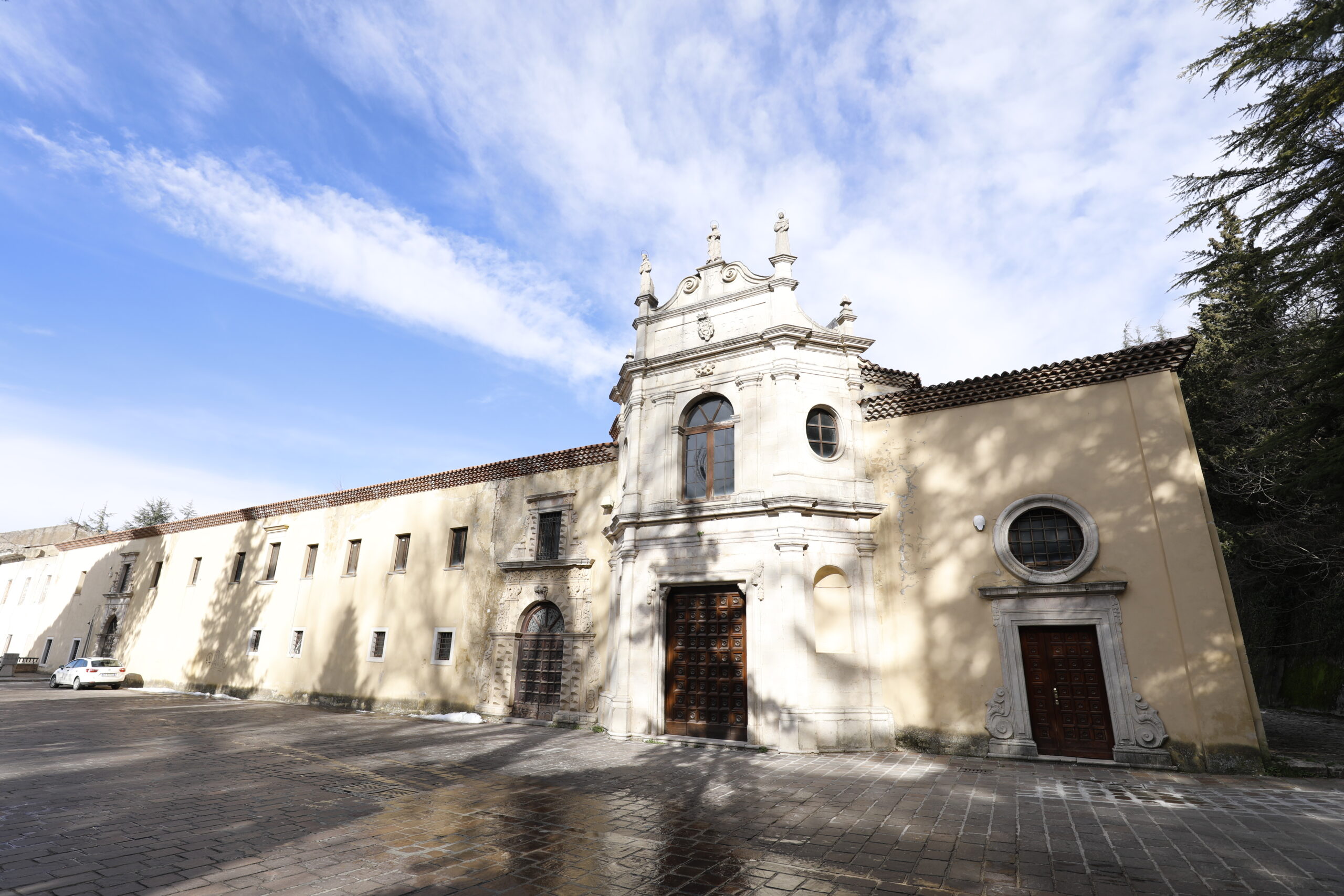
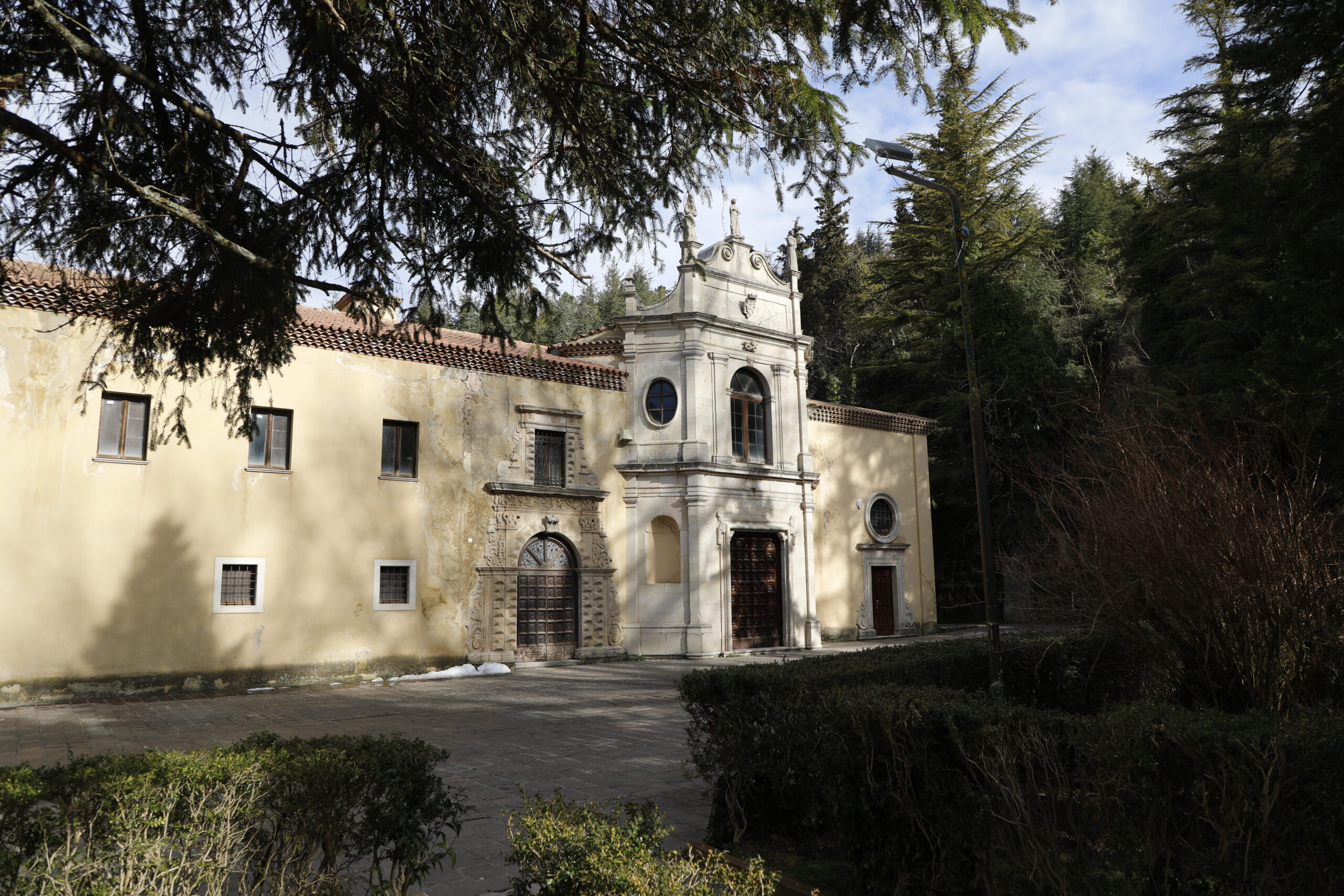
Architecturally, the convent is of great interest. Its facade, completed in 1786, showcases elements of Salentine Baroque—a rare style in this region—visible in the two intricately decorated entrance portals. The church, structured with two naves, houses numerous artistic treasures. Among them are 17th-century paintings by Lucanian artists Girolamo Bresciano and Pietro Antonio Ferro. Additional paintings from the 18th century are complemented by a portrait of Monsignor Filippi, painted in 1869 under the pseudonym Sordomuto. These masterpieces are set within polychrome wooden altars, finely carved in the early 18th century.
Highlights among the sculptures include polychrome wooden statues of saints, a rare terracotta depiction of Purgatory, and two monumental white marble tombs—one dedicated to Chiara Gagliardi (1818) and the other to Nicola Maria Corbo (1803). The church’s organ and choir loft further enrich its artistic legacy.
In the 1990s, a significant restoration program reopened the church in 1996, reviving this historical site. Initially, the convent was surrounded by a vast park, now reduced in size but still home to centuries-old poplar trees. Recent renovation efforts in 2023-2024 included the restoration of a 17th-century cruciform column adorned with symbols of the Franciscan Order—a powerful reminder of the history and spiritual significance that this place continues to represent.


Borgo Racconta is a registered trademark of
BweB – PiccolaGrandeItalia.TV
 English
  Italian