. Church of Saint Philip Neri is a unique example of religious architecture connected to the agricultural development project initiated by Prince Filippo Doria in the 1920s. Built under the supervision of agronomist Luigi Croce, administrator of the Doria estate in Lagopesole, it was dedicated to the saint whose name the prince bore.
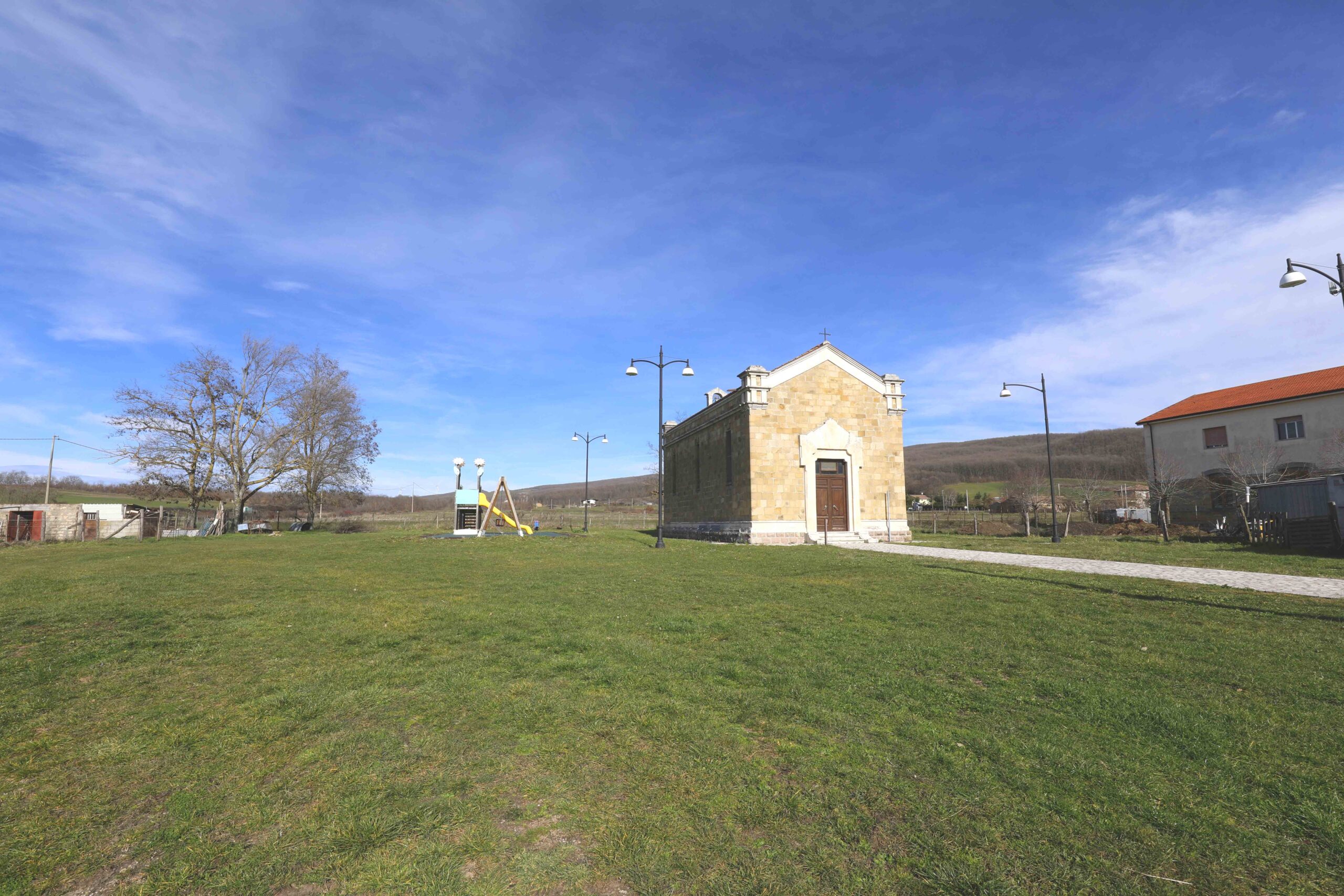
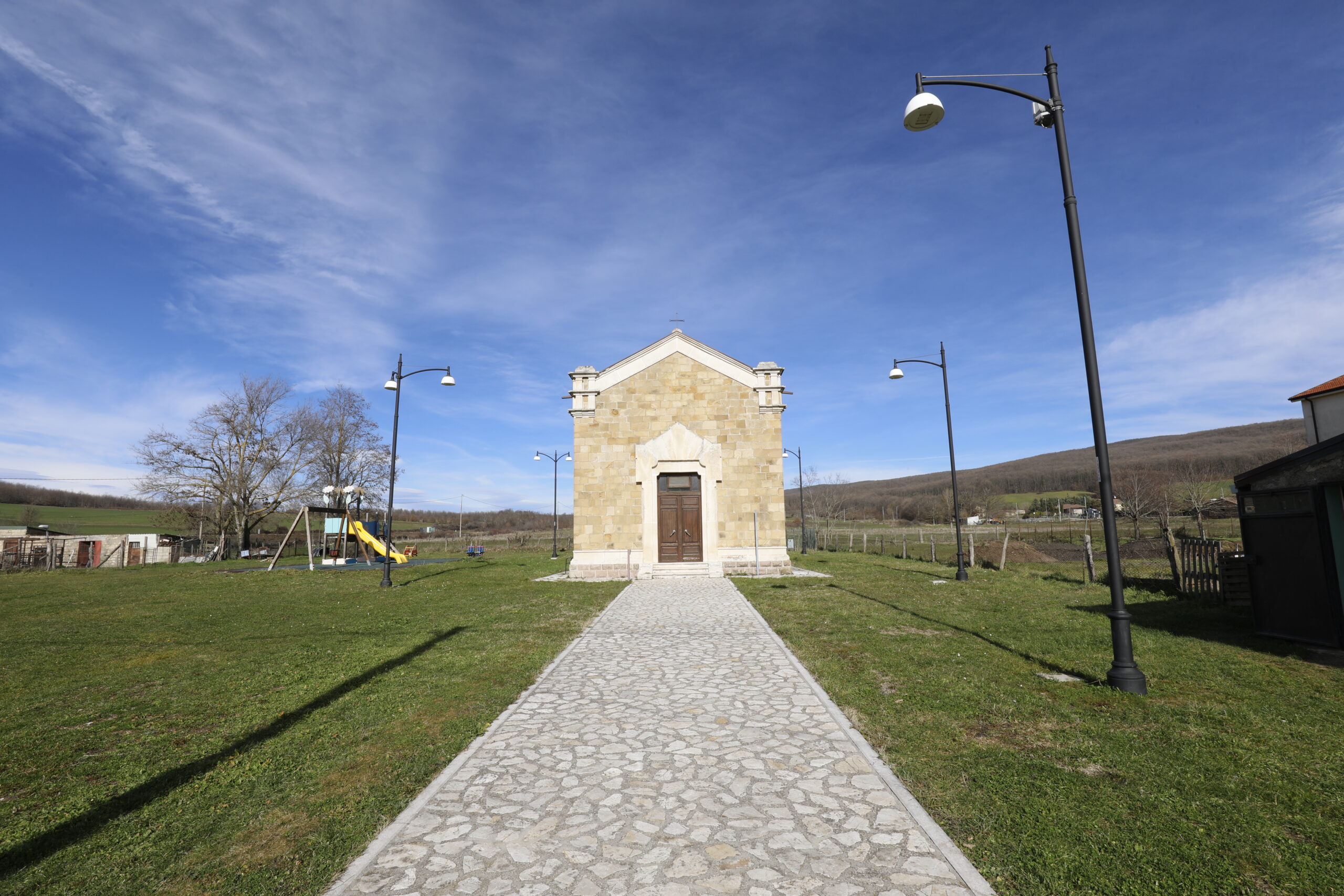
The rectangular, single-nave structure stands out for its intricate decorations in white limestone, which beautifully contrast with its sandstone masonry. The cornices along the eaves and pediments add elegance to the building, crowned by four corner turrets and a bell shrine at the rear.
Inside, the nave is divided by a masonry arch, separating the presbytery area from the space reserved for the congregation.
In 1929, the church was further enriched by frescoes painted by the Piedmontese artist Mario Barberis, depicting local agricultural themes inspired by the Canticle of the Creatures. Unfortunately, when the boarding school and agricultural school associated with the church were closed, the building was repurposed as a storage facility, causing significant damage to the paintings. Additional harm resulted from poorly executed restorations in 1954 and the 1980 earthquake, which led to the near-total destruction of the artwork.
Despite these losses, a few works by Barberis have survived: two recently restored canvases depicting Saint John the Baptist and Saint Peter the Apostle, as well as a 1927 painting of the Virgin Mary appearing to Saint Philip Neri, surrounded by children—though the latter remains in severe disrepair. In 1958, the church acquired a statue of Saint Philip Neri, which is still used in the annual procession on May 26, held in honor of the saint.
The 1980 earthquake also worsened structural damage, particularly in the arch facing the presbytery area. Thanks to a restoration and stabilization effort overseen by the Superintendence for Cultural Heritage, the church was reopened to the public. However, roof leaks necessitated further intervention in 2017.
By then, the interior plasterwork had deteriorated beyond repair and was removed entirely. Before restoration began, a graphic and photographic survey thoroughly documented the original frescoes, ensuring that the Church of Saint Philip Neri's artistic heritage would not be lost.



 English
  Italian