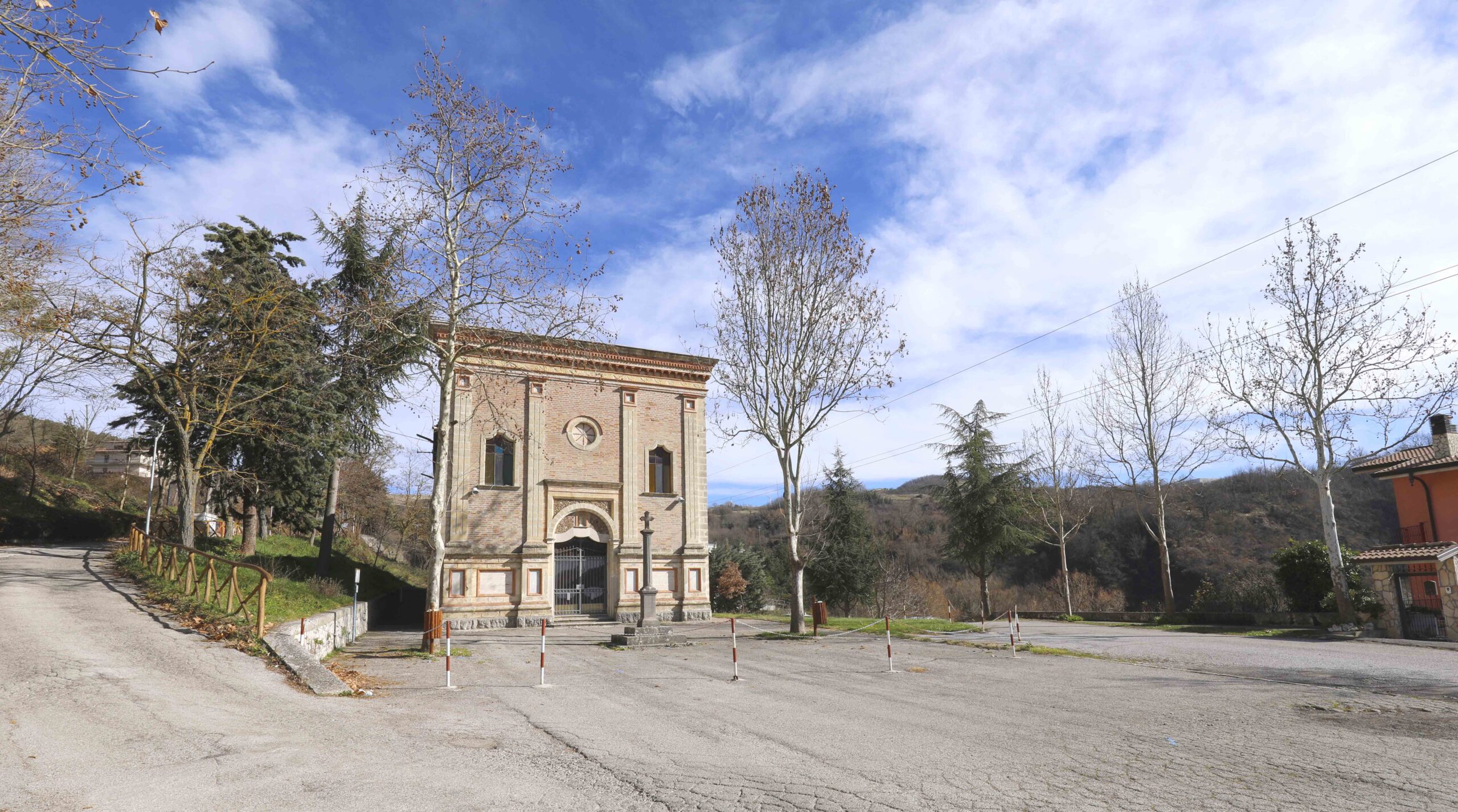
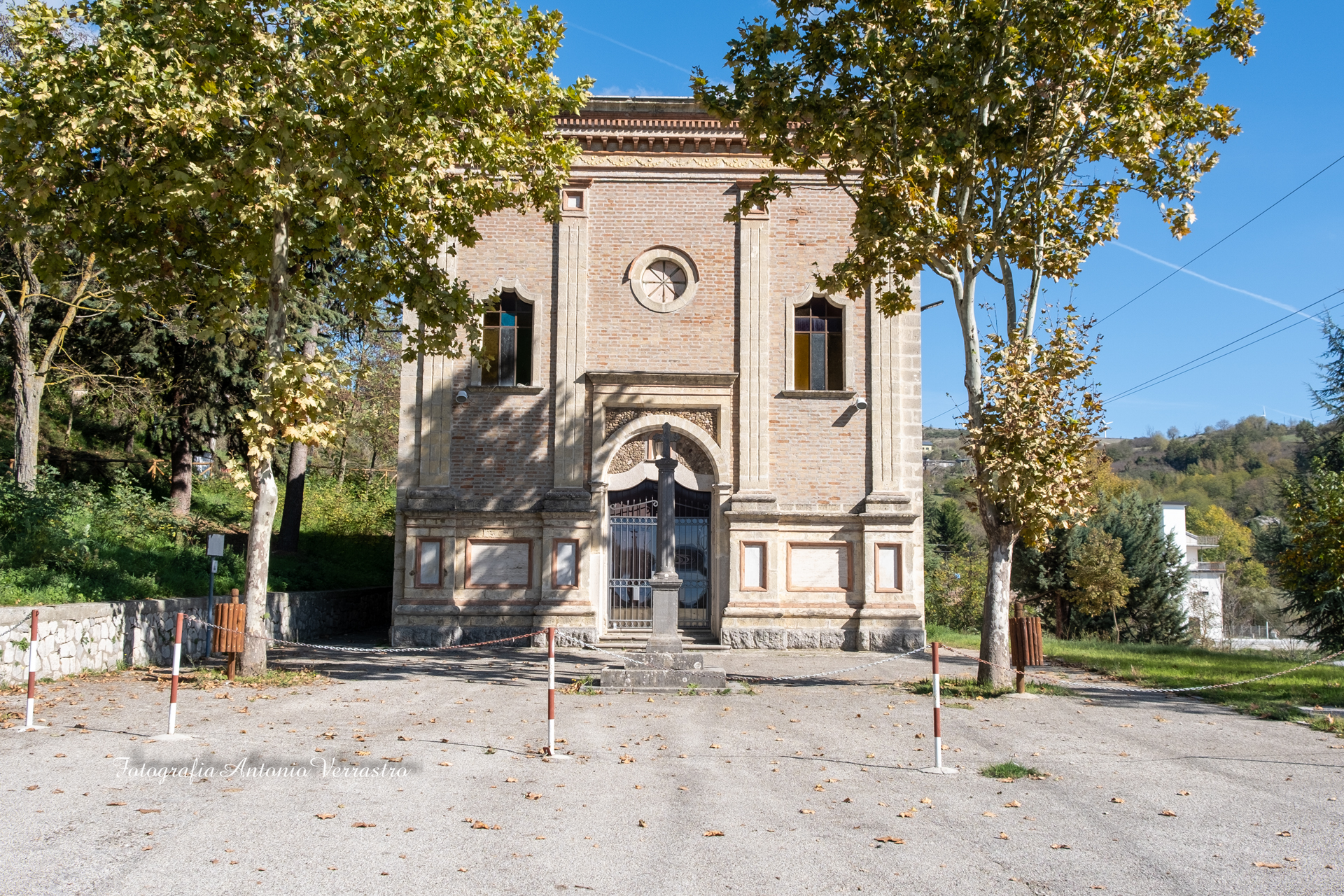
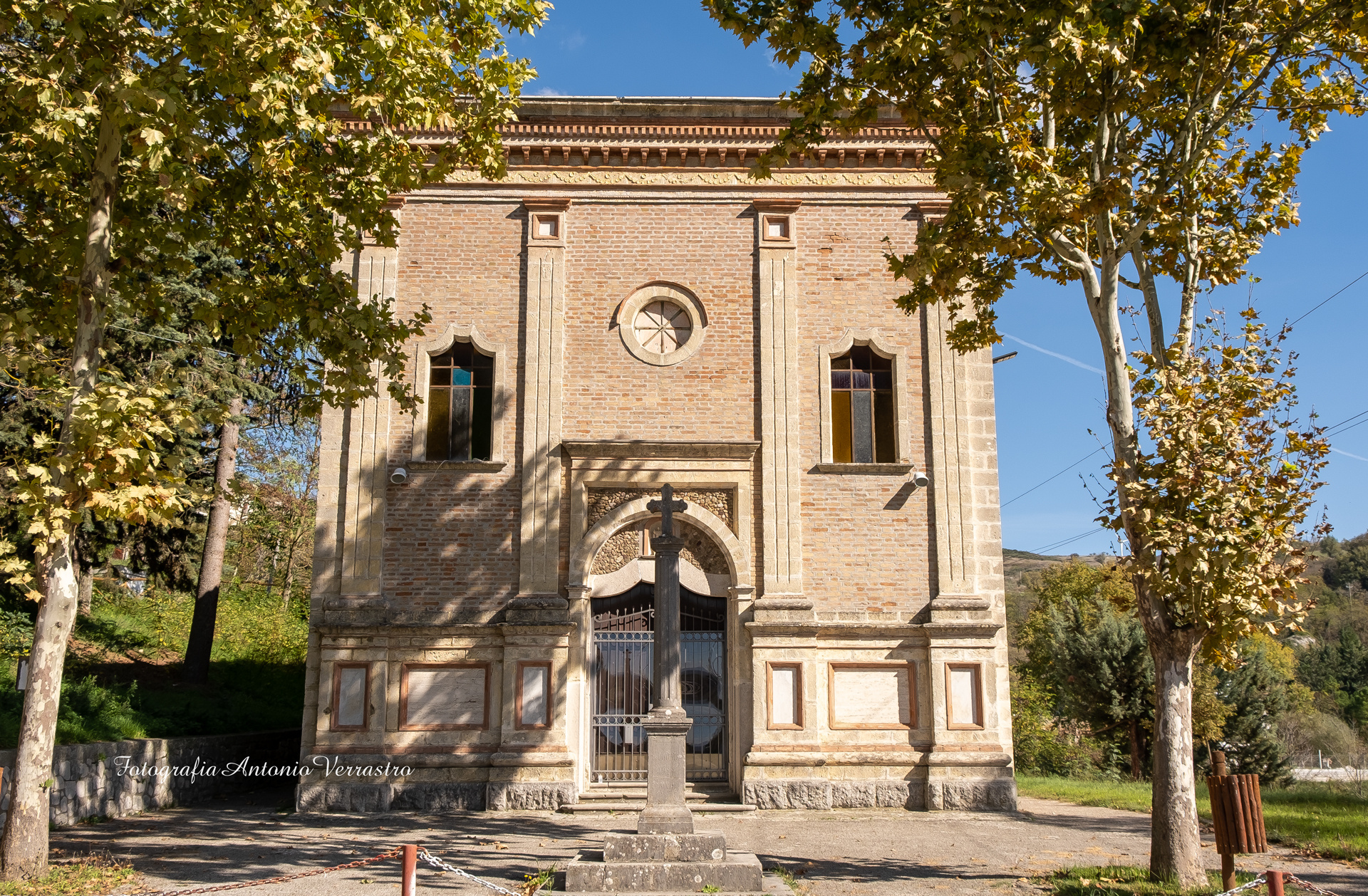
. St. Vitus’ Church, dedicated to Avigliano’s patron saint, stands just outside the town’s ancient walls. It is a place of deep devotion and artistic significance. Although its origins remain somewhat mysterious, records confirm its existence before 1544.
In 1768, the church underwent restoration under Master Paolo Sileo, though the exact extent of the work remains unclear. A few years later, in 1780, a sacristy was built behind the main altar, featuring an upper floor designated for the abbot’s quarters. That same year, a violent storm uprooted a large oak tree, which, along with two elms, had once enhanced the church's natural surroundings.
The Congregation of Saint Vitus was established in 1894. The following year, Saint Vitus was proclaimed co-patron of Avigliano alongside Our Lady of Mount Carmel.
The church has a single nave and features a rectangular facade, rebuilt in 1965 in front of the original one. The triangular pediment follows the roof's slope, maintaining the building’s original architectural harmony.
The church houses extraordinary works of art inside, reflecting its rich artistic heritage.
Among the most notable paintings is Girolamo Bresciano's 1640 canvas depicting the Madonna of Monserrat with Saints Joseph, Lawrence, and James the Greater. Another masterpiece is Gian Lorenzo Cardone’s 1771 painting of the Madonna and Child with Saints Apollonia, Francis, Sylvester, and Anthony.
However, the most significant masterpiece is a large canvas of the Virgin and Child with Saints Vitus, Modestus, and Crescentia, recently attributed by art historian Elisa Acanfora to the Flemish painter Guglielmo Borremans, who was active in Basilicata in the early 18th century. This impressive work exemplifies Borremans’ refined artistic style, renowned for its delicate execution and rich detail.
Another remarkable painting is the Madonna of Mount Carmel, initially housed in the now-demolished Church of Saint John. Painted by a Lucanian artist in the late 19th to early 20th century, it is mounted on plywood for preservation.
The main altar, an exquisite 18th-century retablo, features three wooden statues: Saint Vitus, Saint Modestus, and Saint Crescentia. The statue of Saint Crescentia, dated 1793, is signed by Alessandro Troisi, a sculptor from Melfi who trained in Naples. These statues hold deep religious significance and are carried in procession every year on June 15, during the Feast of Saint Vitus, a much-cherished celebration for the community.
St. Vitus’s Church is not just a place of worship but a treasure trove of art and history, offering visitors a deeper understanding of Avigliano’s rich cultural heritage.


 English
  Italian