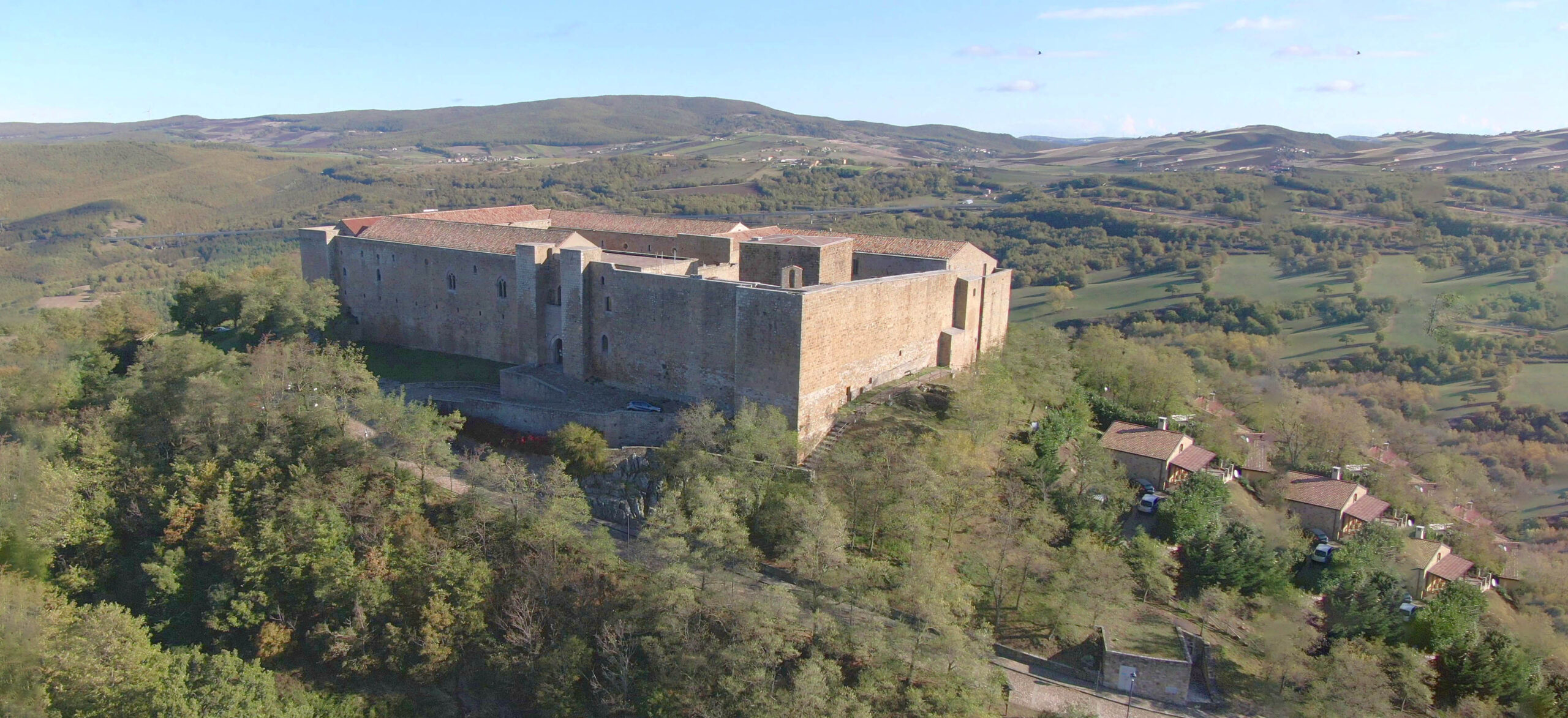
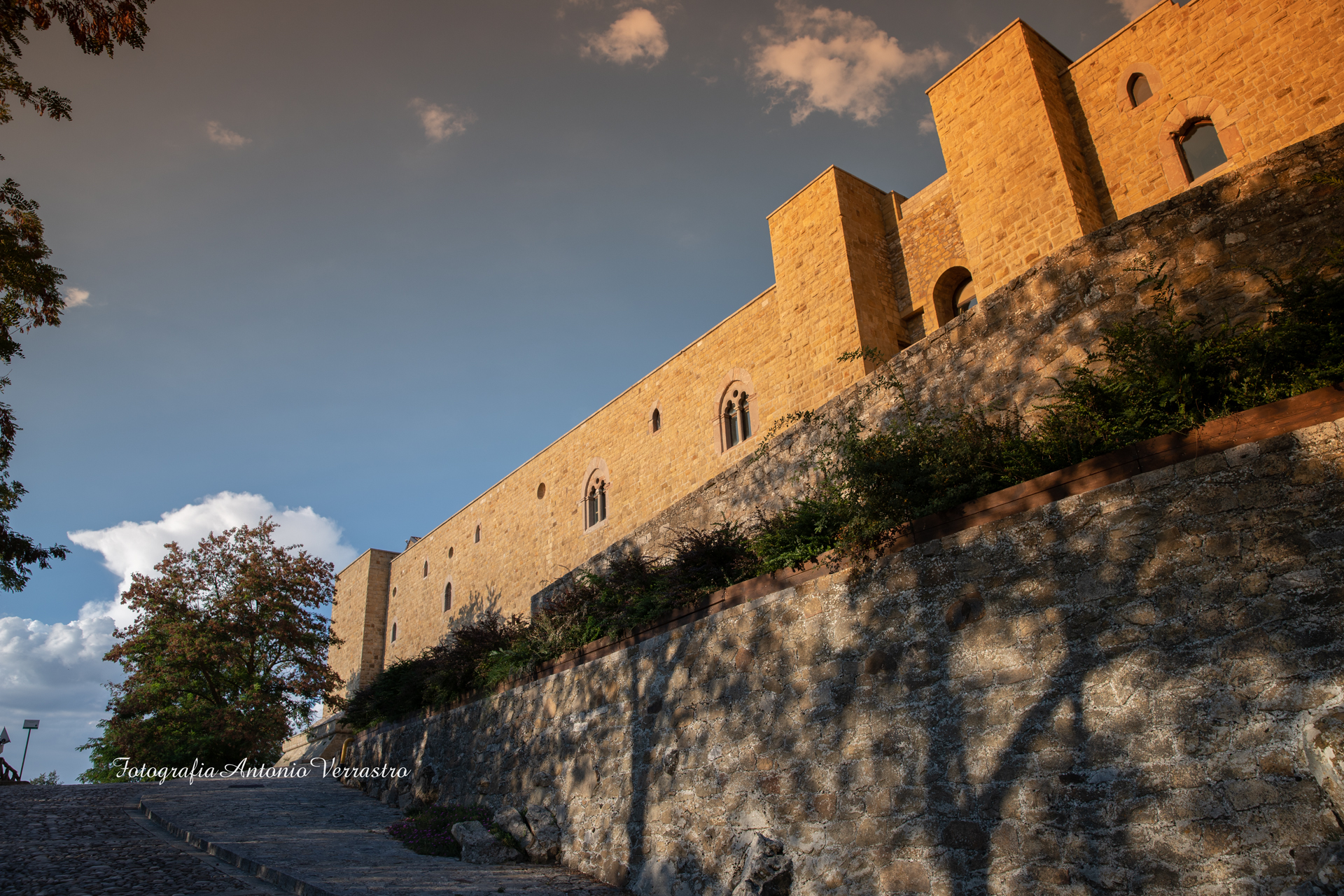
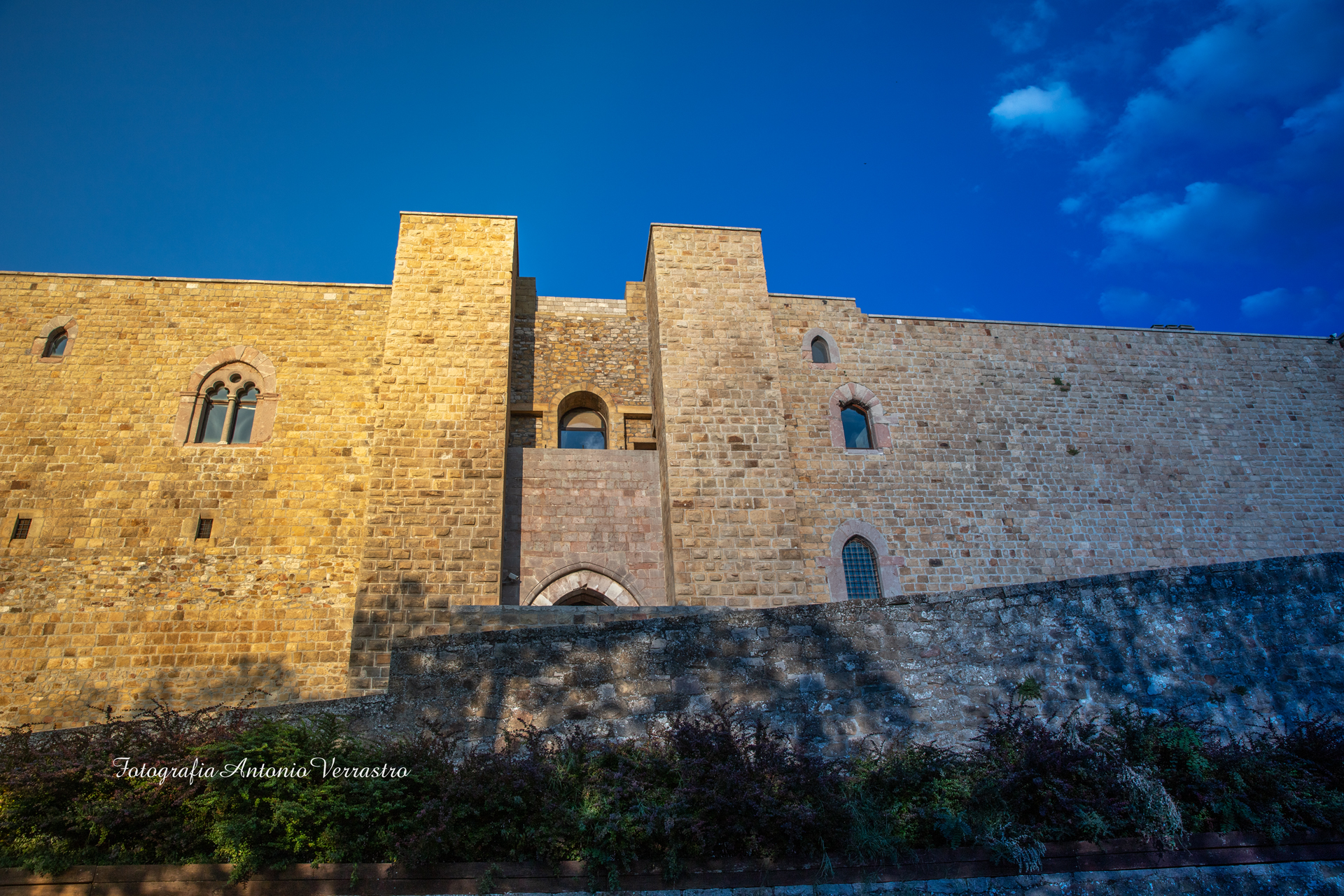
. Lagopesole Castle, a quintessential Federican landmark, stands atop a hill overlooking the Vitalba Valley. The state road from Potenza to Melfi leads to the fortress, which offers a breathtaking view of its grandeur.
This castle was one of the last residences commissioned by Emperor Frederick II, who transformed a Norman stronghold into a magnificent fortress between 1242 and 1250.
However, its history stretches back even further. As early as the 12th century, Lagopesole was the setting for significant meetings among notable historical figures, including Roger II, Lothair III, and Pope Innocent II. In 1416, Count Caracciolo granted the fief of Lagopesole to the State of Melfi, making it part of the state. In 1531, it passed to the Doria family, who retained control until the abolition of feudalism in 1806. During their rule, the castle functioned as an administrative center, and the Dorias maintained it until 1969, when ownership was transferred to the Italian state. Since then, restoration projects initiated in the 1970s have restored the castle to its former splendor.
Today, Lagopesole Castle is a massive rectangular structure with rooms arranged on two levels around two courtyards. The larger courtyard houses state rooms, featuring ornately carved capitals depicting local flora and fauna, and the Palatine Chapel—a rare feature in Frederick II’s constructions. The smaller courtyard contains the keep, a defensive stronghold, and a thermal bath complex uncovered during archaeological excavations.
Frederick II and his architects left an indelible mark on the fortress. The northern wing was enhanced with fireplaces, technologically advanced baths, and a staircase in the western wing. The donjon, newly constructed at the time, was built from stone quarried directly from the castle’s courtyard.
A fascinating historical detail is the 1746 discovery of ancient green marble columns, which were later transported to Naples and used to adorn the Palatine Chapel of the Royal Palace of Caserta.
Today, Lagopesole Castle is managed by the Italian Ministry of Culture and serves as the headquarters for the Forest Carabinieri Unit of Castel Lagopesole and the Carabinieri Biodiversity Department of Potenza. After years of closure, this Federican stronghold has recently reopened to the public. Visitors can explore the Great Courtyard, the Palatine Chapel, and, on the upper floor, the Museum of Lucanian Emigration, which shares the stories of those who left this land in search of a better future elsewhere.
Opening hours are listed on the Musei Italiani app and the official website of the Melfi and Venosa Museums and Archaeological Parks: https://melfivenosa.cultura.gov.it/



 English
  Italian