
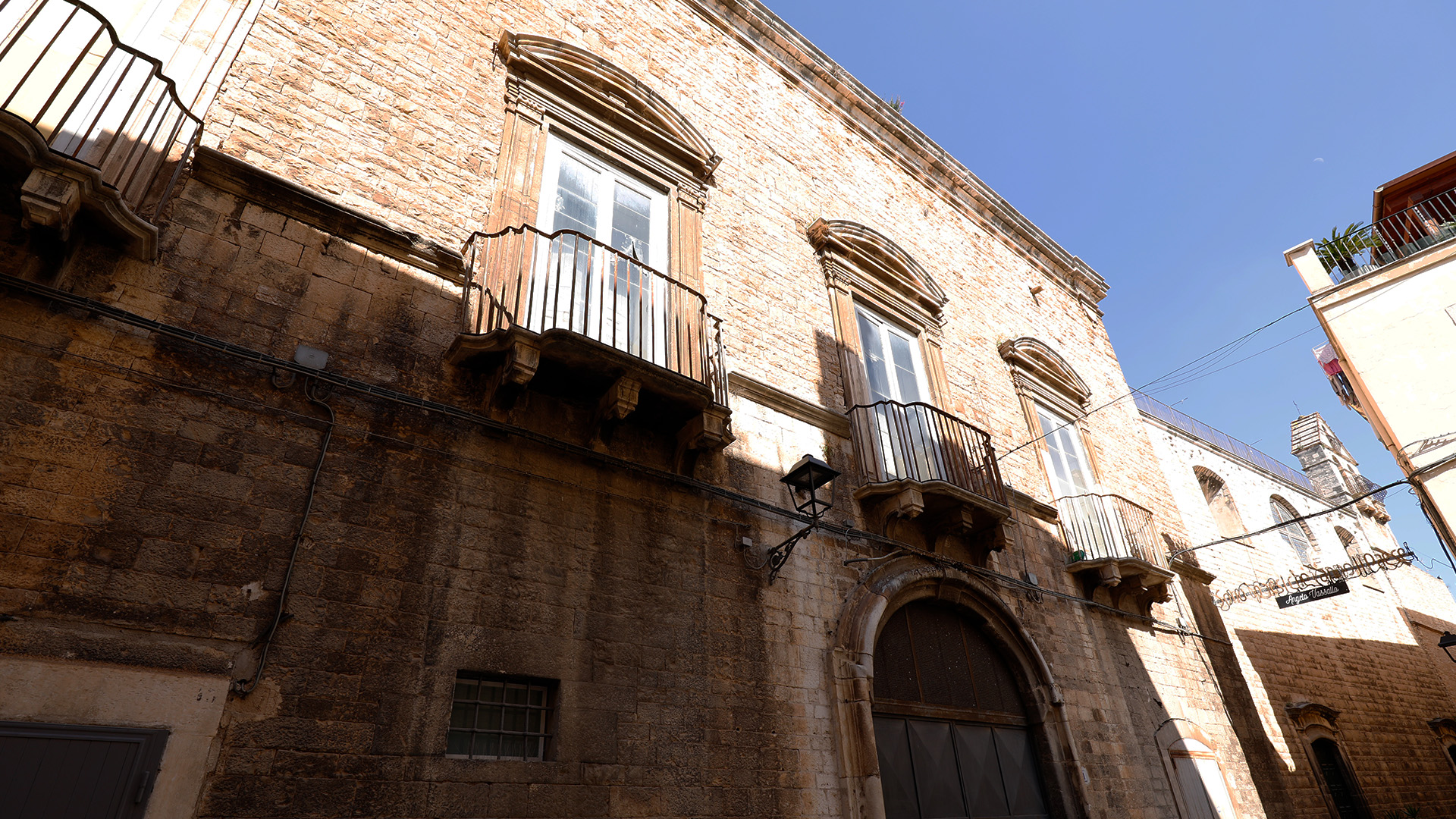
This grand, quadrangular palace dominates an entire block in the heart of Bitonto’s historic center. It stands in a prestigious location overlooking the ancient route of the Appian-Trajan Way. The long façade retains its 17th- and 18th-century architectural features, bearing witness to the status of the families who once resided here.
The stonework clearly distinguishes the building’s two primary levels. The ground floor is clad in smoothly finished, squared limestone blocks capped with a string course, while the upper level displays rusticated masonry characteristics of the Baroque period.
The main entrance, understated yet elegant, is flanked by large windows in the same 18th-century style, marking the piano nobile.
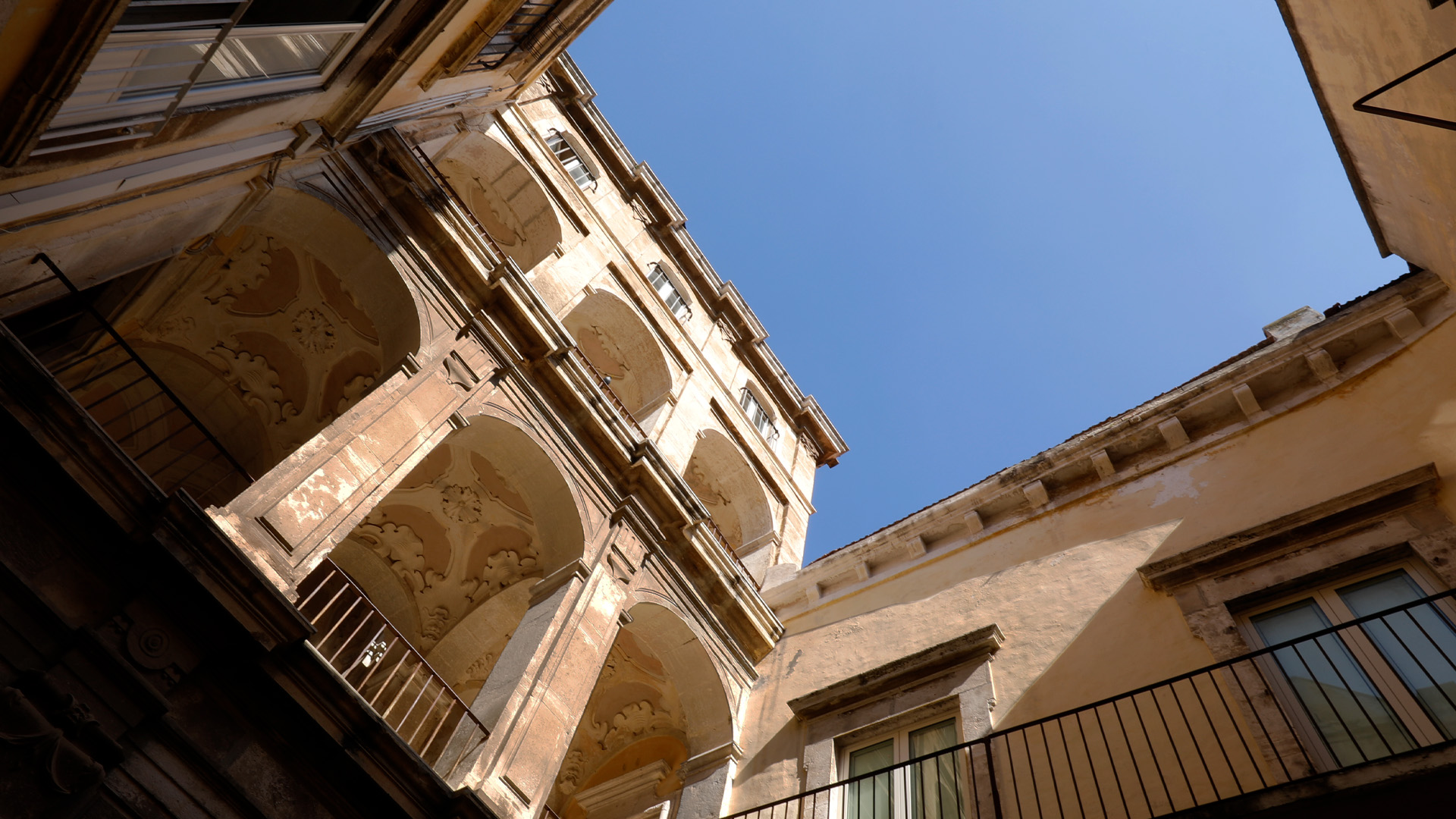
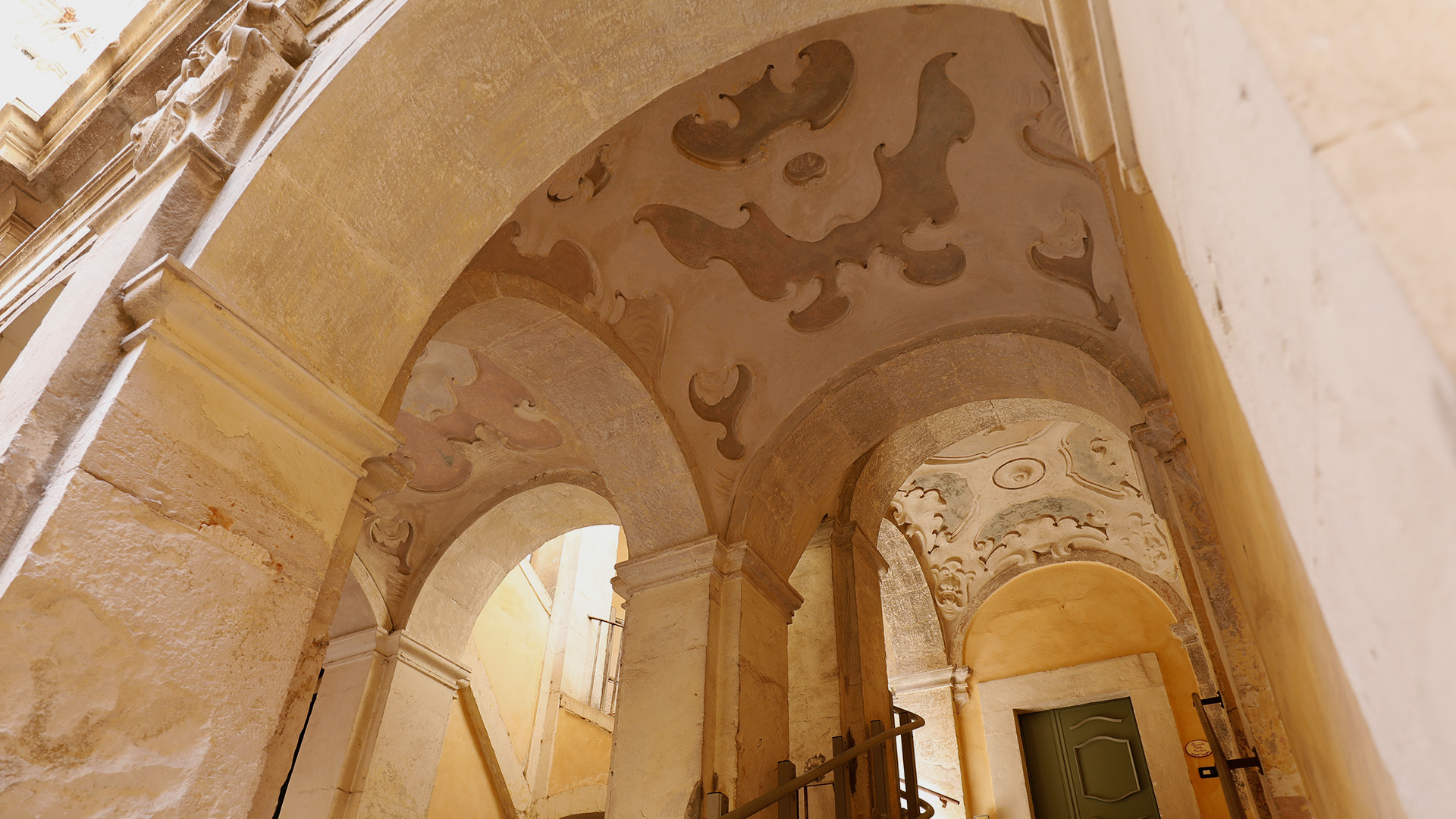
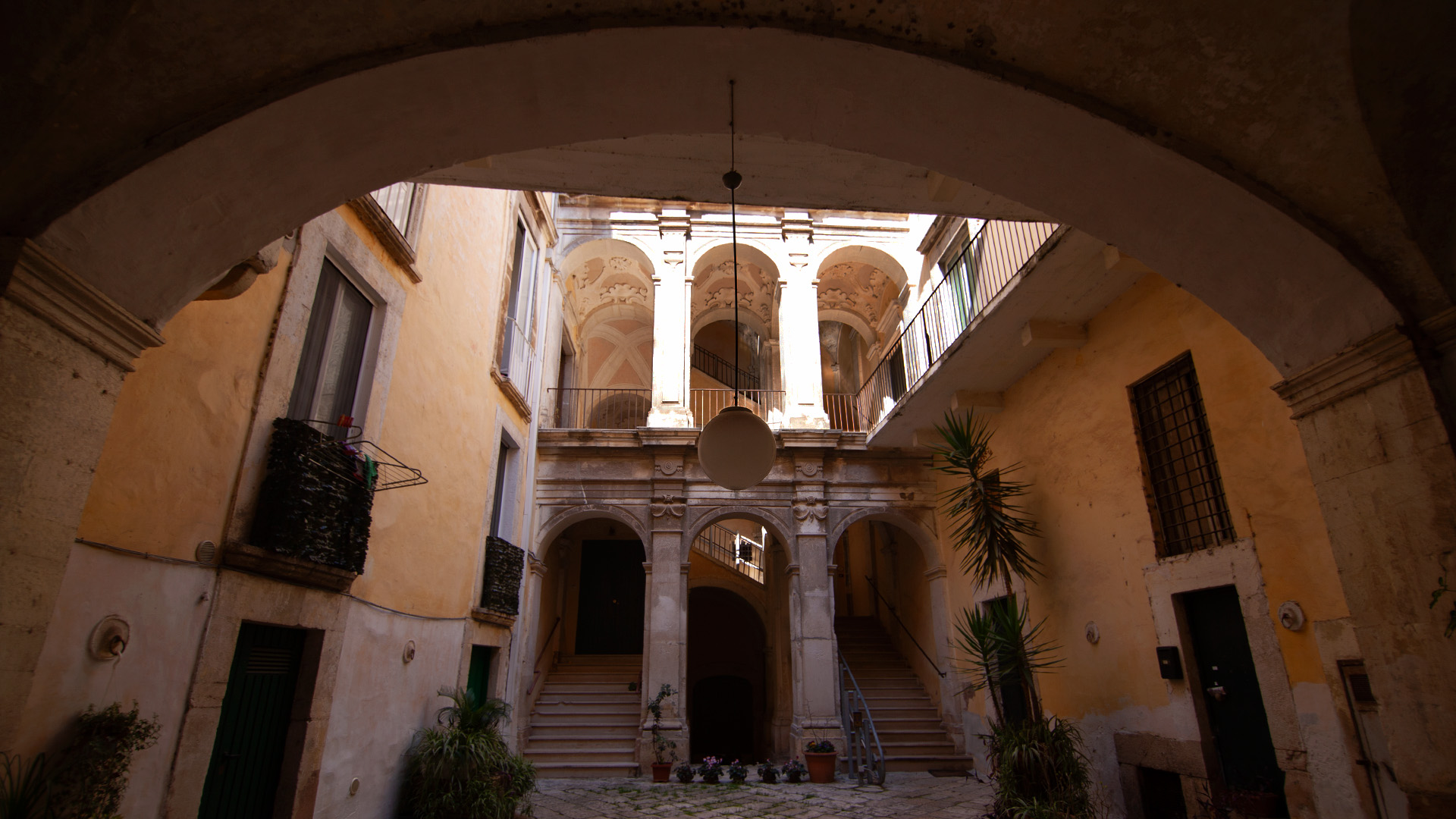
Beyond the austere exterior lies a vaulted entrance hall that opens into a spacious internal courtyard. Here, the eye is drawn to a magnificent three-tiered gallery reminiscent of Neapolitan palaces designed by Ferdinando Sanfelice in the 18th century. The arcades of the gallery frame a sweeping triple staircase made of lava stone, rising with theatrical grace to the upper floors. White stucco decorations, filled with fanciful details, lend the stairs a distinctive Rococo flair. At the center of the courtyard sits a wellhead, clear evidence of the underground cistern once used to collect water—an essential feature for residences of this kind.
Nineteenth-century historians agree in identifying the palace by the names of the three prominent families who inhabited it over the centuries. The Barone family, originally from Piedmont, acquired the fief of Bitonto as early as 1314. In the 15th century, the family was joined by the Gentile through marriage, and eventually inherited the property when the main Barone line died out. Finally, in the 19th century, the palace passed to the Sisto family, who preserved its historical and architectural legacy.


Borgo Racconta is a registered trademark of
BweB – PiccolaGrandeItalia.TV
 English
  Italian
  German