
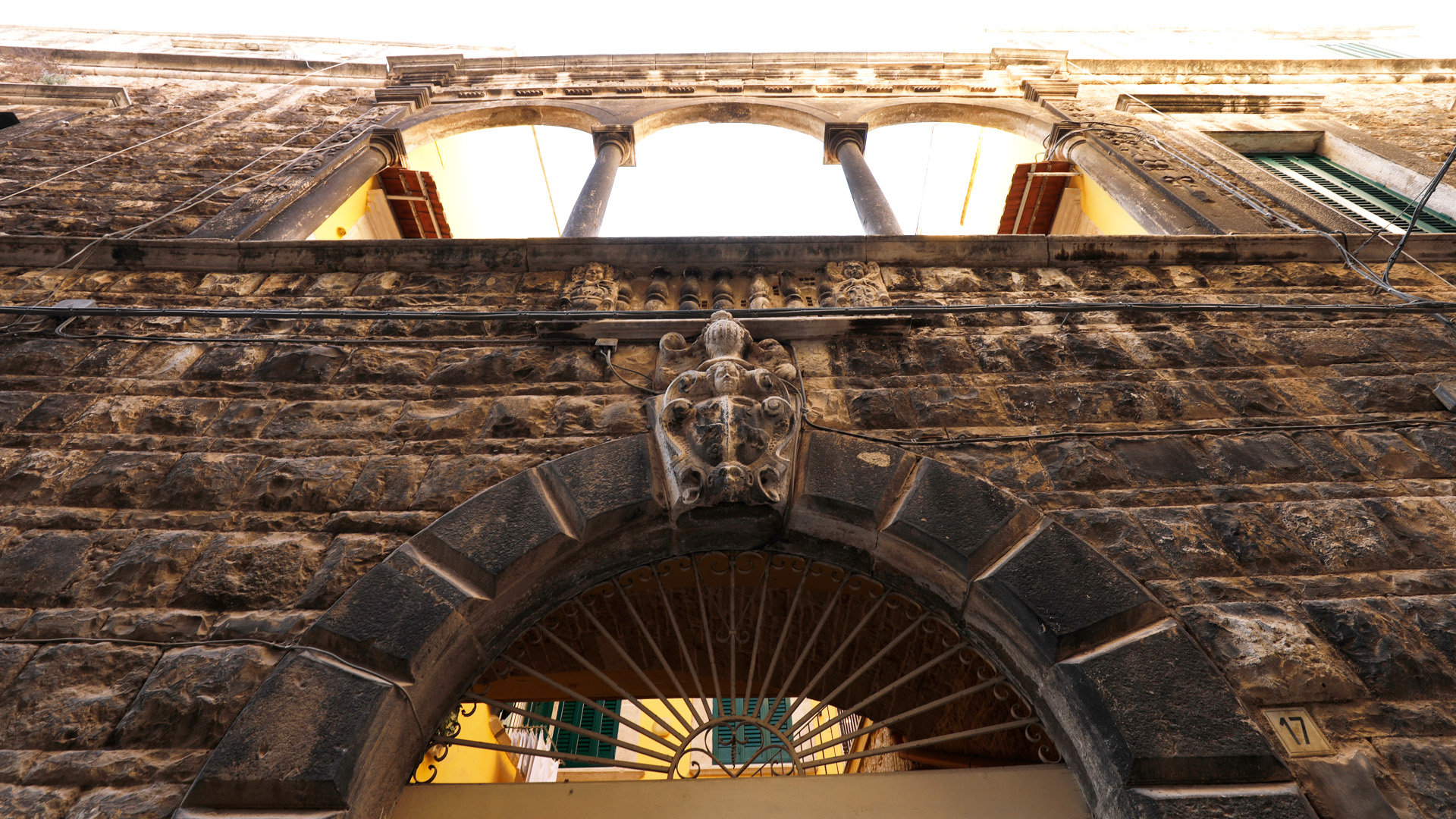
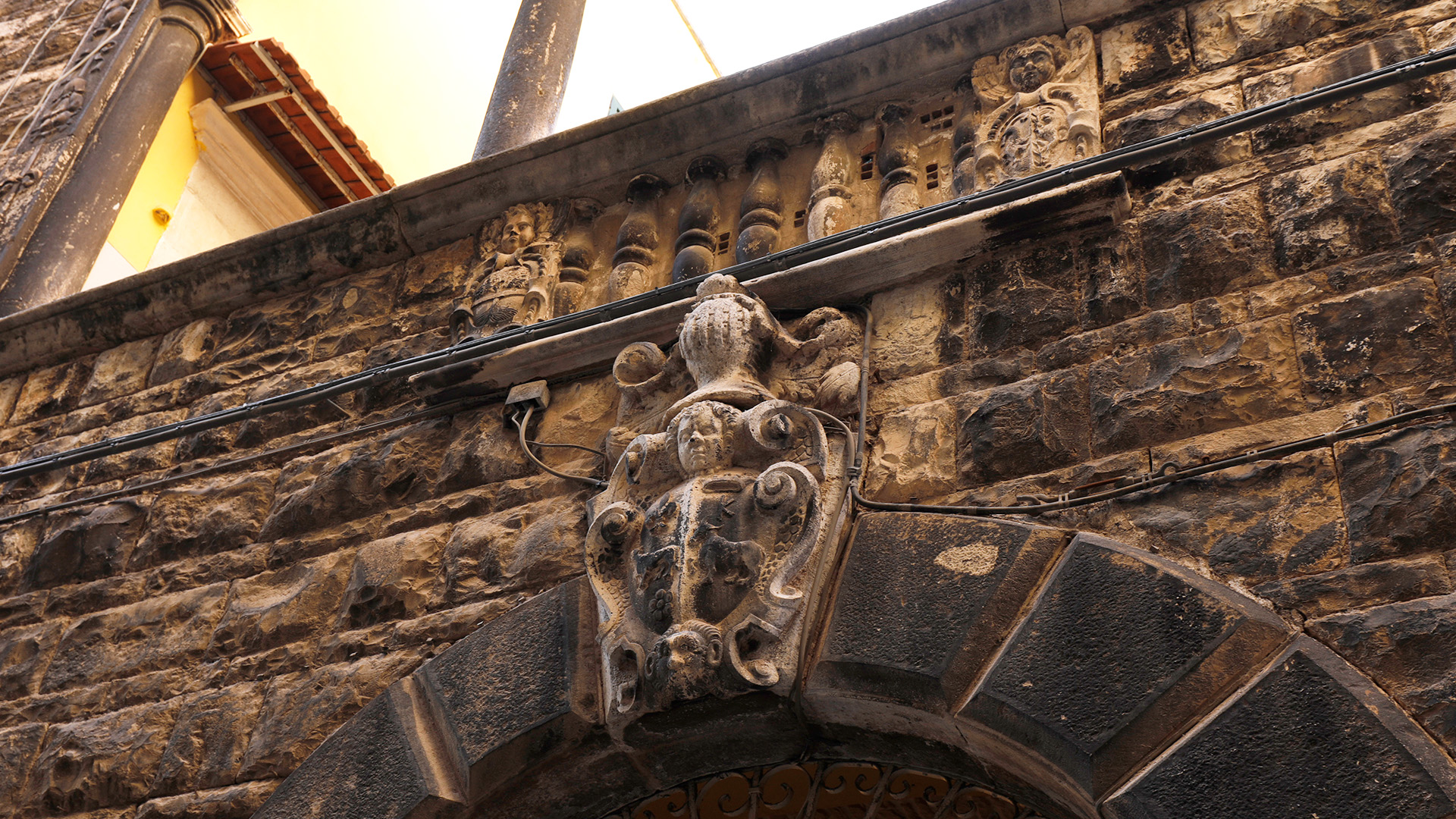
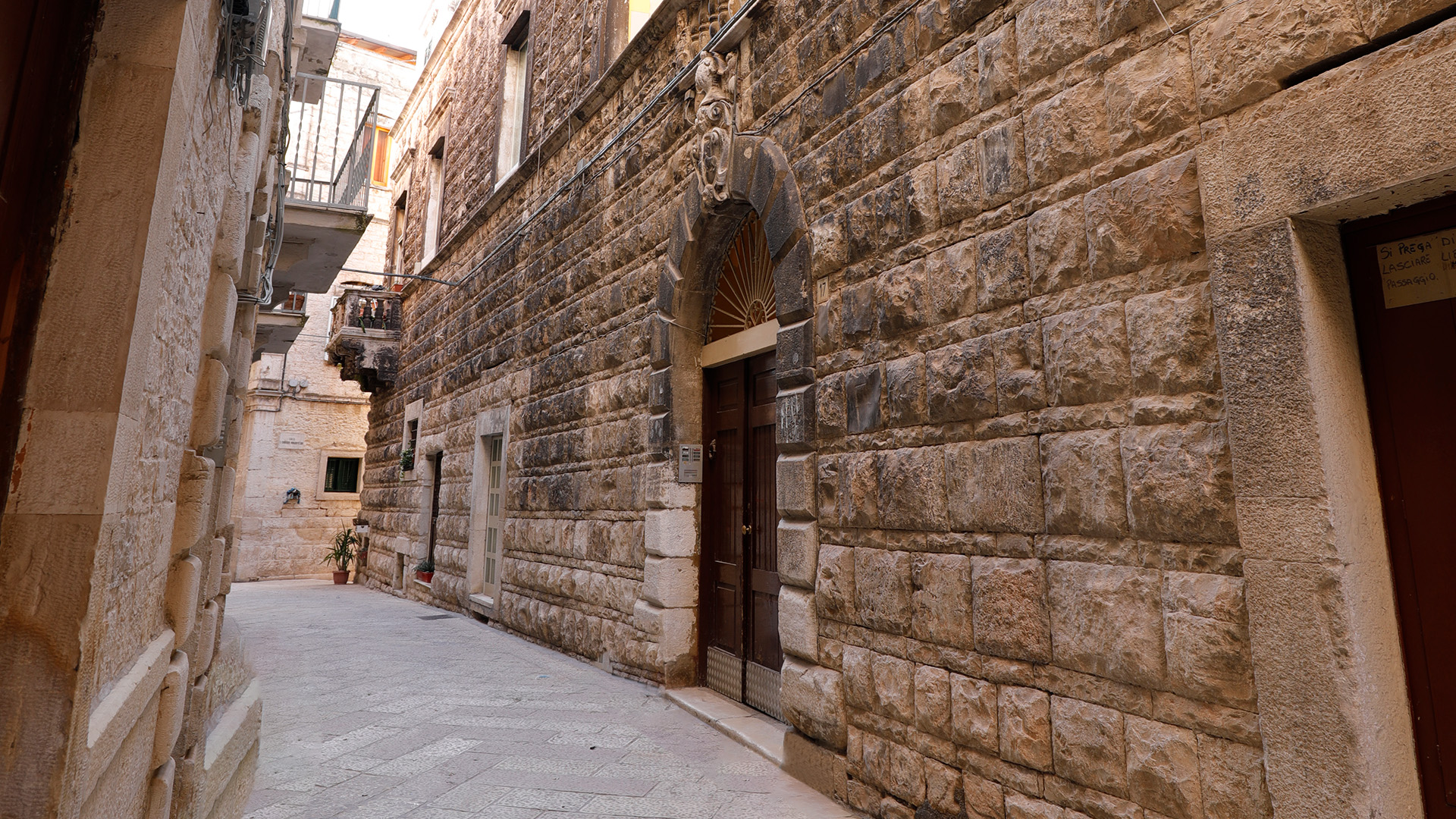
The long front of this noble residence follows the street curve with striking solemnity. The entrance is marked by a round-arched portal framed with sculpted stonework. Above it, a prominent noble coat of arms stands out, merging the heraldic symbols of the Planelli and Bove families—among the first to live in the building.
Above the portal, a refined Renaissance-style gallery unfolds with three elegant bays. The frieze alternates triglyphs and metopes adorned with floral rosettes, while the pilasters are decorated with ribbons, bows, and clusters of leaves and fruits emerging from the mouths of whimsical mask-like faces.
The façade is divided into two levels by a string course and features rectangular windows on either side of the gallery. A sober horizontal cornice elegantly completes the architectural composition.
Though no precise records exist, stylistic elements suggest that the building was constructed in the early 1600s, when Bitonto’s architecture still bore strong late-Renaissance features.
Later renovations, dating to the second half of the 17th century, led to the addition of a balcony on the left side of the front, softening the overall appearance. A tripartite coat of arms is visible at the center, featuring the symbols of the Scaraggi family and possibly the Ferri family. The construction of this balcony marks the moment the property passed to other noble families, likely through marriage. These changes were often commemorated by placing family crests on architectural elements—such as the small columns of the gallery’s balustrade.
Stepping through the entrance, one enters the inner courtyard, from which a single-flight staircase leads to the upper floor. Over the centuries, the building’s interior has undergone many renovations—some recent—that have altered its original structure.
Linked to the palace is a local legend of a tragic love story between a young woman from the Tèrmite family and the second-born son of the noble Pietà family, who lived in the palace directly across the street. Both families opposed their romance. The girl was forced to take religious vows and enter the Monastery of the Virgin Sisters, while the young man became a mercenary soldier. Despite their separation, he never gave up hope. He would return secretly, sneaking down the narrow back alley just behind the convent, hoping to glimpse her.


Borgo Racconta is a registered trademark of
BweB – PiccolaGrandeItalia.TV
 English
  Italian
  German