
The historic center of Bitonto is a veritable treasure trove of art, filled with magnificent churches and noble palaces. Yet, just beyond the ancient walls, smaller chapels tell equally fascinating stories, intertwined with local legends and historical events. Among them, the Church of Saint Vitus stands out—a humble yet deeply historic building, dating back to 1664.
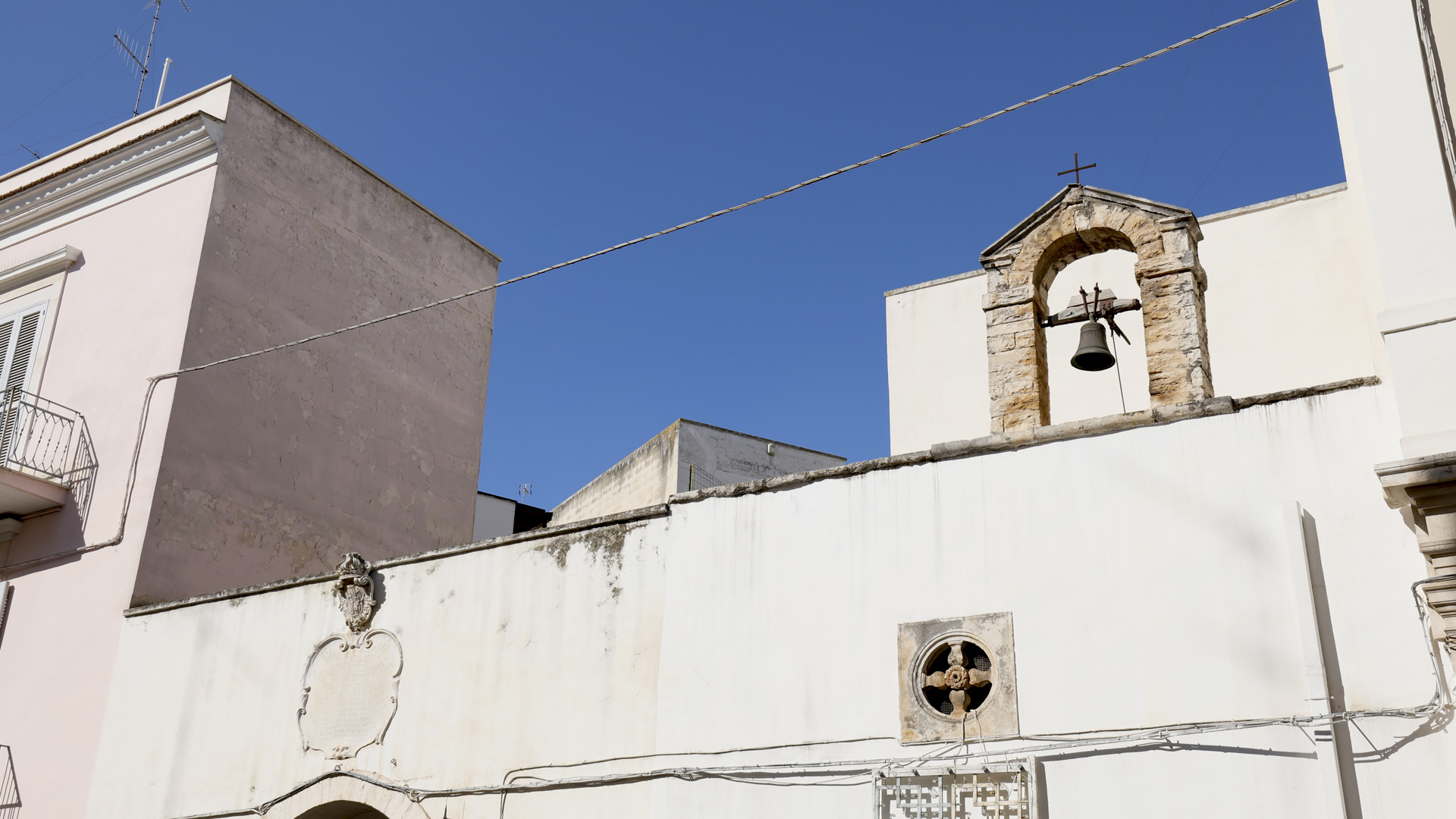
The church played a notable role in 1741 when Charles VII and Queen Maria Amalia Walburga visited Bitonto, stopping on their way through Bari. The royal couple was welcomed with great honors. From the terrace of this small church, they listened to Bishop Giovanni Barba recount the historic battle in which the Spanish army triumphed over the Austrians. A stone plaque was set into the church’s façade to commemorate the visit, bearing a dedication to the king and queen.
The church is also tied to darker episodes from the region’s past, particularly the phenomenon of banditry that plagued southern Italy between the 18th and 19th centuries. It became the final resting place of Francesco Giacò—better known as Bagiacco—a feared outlaw who terrorized the countryside. Born in 1783, he ruled the region with an iron hand for years before being captured and sentenced to death. On September 23, 1809, he was executed and beheaded. His body was buried here.
Humble in scale, the church follows a rectangular floor plan with a barrel-vaulted ceiling.
It sits slightly below the current street level, a clear sign of the many layers of construction added over the centuries. A document from 1202 suggests that the current church may have been built atop the ruins of an earlier structure. In 1716, a restoration was carried out, and a cycle of frescoes was commissioned, which resurfaced during recent conservation work.
On the rear wall, one can admire images of Saint Crescentia and Saint Modestus flanking two angels who appear to open the Tabernacle's doors. At the center hangs a late Mannerist painting of Saint Vitus. On the floor lies a burial stone, bearing witness to the church’s long-standing funerary use. The façade, simple yet elegant, features a double architraved doorway, a small rose window, and a bell gable.


Borgo Racconta is a registered trademark of
BweB – PiccolaGrandeItalia.TV
 English
  Italian
  German