
The Church of the Souls in Purgatory was founded to provide the Confraternity of Saint Mary of Suffrage with a more significant place of worship.
Medieval buildings had previously occupied the land for the new church.
The construction began in 1670, based on designs by architect Michelangelo Costantino, the same artist who created the Carafa Mausoleum in the cathedral. The church was consecrated in 1688.
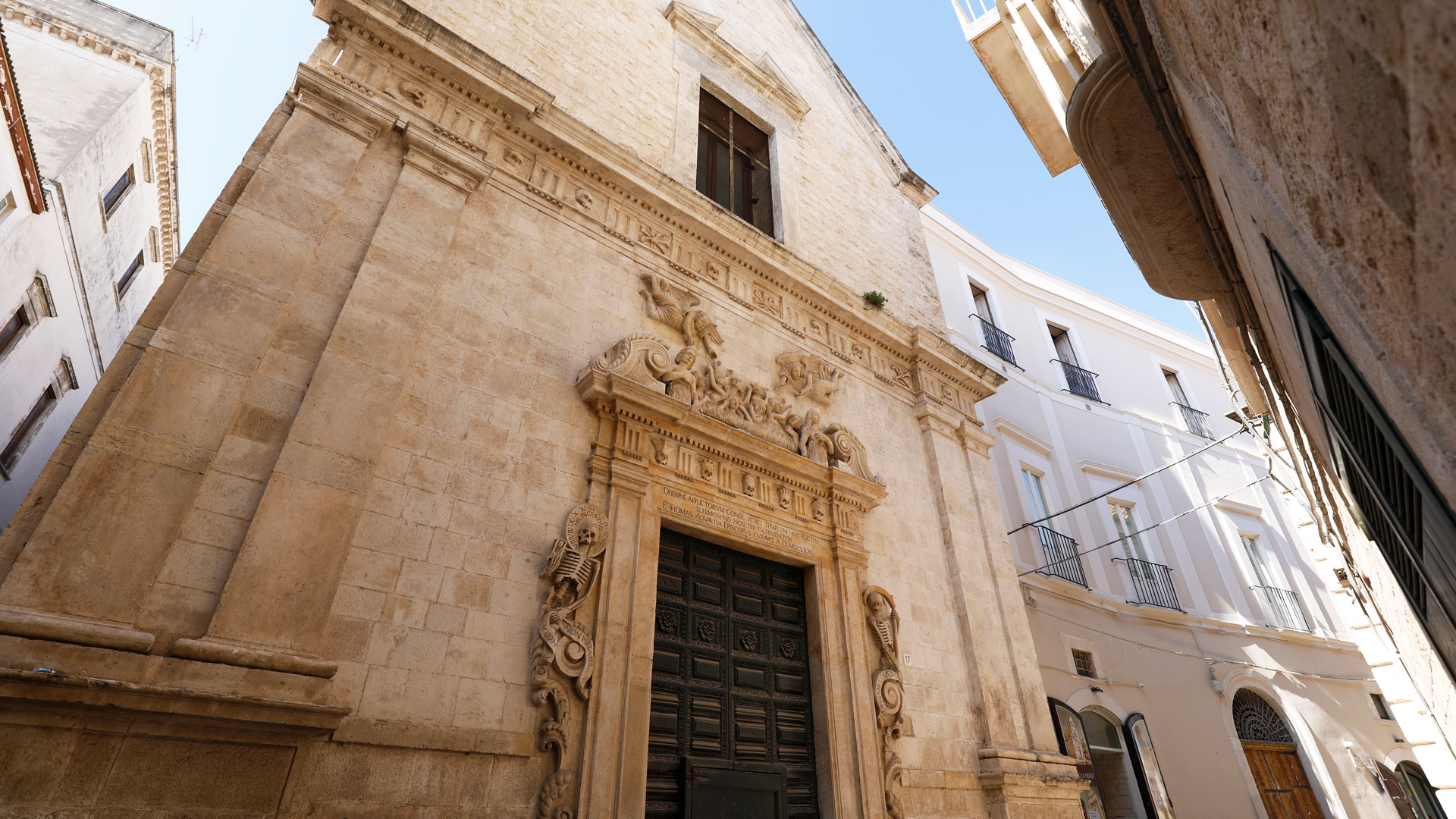
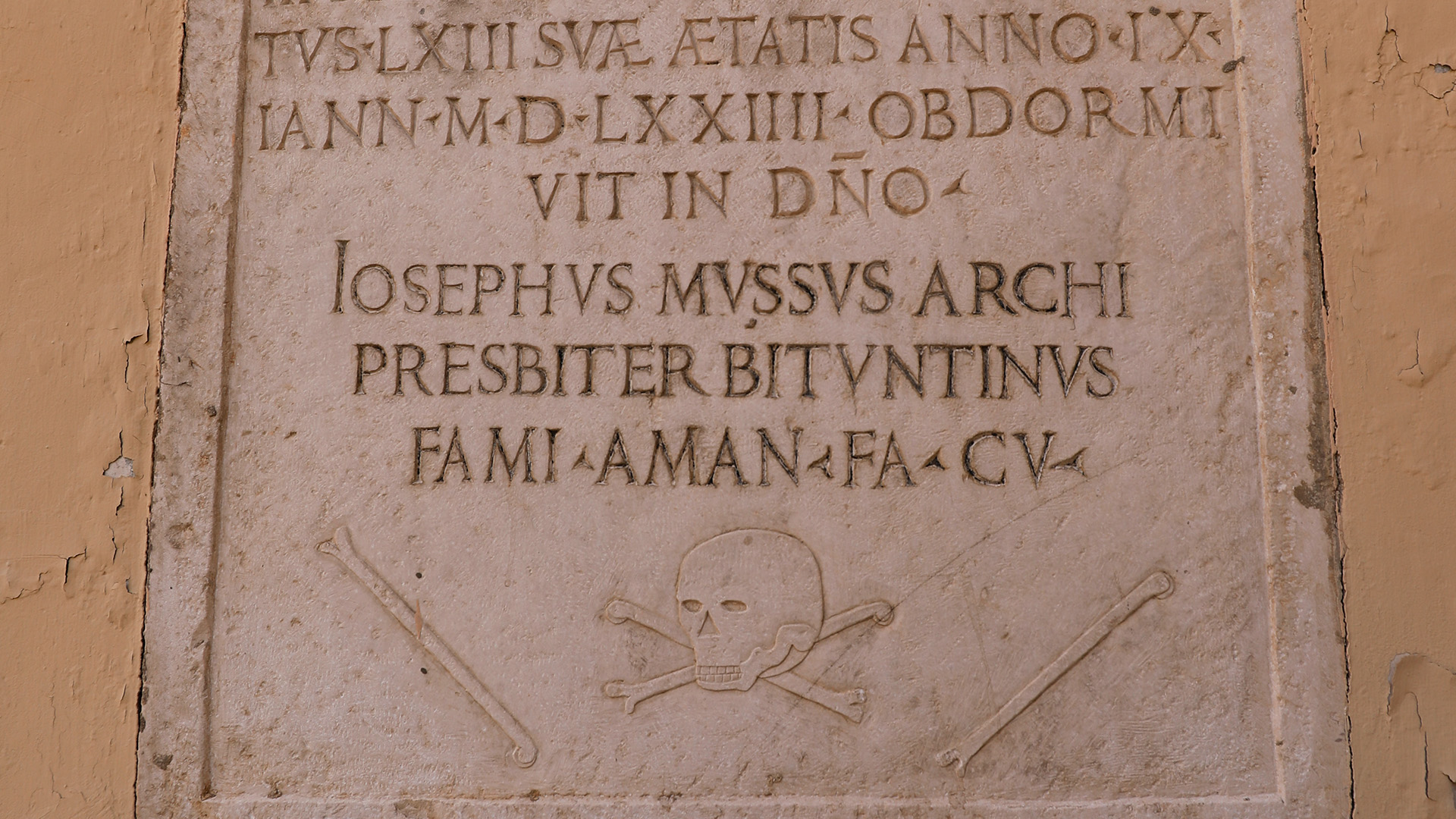
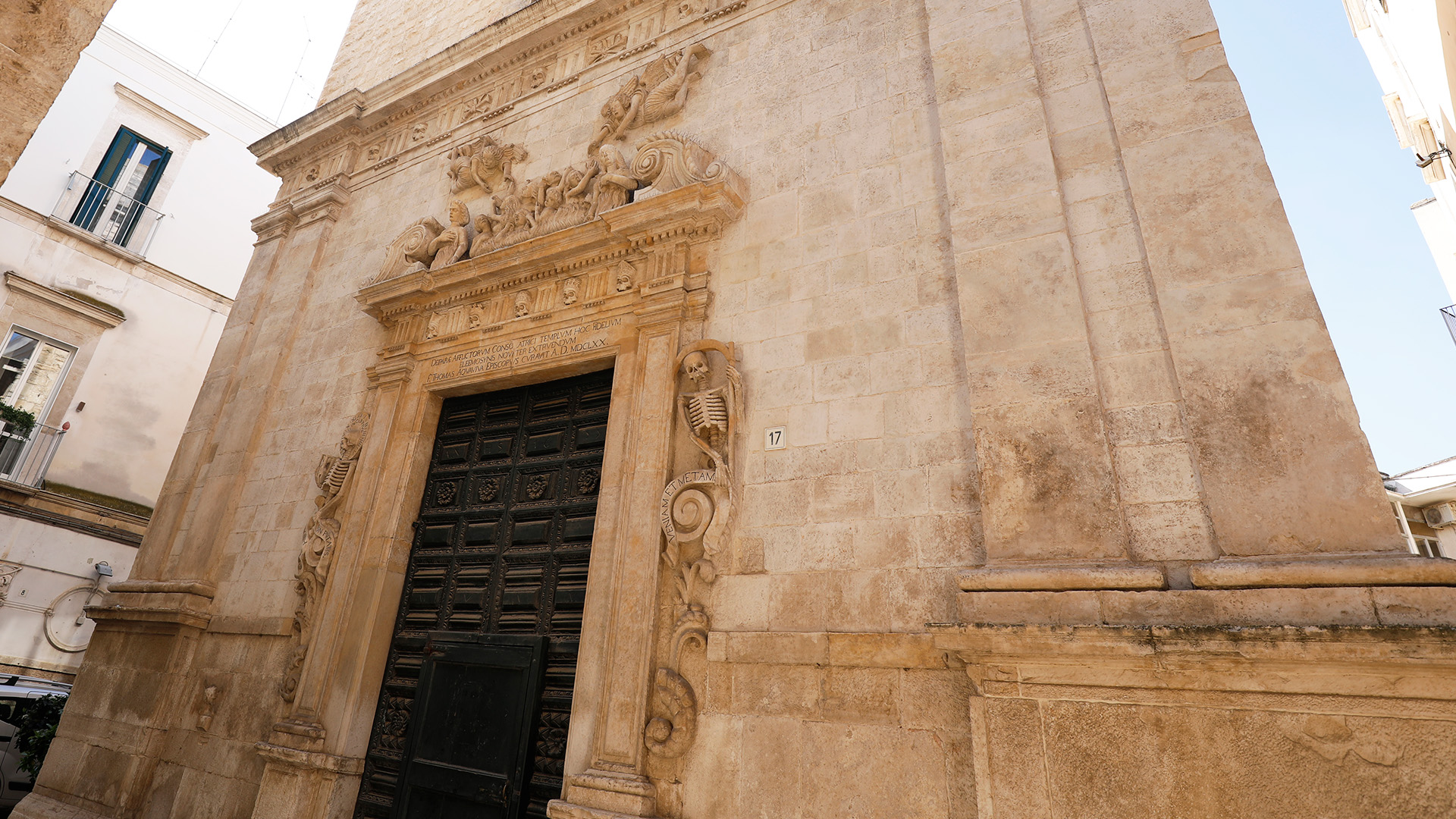
Its most striking feature is the tall, triangular gable façade, richly decorated with themes of death and redemption—perfectly reflecting the spiritual values promoted during the Counter-Reformation. The entrance portal, framed in smooth stonework, is particularly evocative: its vertical columns are carved with life-sized skeletons, symbolizing the fragility of human life.
Above the doorway, on the architrave, you’ll find sculpted metopes showing skeletons wearing the crowns and miters of popes, bishops, and kings—reminders that death comes for all, regardless of social status. The pediment is adorned with a bas-relief depicting souls in purgatory being lifted by angels, evoking a message of hope and salvation.
The church interior consists of a rectangular nave, lined with arches and embellished with sumptuous Baroque altars dating from the late 18th century. One exception is the second altar on the left, which still preserves its original 17th-century decorations.
The main altar dominates the back wall, where the statue of Our Lady of Sorrows is displayed. This figure, along with that of the Dead Christ, plays a central role in the solemn Good Friday procession—a deeply emotional and meaningful tradition for the people of Bitonto


Borgo Racconta is a registered trademark of
BweB – PiccolaGrandeItalia.TV
 English
  Italian
  German