
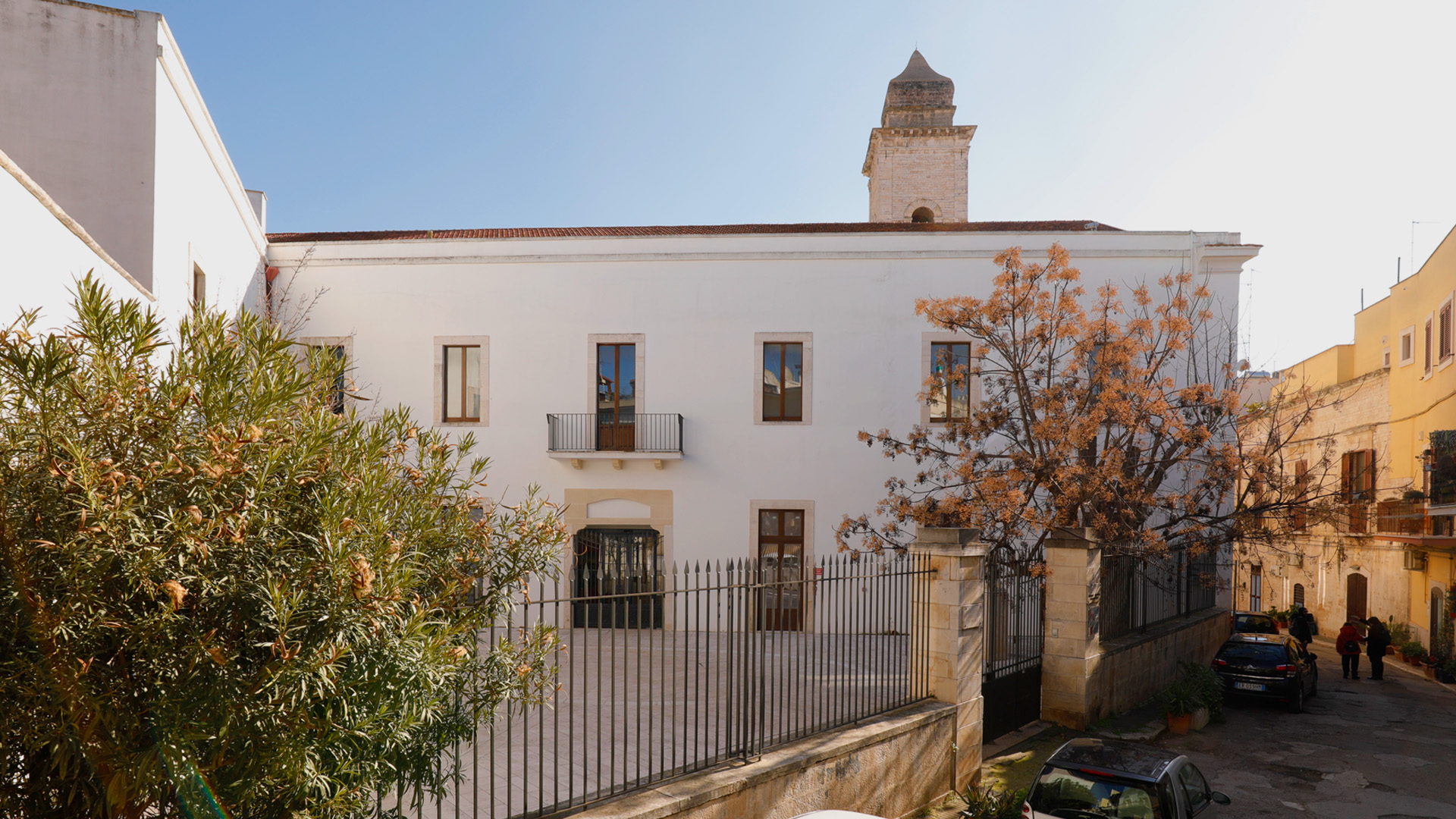
In 1283, Charles I of Anjou granted the Conventual Franciscan Friars a plot of land at the highest point in Bitonto to build their church and monastery. The property, which belonged to the Benedictine Monastery, offered wide open spaces and lush gardens—perfect for welcoming such a significant religious community. By 1291, construction was in full swing, although the church had already been used since 1286. The Bitonto convent quickly became one of the most influential in the region, serving as a center for the study of theology, oratory, and literature.
The dissolution of the order in 1866 marked a significant turning point. In 1885, the Municipality of Bitonto repurposed the building as a school, appreciating its central location, healthy environment, and ample space—ideal for separating male and female classrooms. The school remained in operation until 1898, when, following a wave of civil unrest on September 29, the local authorities called in a unit of the Royal Carabinieri, who were stationed inside the school building.
In 1899, part of the convent was officially and permanently transferred to the Military Administration to serve as army barracks. 1905, the barracks were renamed from Saint Francis to Umberto I. During World War I, the building was converted into a military hospital. It returned to educational use in 1920, while the Carabinieri relocated to the Monastery of Saint Peter.
Between the two world wars, the convent housed the 10th Infantry Regiment. One of its most notable commanders was Colonel Pasquale Lomaglio, who in 1943 peacefully negotiated the withdrawal of German troops from Bitonto, preventing violence and possible bloodshed.
1950, the building was returned to the Church, and Bishop Aurelio Marena transformed it into the Interdiocesan Seminary. He also relocated the Diocesan Archives and Library to the same site.
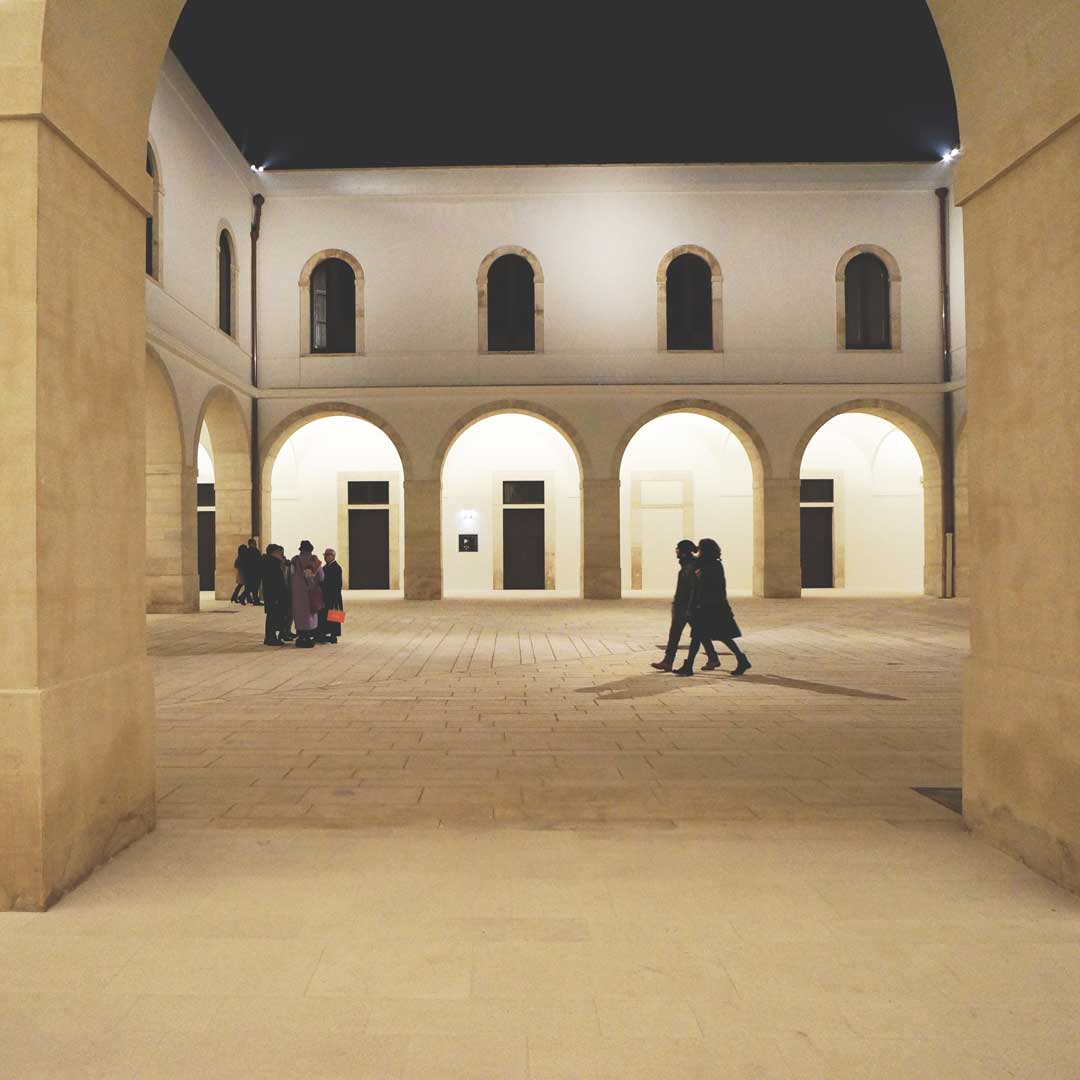
The architectural complex is organized around two cloisters. The more minor, medieval cloister features pointed arches and is believed to be the original core of the convent—possibly dating back to an earlier Benedictine monastery. The larger, more extensive cloister retains only part of its original design along the church-facing side, where cross-vaulted ceilings can still be seen. In the 18th century, the structure was expanded, and new sail vaults were added along the east and south wings.
Two impressive entrances grace this section of the building. To the south, a 14th-century portal holds a fresco of the Virgin Mary and leads into the church’s sanctuary. To the east, a 1700s portal—decorated with the Planelli family crest—opens into the sacristy, now home to the Diocesan Archives and Library.
The other two sides of the cloister were renovated in the 20th century when the entire complex was officially converted into a seminary.
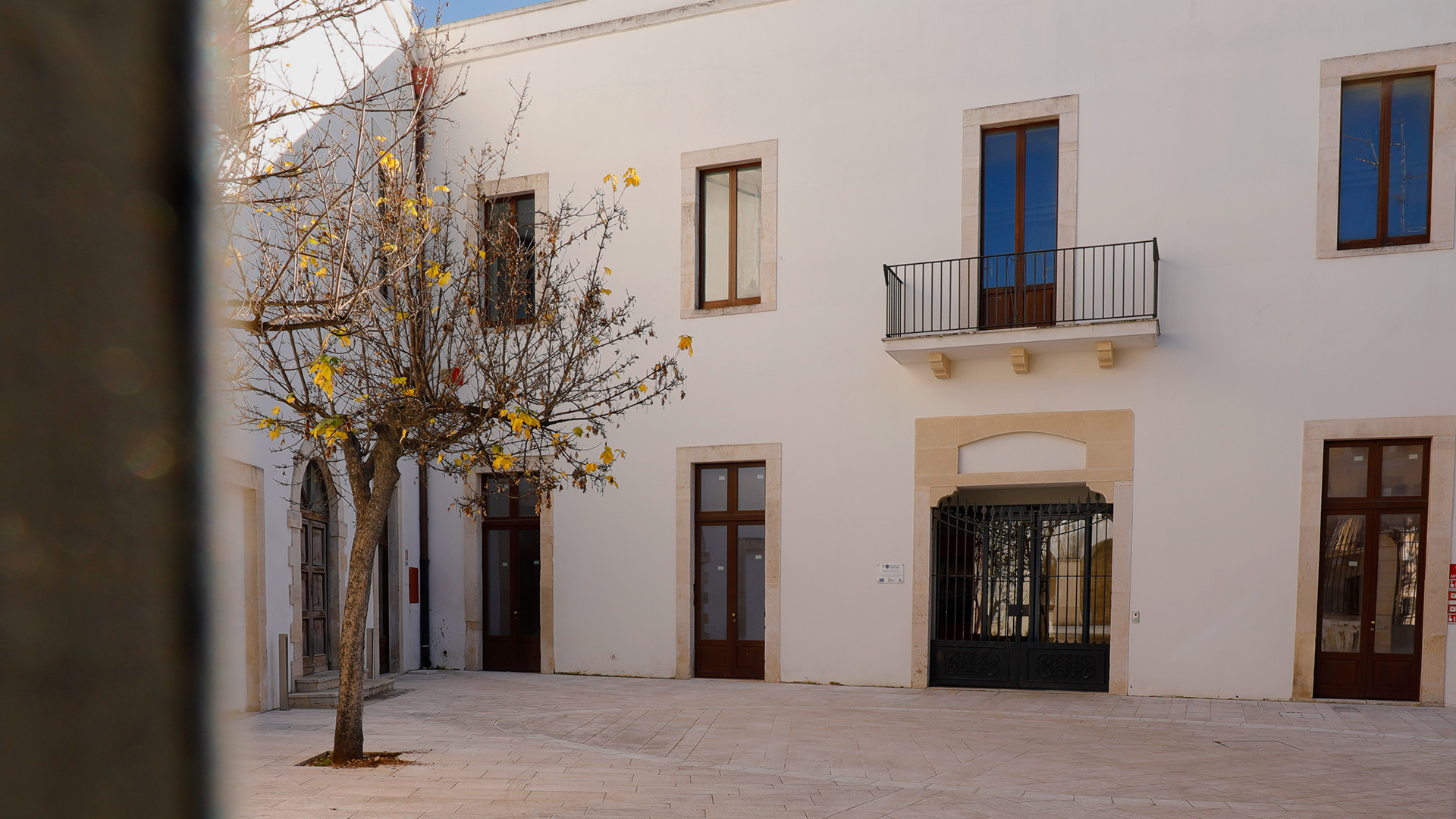
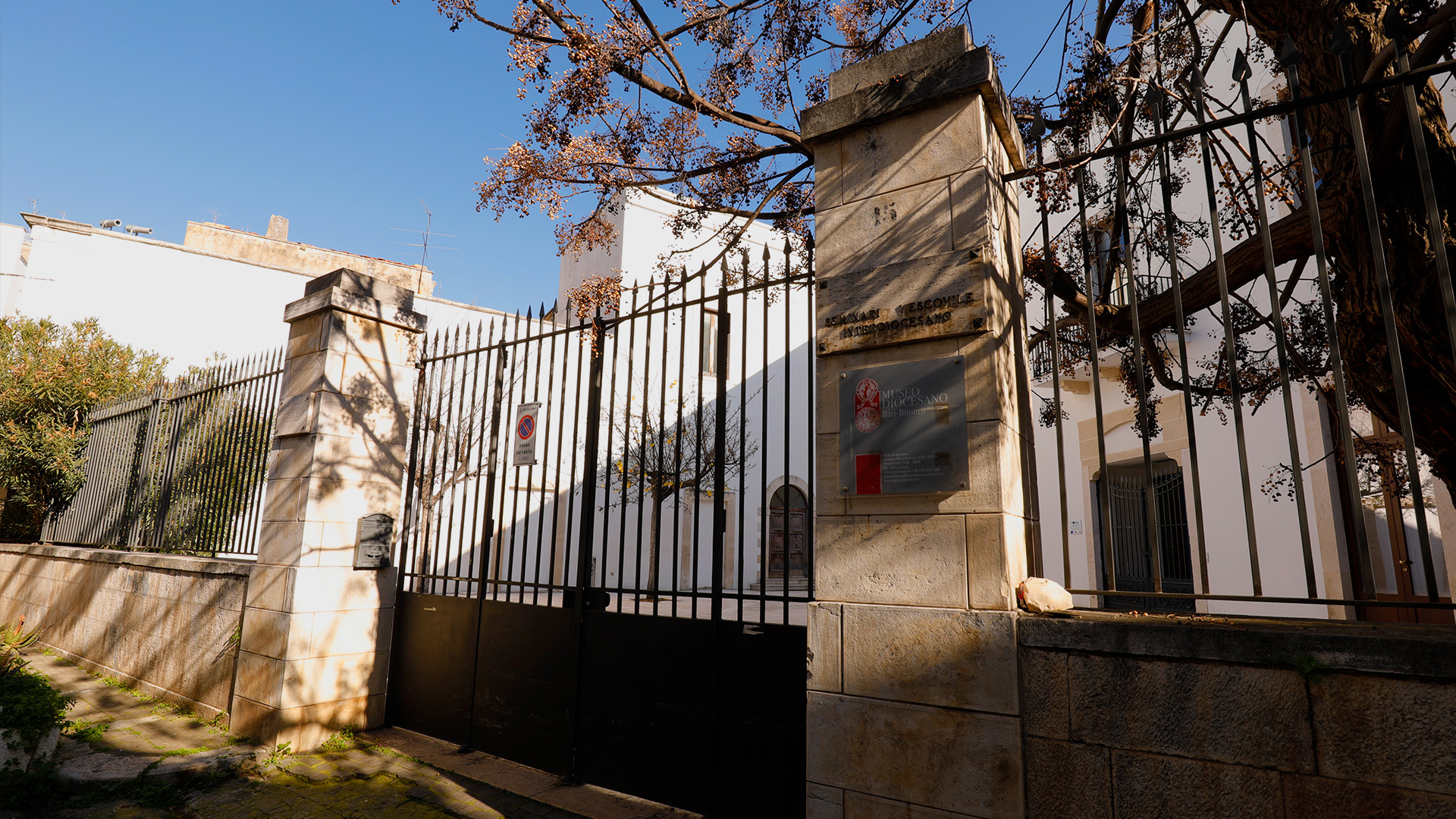
Today, the former convent is home to the Monsignor Aurelio Marena Diocesan Museum—the largest diocesan museum in southern Italy. It is the guardian of Bitonto’s rich religious, cultural, and artistic heritage.

Borgo Racconta is a registered trademark of
BweB – PiccolaGrandeItalia.TV
 English
  Italian
  German