
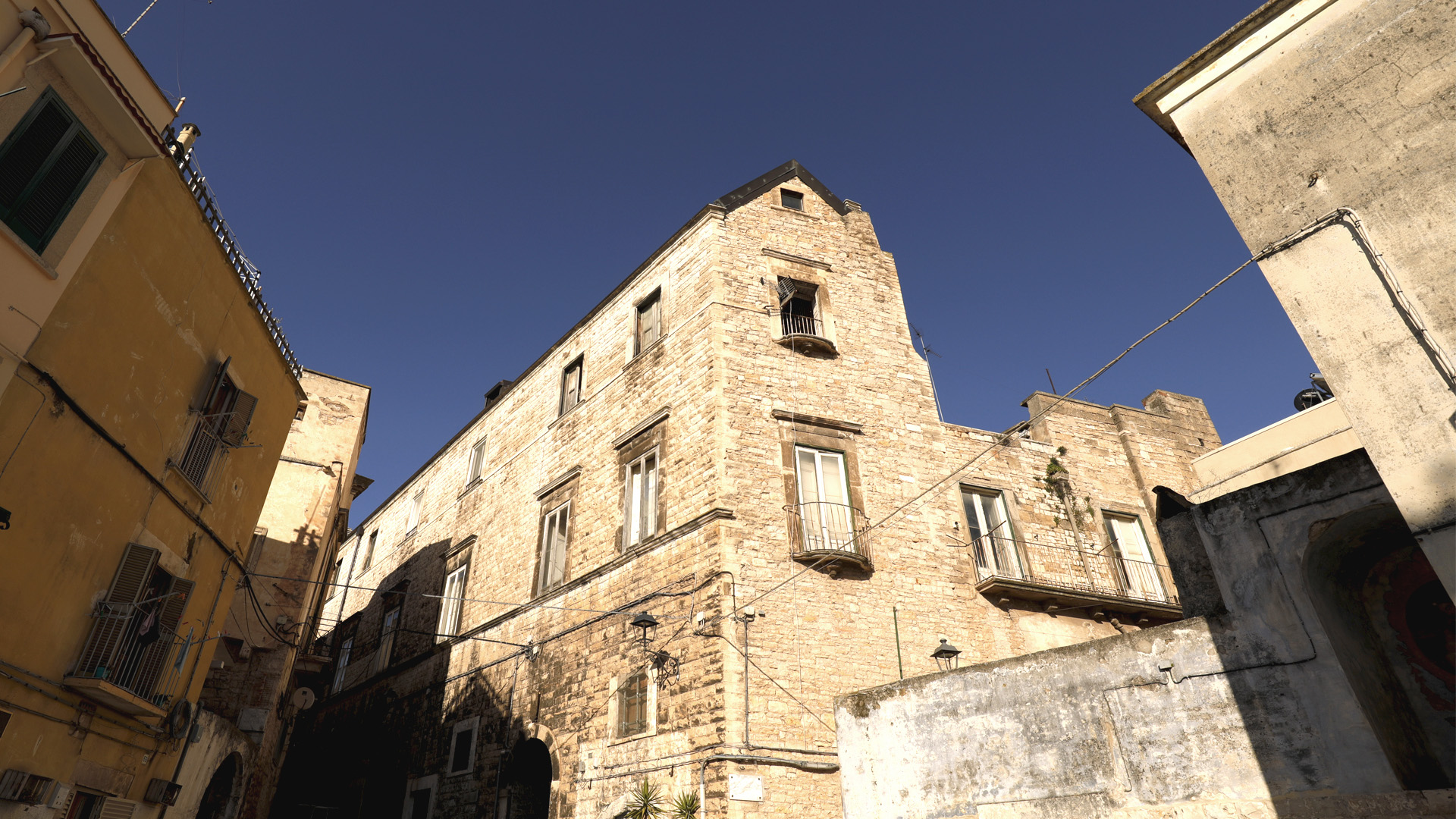
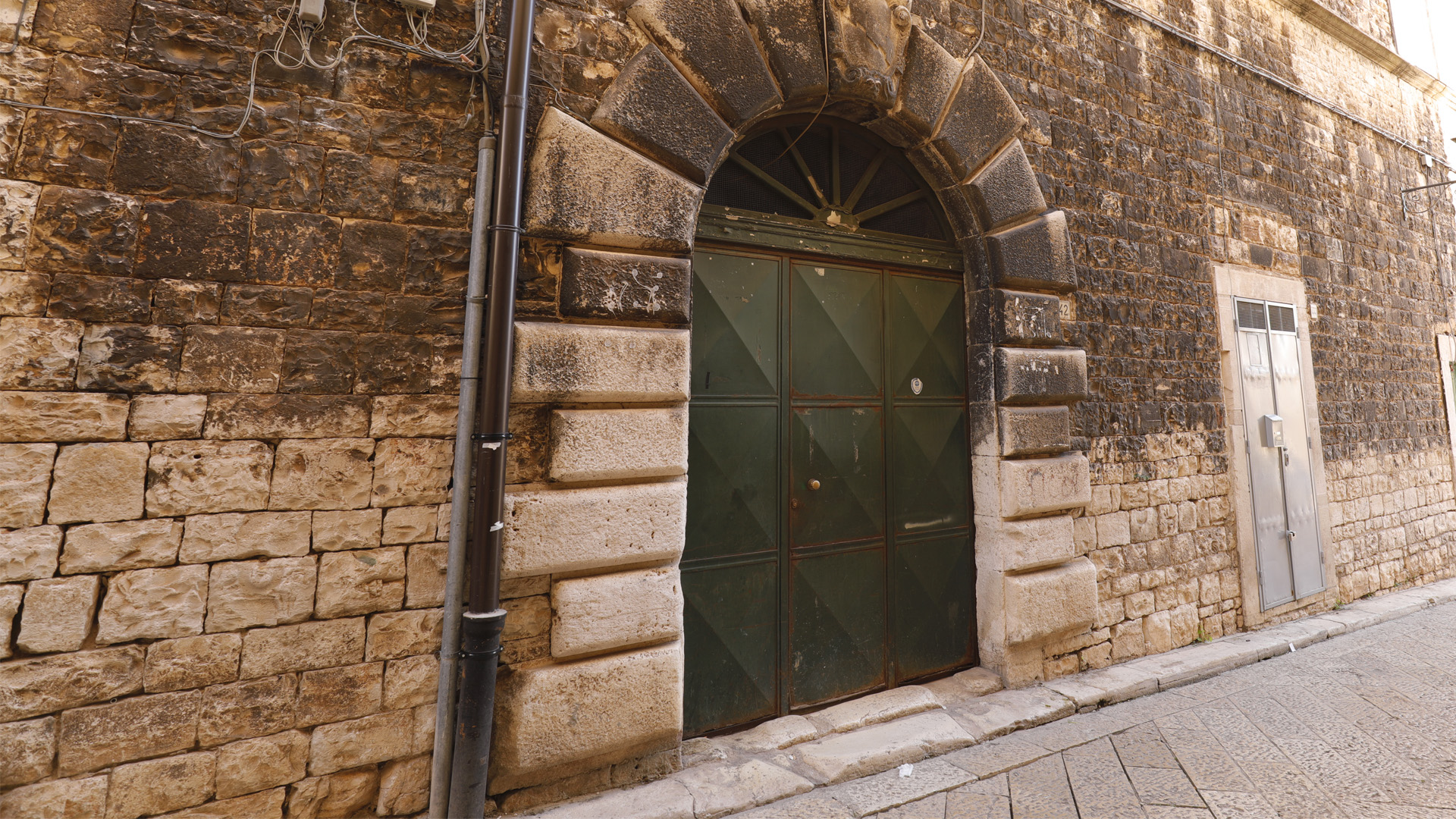
Along Via Ambrosi—an ancient road dating back to classical times—stands the majestic Gentile—Labini—Sylos Palace. Its complex layout results from multiple construction phases layered over preexisting structures. The building is striking for its grand scale and the graceful flow of its architectural lines. One’s eye is immediately drawn to the dark rustication of the limestone, which gives the façade a rich, textured appearance.
The palace’s irregular floor plan reflects the various stages of construction that shaped its evolution. The original structure, completed in 1599, emerged during a period of great renewal for the city. Freed from feudal rule, Bitonto was opening up to trade, culture, and the arts, marking the beginning of a vibrant architectural revival.
In 1613, a significant residence expansion was commissioned, including adding a second floor and a sloped roof, as evidenced by the mansard-style windows at either end.
The façade along Via Ambrosi is built from evenly cut blocks of limestone, with irregular rustication interrupted by a horizontal string course that supports the large windows. The main entrance, a fine example of Renaissance style, features the 17th-century coat of arms of the Labini family carved into the keystone. A bit further down, to the portal's right, stands the Labini Arch—adorned with the family crest—which leads into an ancient courtyard. Here, you’ll find a cluster of houses that preserve the layout of the medieval neighborhood, once part of Bitonto’s historic Jewish quarter during the 12th and 13th centuries.
On the side facing Via San Luca, the stringcourse is interrupted by a prominent balcony. At the corner of the building, on the upper floor, there’s a 17th-century coat of arms framed in a decorative scroll depicting a rampant lion resting on the face of a cherub—the emblem of the Gentile family, the palace’s original owners.
The entrance hall, covered by a ribbed vaulted ceiling, is adorned with carved pinecones—symbols of immortality. An elegant late 16th-century wall-mounted cistern in the inner courtyard adds a note of refinement.
The ground floor, once home to storerooms, stables, and service quarters, now houses apartments and offices.
The building is topped with a traditional double-pitched roof supported by wooden trusses and covered with terracotta tiles.
Some rooms still feature refined Art Nouveau decorations from the 1920s. One of the palace’s most charming features is the small family chapel: its stone altar, painted to resemble marble, reflects both the family’s devotion and the elegant taste of the time.


Borgo Racconta is a registered trademark of
BweB – PiccolaGrandeItalia.TV
 English
  Italian
  German