
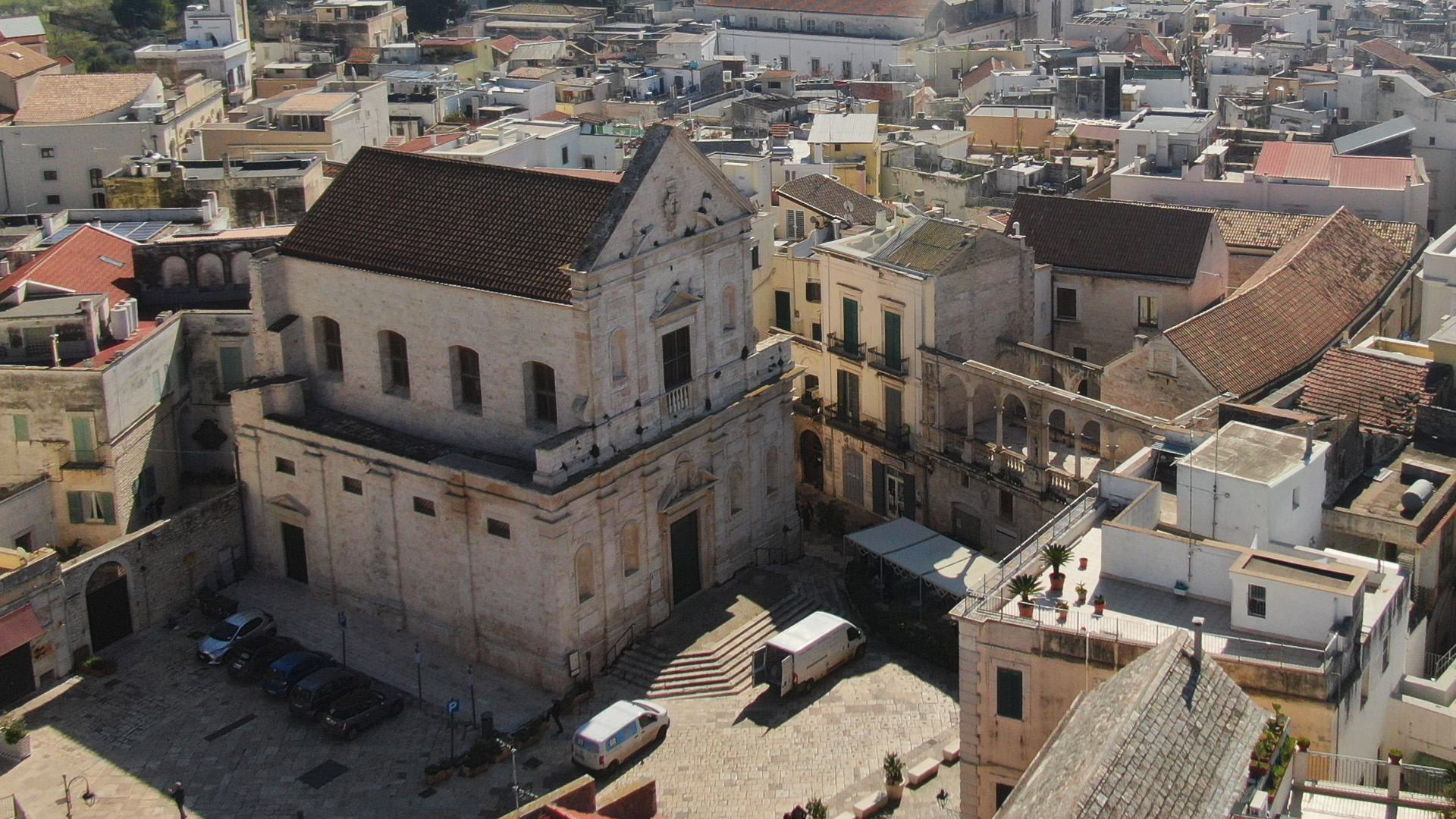
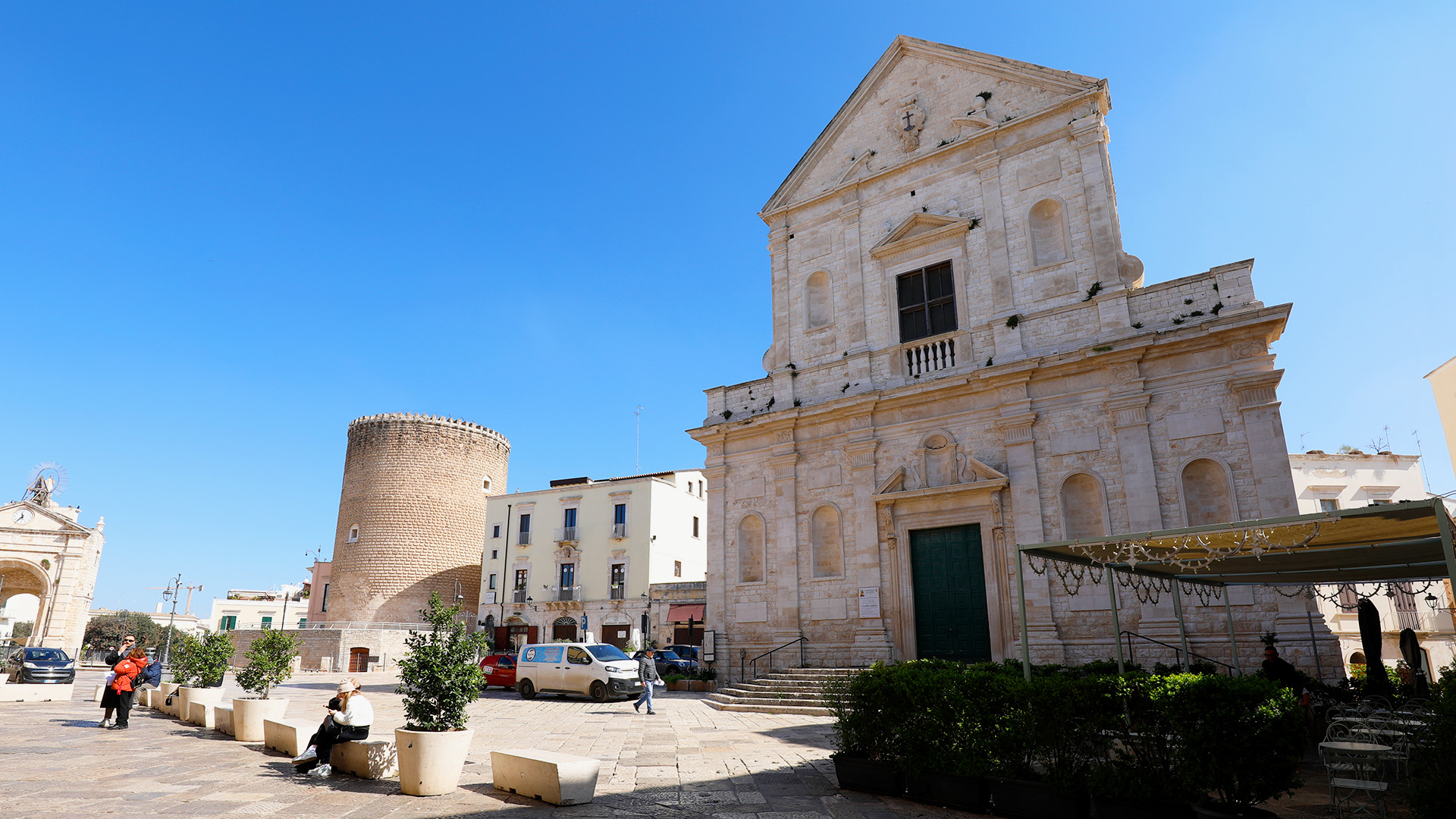
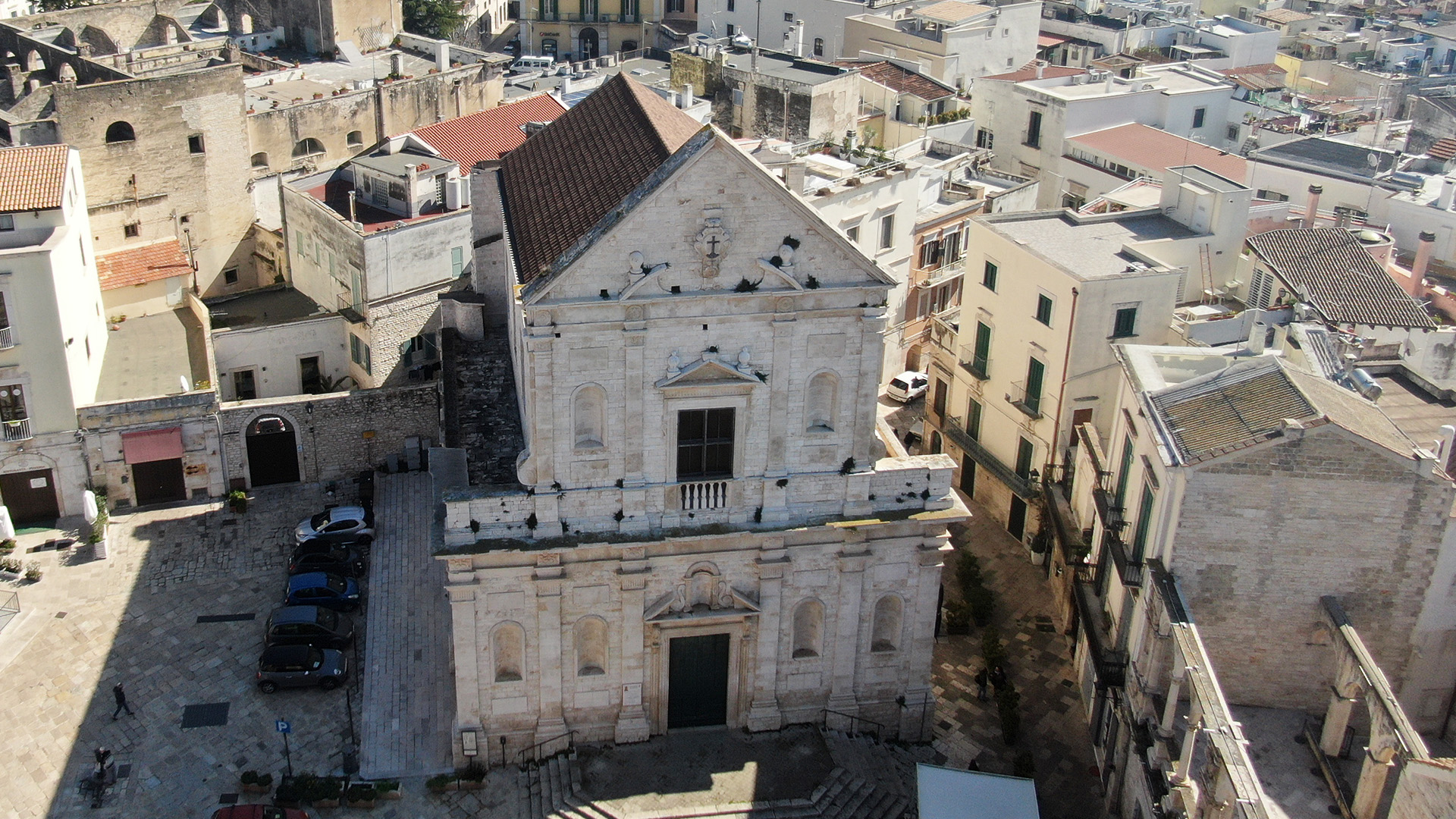
Rising majestically over Cavour Square, the Church of Saint Gaetano stands as a powerful example of Baroque architecture and a testament to the prolonged presence of the Theatine Order in Bitonto. Its construction began on December 6, 1609, with the festive laying of the first stone in front of a cheering crowd. To make space for the new church, the Theatines demolished the old Baptistery of Saint John, once where the church’s staircase begins, and converted nearby homes into a convent. Despite their enthusiasm, construction progressed slowly, and the church was only consecrated in 1730—still unfinished.
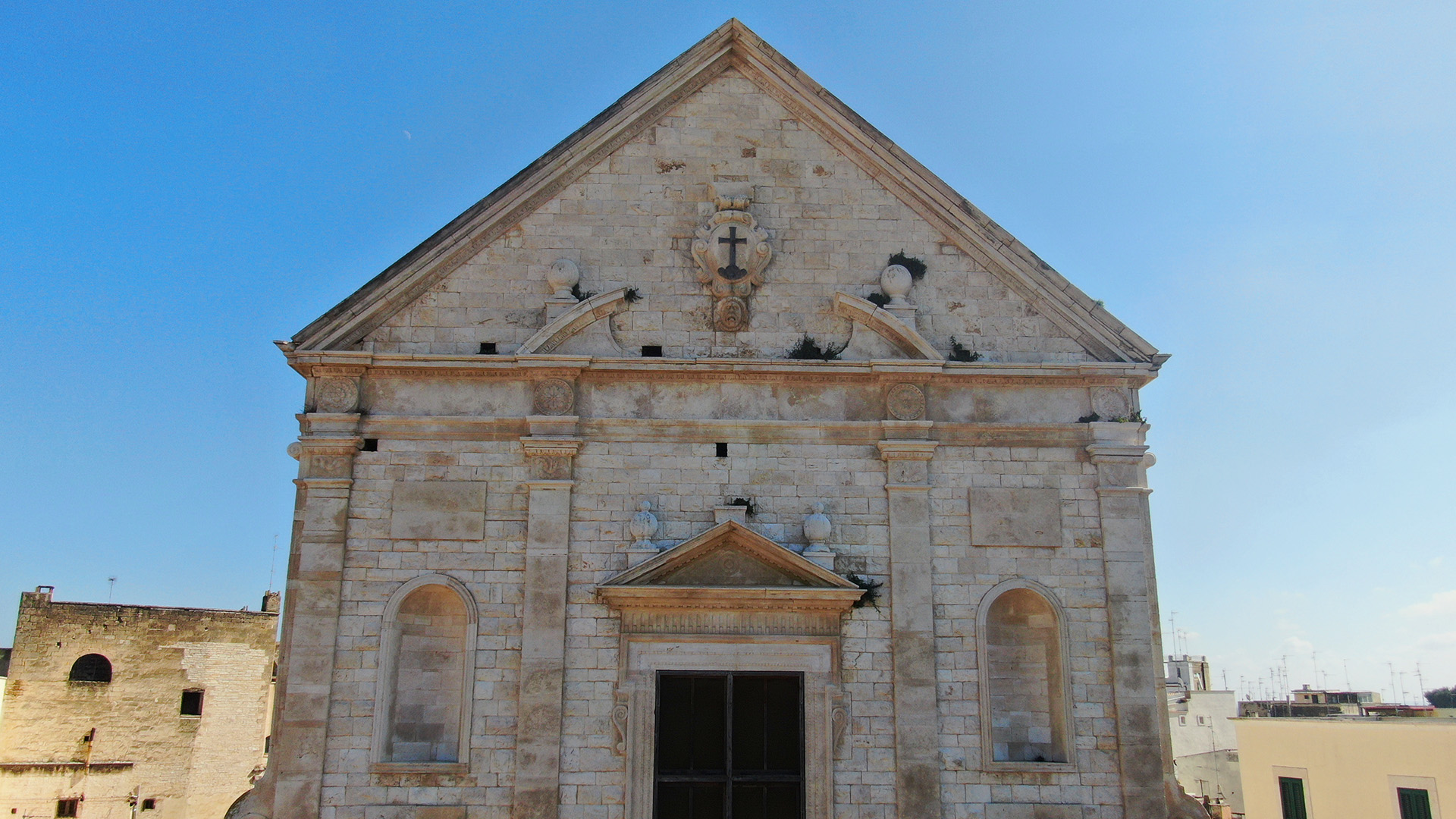
The building features a bold rusticated front, divided into two levels and adorned with pilasters and niches—though the plinths meant to hold statues remain empty. The grand staircase leading up to the church amplifies its vertical thrust, while the triangular pediment adds to its stately presence.
The interior design was inspired by the mother church of the Theatine Order, Sant’Andrea della Valle, in Rome. It features a large rectangular nave divided into two sections by a prominent cornice flanked by interconnected side chapels. The wooden pitched ceiling is richly decorated with scenes from the life of Saint Nicholas, painted by the renowned artist Carlo Rosa (1613–1678). The central panel depicts The Glory of Saints Nicholas, Gaetano, and Andrew of Avellino, paying homage to the Theatines’ deep spiritual tradition.
At the far end of the church, a semicircular apse rises above a series of side chapels. The first chapel on the right, owned by the Sylos-Sersale family, is particularly notable for its Baroque altar carved in Lecce stone and a precious Mannerist painting of the Nativity of the Virgin.
On the left side, you’ll find the chapels once dedicated to Saint Joseph and Anne's relics, now honoring the Sacred Heart of Jesus and Our Lady of Sorrows. Along the walls, marble plaques with angels and scrollwork honor the devotion of local noble families.
Beyond their religious role, the Theatines played a key part in community life: They offered spiritual care, helped the sick, trained clergy, and educated the nobility. They also founded an oratory and a Pious Fund for the Dead—known as the Monte dei Morti—to support prayers for the souls of the departed. Through their mission, they spread the veneration of Saint Andrew of Avellino and Blessed Gaetano, who inspired their spiritual and social outreach.


Borgo Racconta is a registered trademark of
BweB – PiccolaGrandeItalia.TV
 English
  Italian
  German