
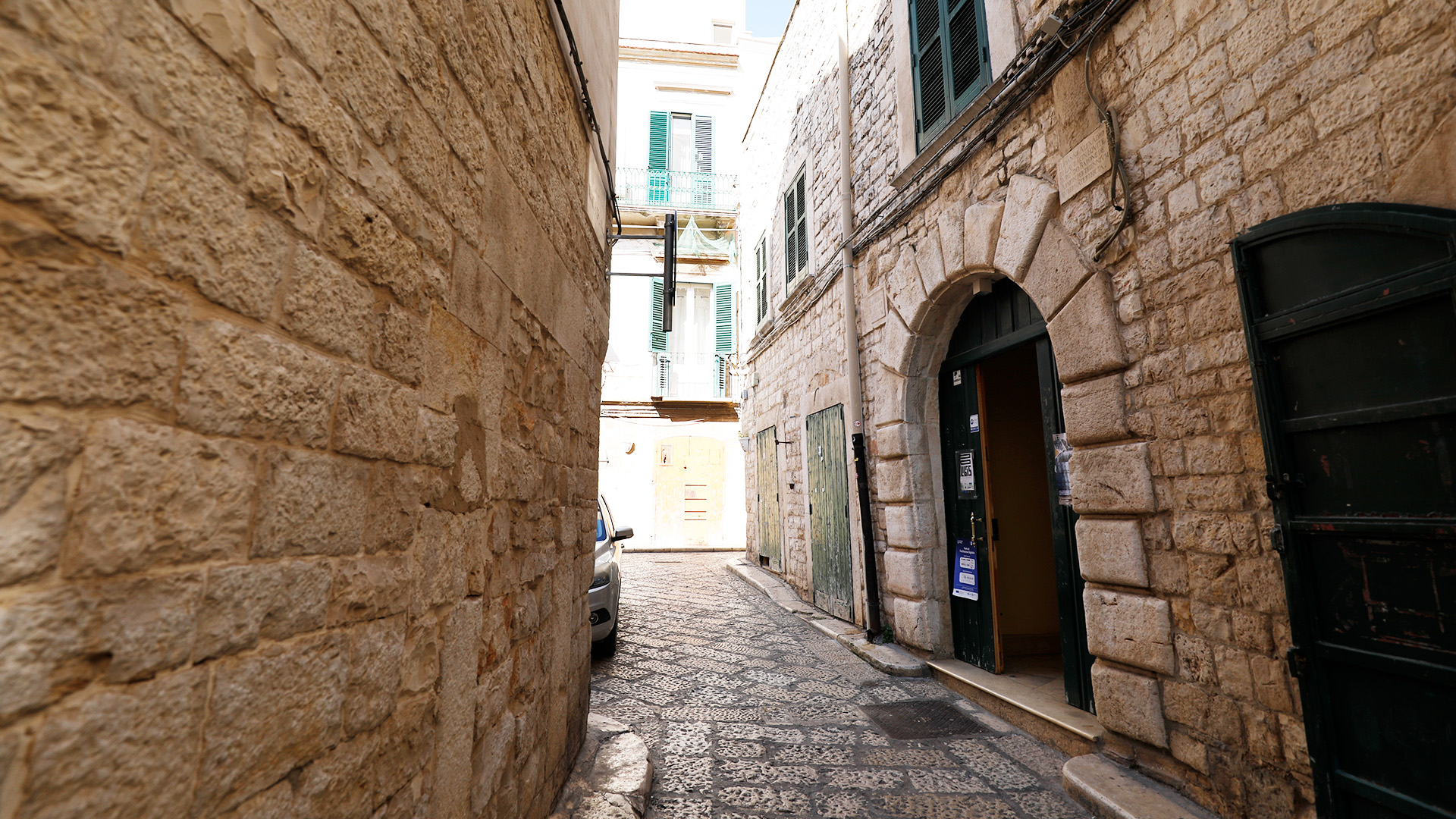
For over two centuries, this historic building served as the residence of royal governors—many of whom left traces of their presence in inscriptions still visible both outside and inside the structure. The façade, marked by rustic stonework, likely dates back to the 15th century and was modified in the 16th, as evidenced by the two larger windows with projecting sills to the left of the entrance. In contrast, the three more unadorned windows on the right appear to belong to the earlier century.
The main entrance is framed with smooth radial ashlar work, and at its center sits a heavily worn coat of arms, most likely the city’s emblem. Flanking the doorway are plaques bearing inscriptions now eroded by time.
Climbing the staircase that once led to the Royal Court’s chambers, visitors will notice a baroque-style capital base set into the balustrade.
The spacious ground floor opens on the left to the governor’s private residence and on the right to the former courtroom, once used for administering justice.
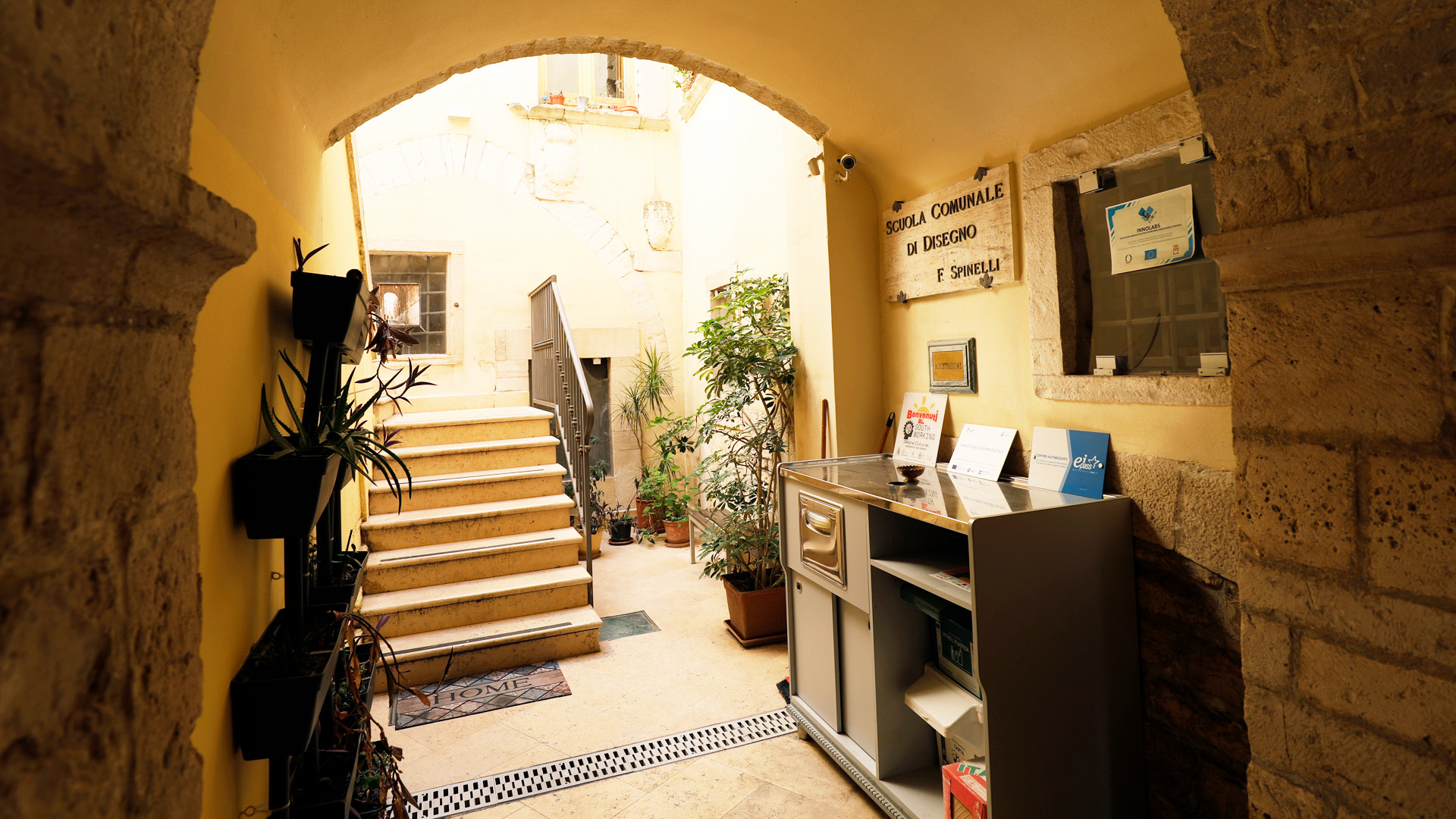
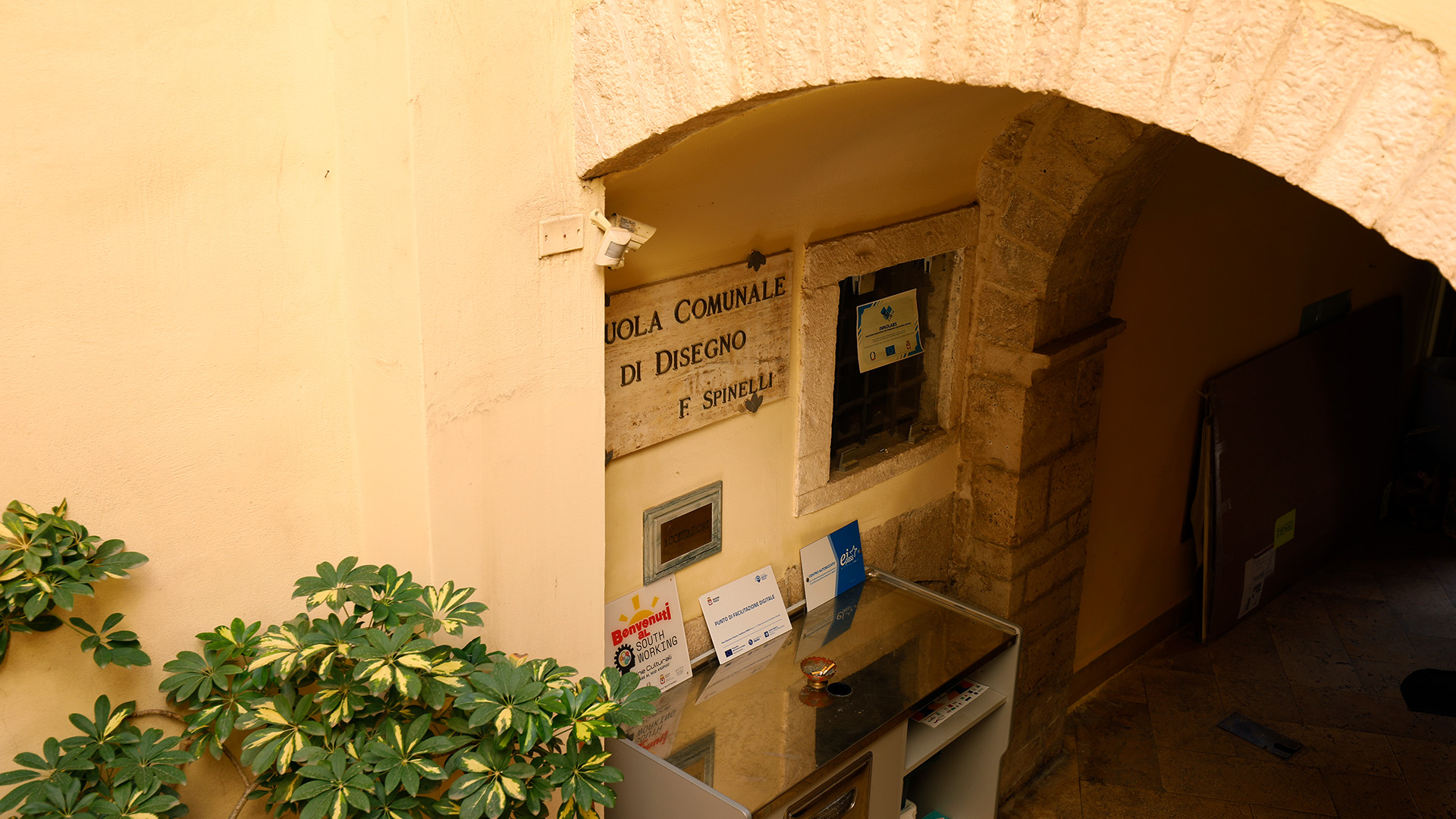
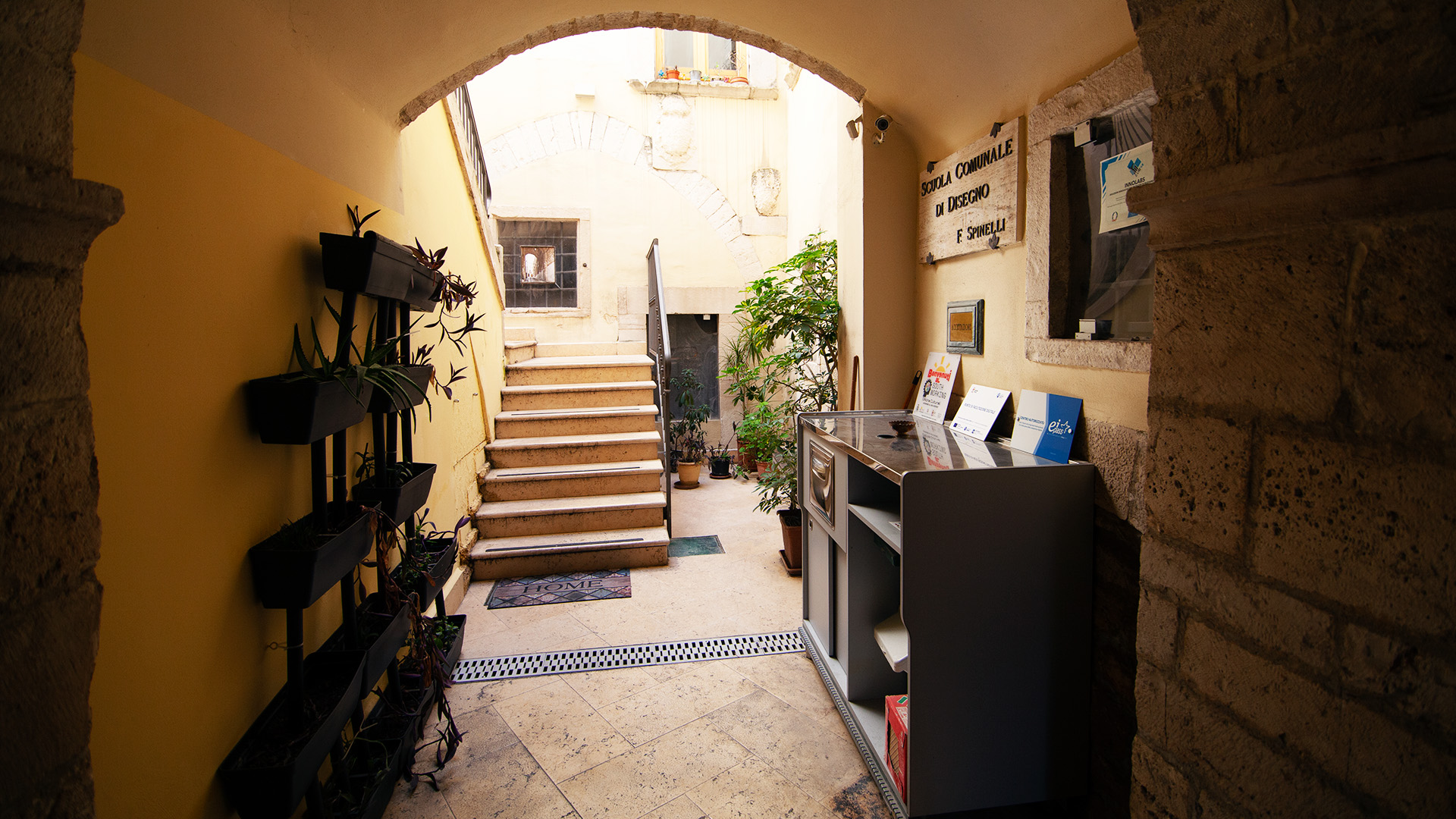
The building was later repurposed as a district jail after its use as a royal courthouse. In 1871, it became the home of the Municipal Evening School of Drawing, aimed at training local artisans, stonemasons, and woodworkers. The school’s first director was Francesco Spinelli, commemorated by a plaque in the entrance courtyard. The institution earned recognition at national and international exhibitions, with students awarded in Milan, Turin, and Paris.
Since 2010, the former Royal Court building has been transformed into a public space for youth engagement, culture, and environmental programs.

Borgo Racconta is a registered trademark of
BweB – PiccolaGrandeItalia.TV
 English
  Italian
  German