
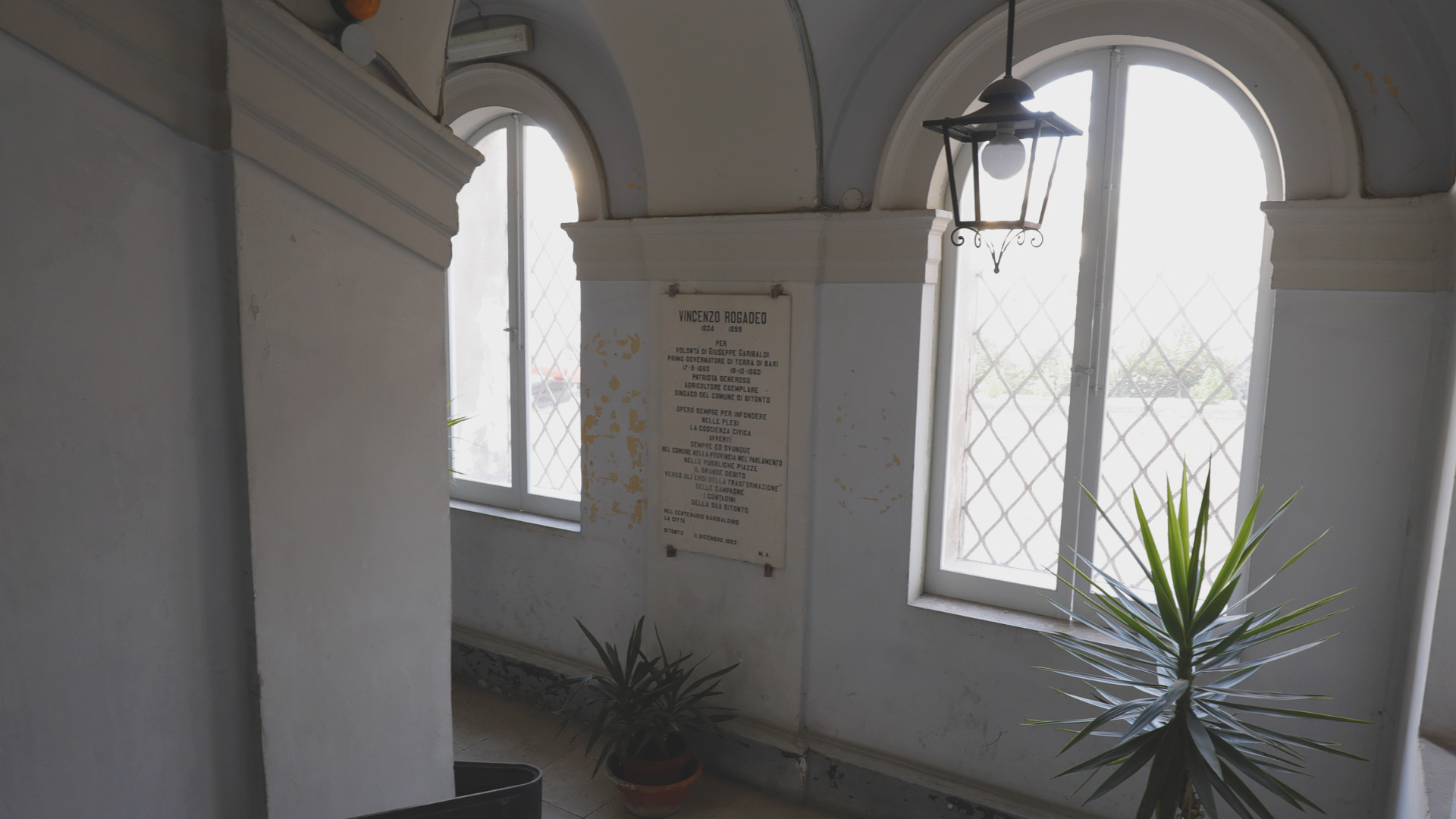
Just past the Arch of the Council of the Nobles and the medieval portal of Saint Anne’s Church, you’ll find Rogadeo Palace—one of the most essential historical residences in Bitonto. Initially built in the medieval period, the building was extensively rebuilt in the second half of the 17th century during the expansion of Via Mercanti. The current façade, however, dates back to the 18th century, having been reconstructed after a fire.
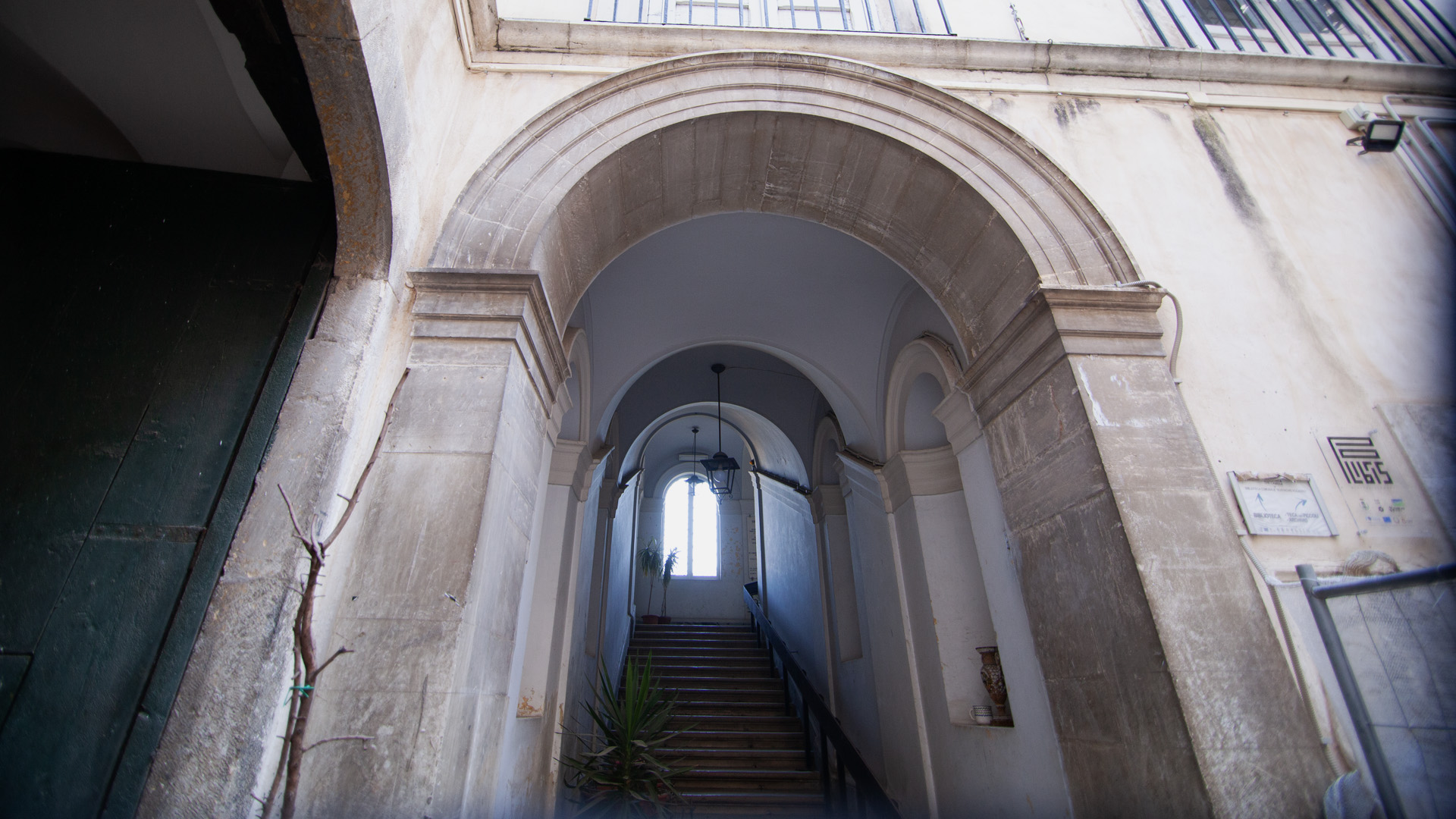
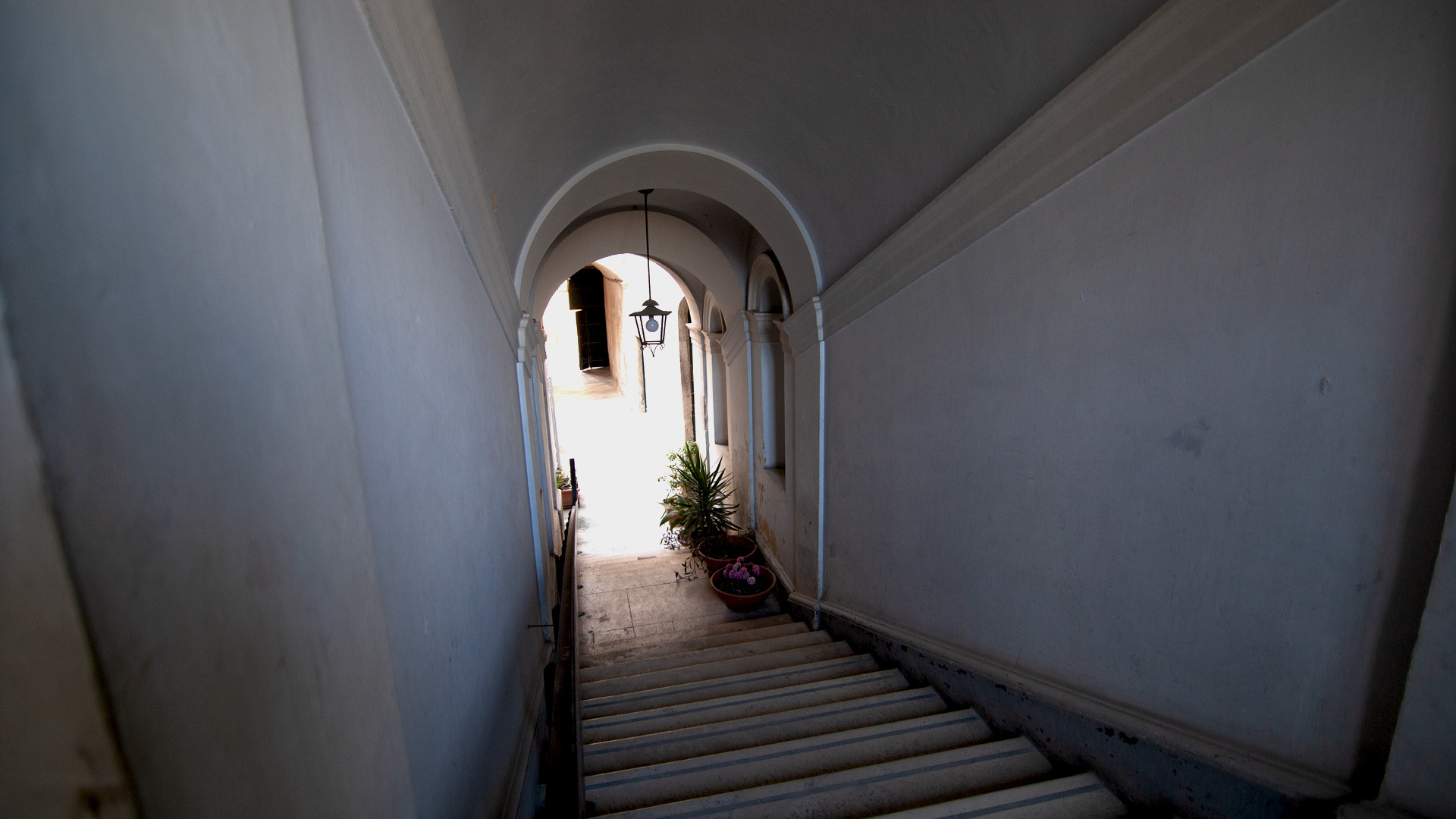
The main entrance features a refined portal framed by rusticated pillars and topped with three massive stone brackets supporting a balcony. The doorway is about a meter and a half from the façade, allowing easy access for carriages and noble vehicles.
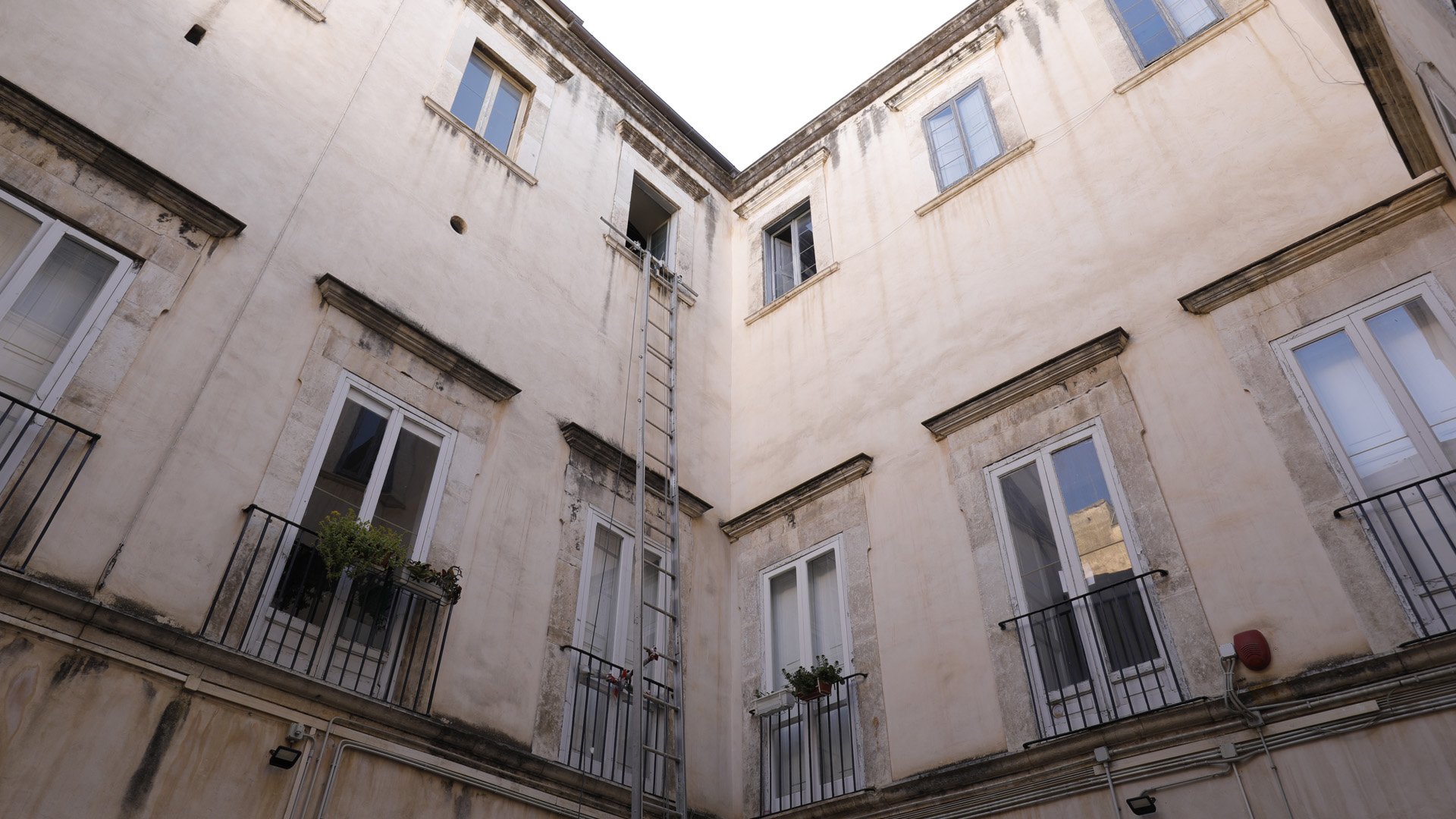
On the courtyard walls, visitors can spot the carved stone crests of the City of Bitonto and the Rogadeo family, along with a high-relief sculpture of Christ in the act of blessing, dating to the early 1600s. On the left-hand side of the courtyard is the secondary entrance to the palace’s private chapel, dedicated to Saint Anne.
The palace's main floor stands out for its curved balconies and windows crowned by pagoda-style pediments. With more straightforward openings, the upper floor once housed the servants' quarters. At the rear, the building opens onto a large private garden. On Santa Barbara Courtyard, where the original main entrance once stood, a 17th-century Rogadeo family crest is still visible.
In 1966, the ground and first floors of the palace were donated to the city. The main floor was converted into the Civic Library, housing a remarkable book collection that originated from the Rogadeo family’s private library and has grown over time thanks to donations from institutions and private collectors.
The library holds nearly 50,000 volumes today, including parchment documents, manuscripts, and rare books. Among its most treasured items is an illuminated 12th-century Gospel Book—a testament to these walls' extraordinary historical and cultural value.


Borgo Racconta is a registered trademark of
BweB – PiccolaGrandeItalia.TV
 English
  Italian
  German