
The Church of the Annunciation, dedicated to the Blessed Virgin Mary and the confraternity of the same name, was rebuilt in 1741 based on a design by architect Vito Valentino. The reconstruction became necessary due to severe structural damage that, as early as 1731, threatened the stability of the preexisting church located on the same site. In the late 17th century, the building was in poor condition, making the reconstruction unavoidable.
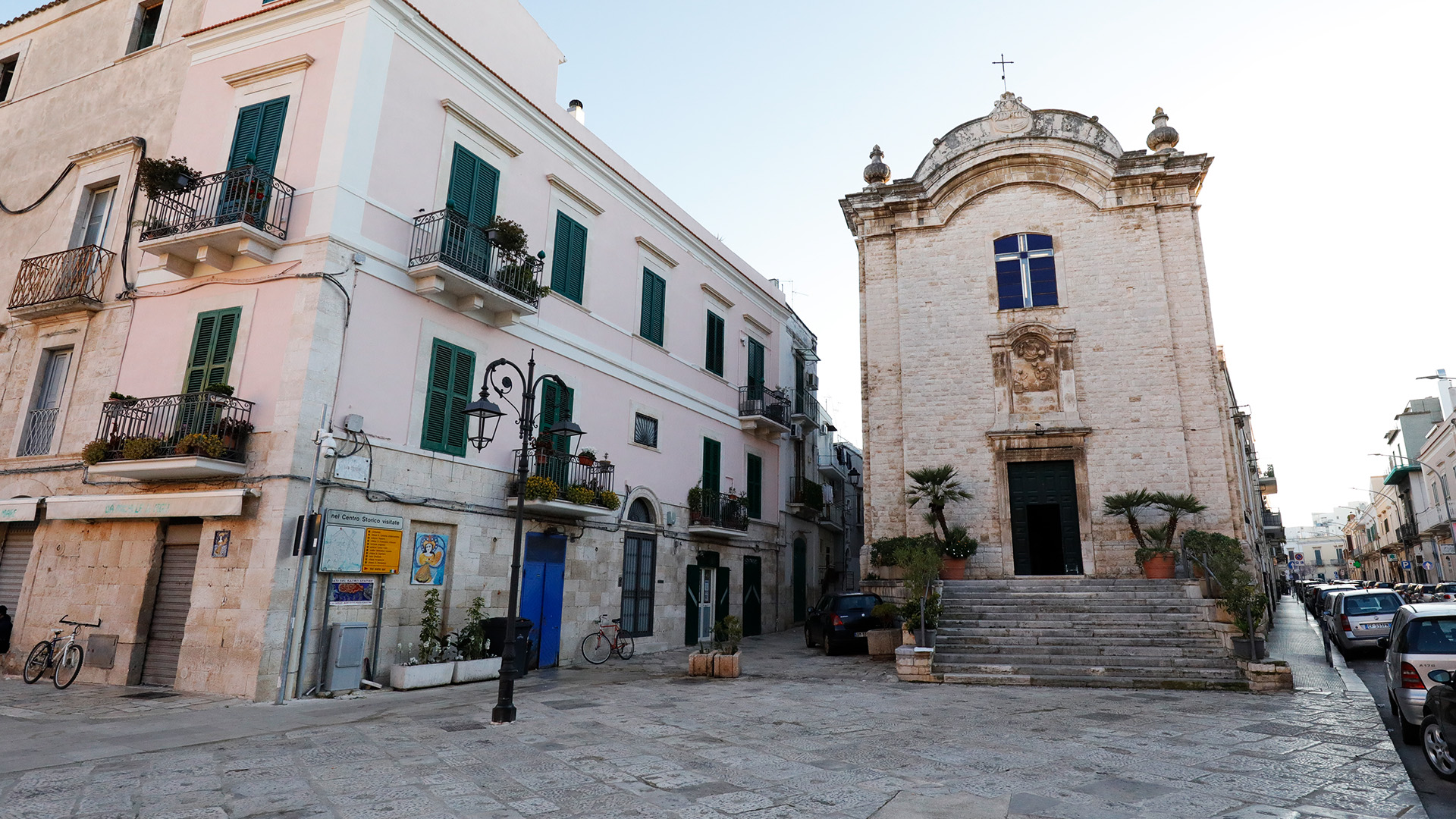
The urban redevelopment at the end of the 19th century led to the demolition of part of the medieval city walls and of the semicircular tower of Saint Augustine, giving the church the commanding perspective it still enjoys today.
The façade is slender and preceded by a wide staircase. The trabeated portal is crowned with a bas-relief depicting the Annunciation and surmounted by a large window that illuminates the interior. The side façades repeat the same rustic ashlar motif and feature oval windows that allow light into the internal bays. To the right rises a bell gable, while on the left, the former side entrance—now sealed—is still visible.
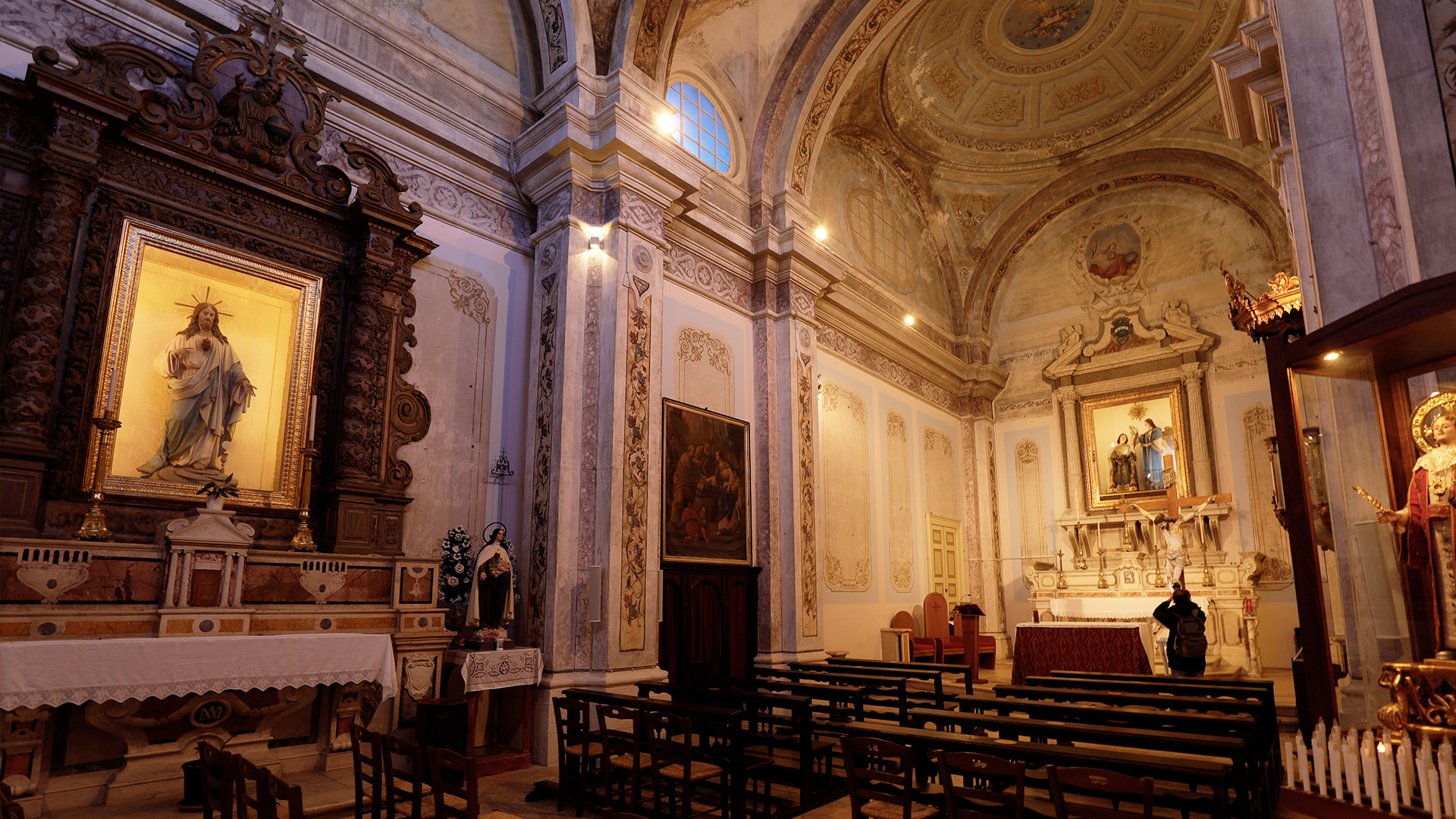
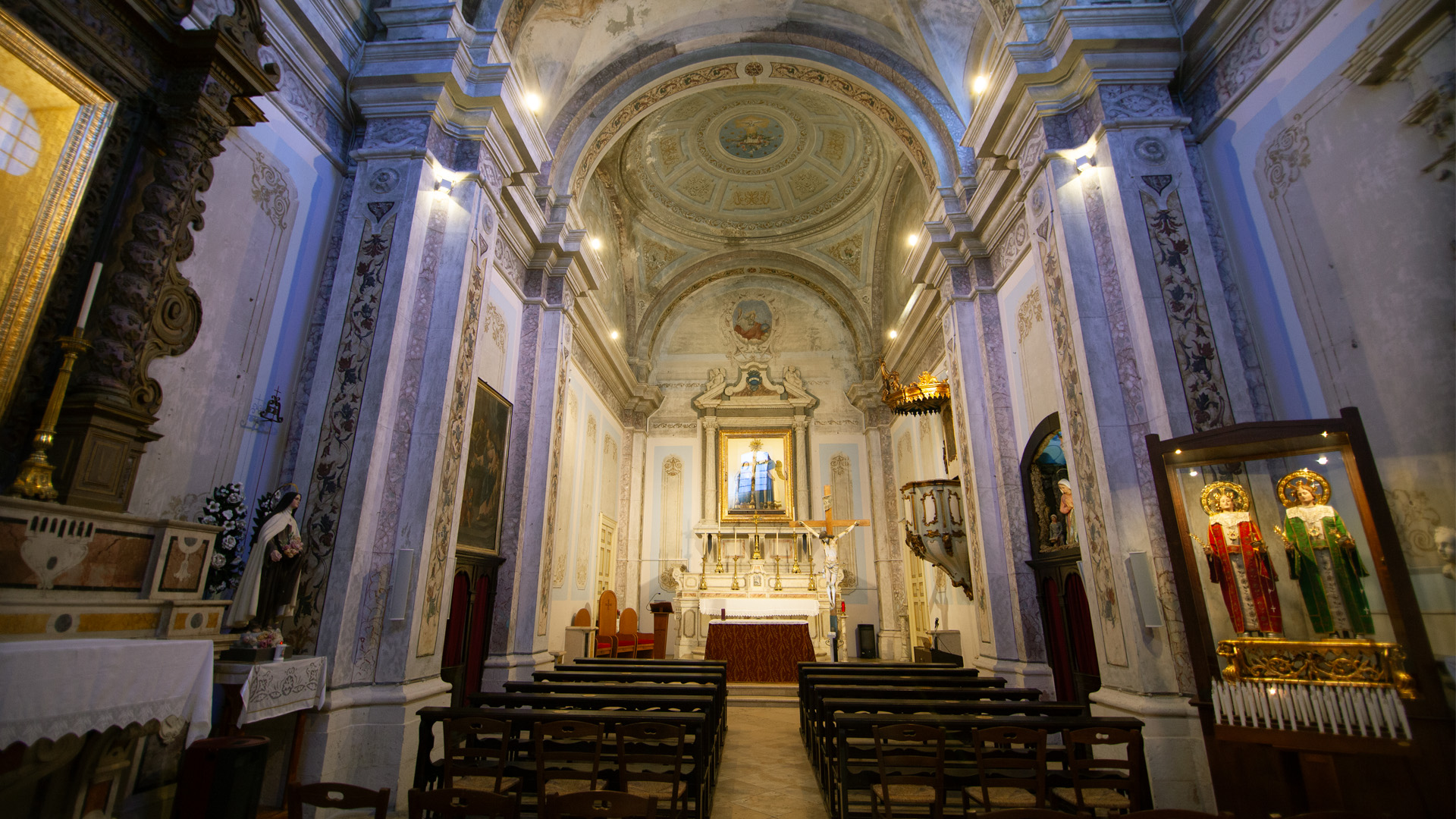
The interior consists of a rectangular nave covered by domes on pendentives. The presbytery wall hosts a 19th-century altar made of faux-marble stone, decorated with composite capitals that support a broken pediment. On the left side stands the Altar of the Annunciation, today dedicated to the Sacred Heart of Jesus. A 17th-century wooden sculptural group, a refined example of Baroque wood carving, surmounts its 19th-century mensa. The ensemble features twisted columns and an entablature topped with a blessing Eternal Father. The tabernacle was initially intended to house a papier-mâché statue of the Sacred Heart of Jesus, attributed to Giuseppe Manzo, a celebrated sculptor from Lecce active in the first half of the 20th century. Flanking the statue are two other papier-mâché works: Saint Rita and Saint Anthony of Padua.
In front of the wooden altar stands the Altar of Our Lady of Sorrows, made between the late 18th and early 19th centuries. Its structure blends late Baroque with Neoclassical influences, revealing the stylistic transition between the two periods. Inside the central niche is a papier-mâché sculpture dating to the 19th–20th century.
The central dome’s painted decoration depicts the Coronation of the Virgin. At the center, the Trinity—Christ, God the Father, and the Holy Spirit—blesses the Virgin, whose angels crown. Two processions complete the scene: on the left, the Apostles led by Saint Paul, followed by the Archangel Michael and a choir of angelic singers; on the right, the Holy Women led by Mary Magdalene, followed by the Archangel of Holy Faith and a host of angel musicians. The pendentives portray the four Evangelists—Mark, Luke, Matthew, and John.
The presbytery vault is adorned with coffering and grotesques and features an illusionistic oculus from which the Holy Spirit radiates in the form of a dove. This decoration, with its clean and orderly lines, reflects the Neoclassical taste and likely dates to the late 18th and early 19th centuries. The pendentives feature four symbolic flowers of Christian devotion: the lily, the rose, the citron, and the wildflower.
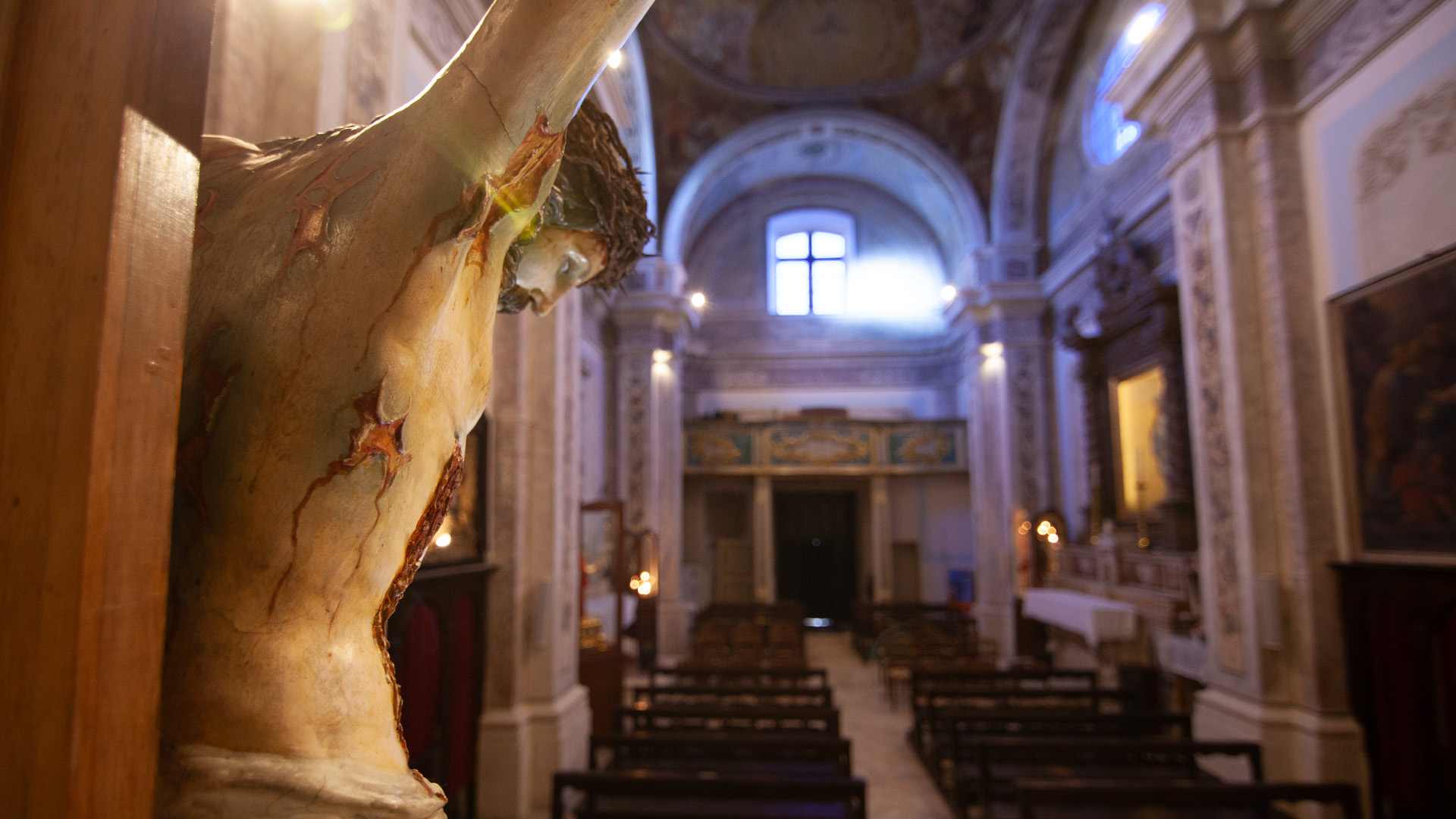
On the counter-façade, above the entrance, is a wooden choir loft carved by local artisans in the early 18th century. Its decorative style aligns with that of the pulpit near the presbytery, which also dates to the 17th century and is adorned with gilded accents and chiaroscuro detailing. On the back of the pulpit, a depiction of the Holy Family was painted in the same period.

Borgo Racconta is a registered trademark of
BweB – PiccolaGrandeItalia.TV
 English
  Italian
  German