
Ventafridda Palace reflects the rich and multifaceted personality of Francesco Ventafridda (1844–1895), an eclectic figure in Bitonto’s cultural history. He was a musician, musicologist, painter, and photographer—and he left his mark on the building by decorating the entrance hall, creating an elegant and evocative space.
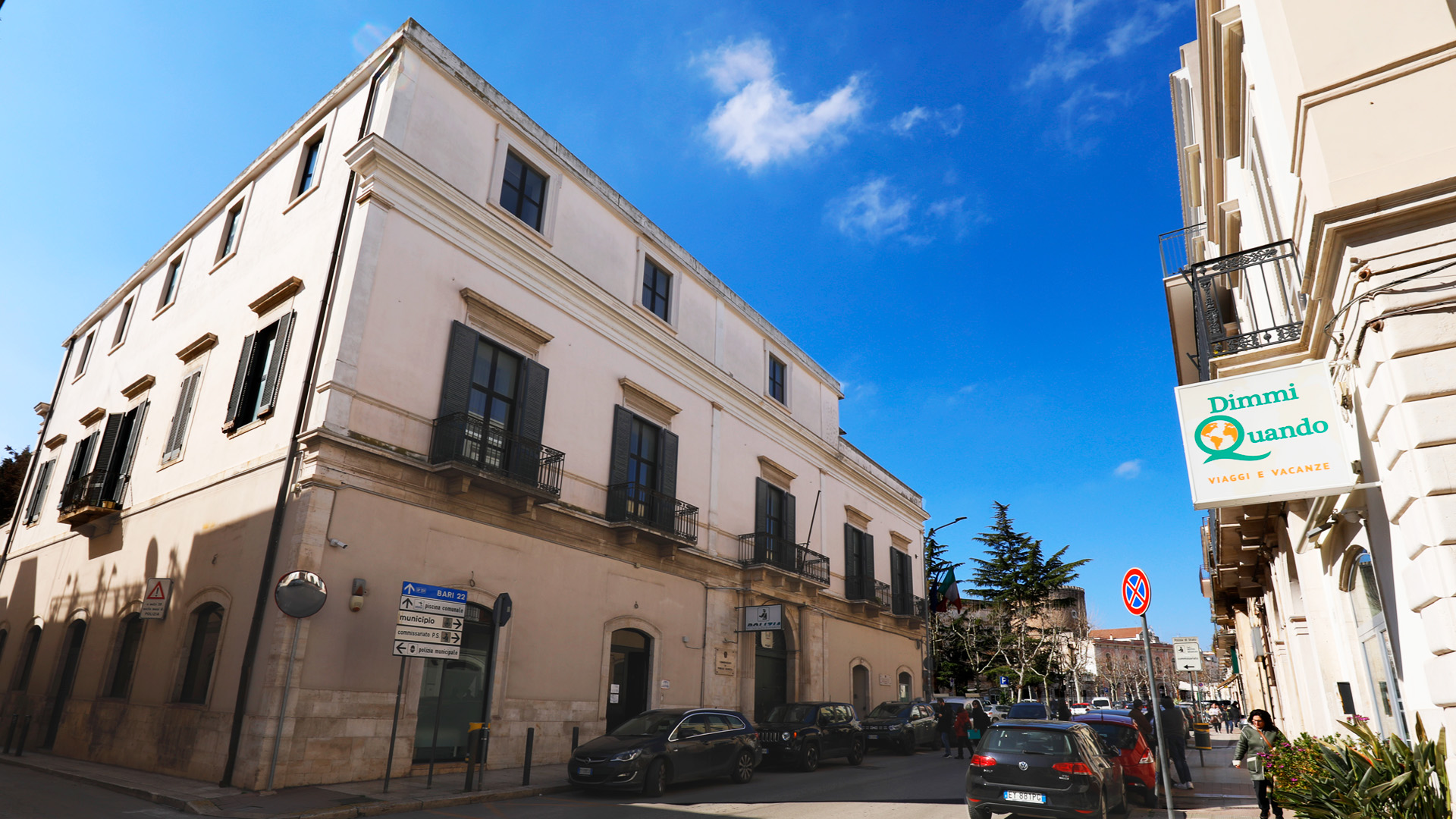
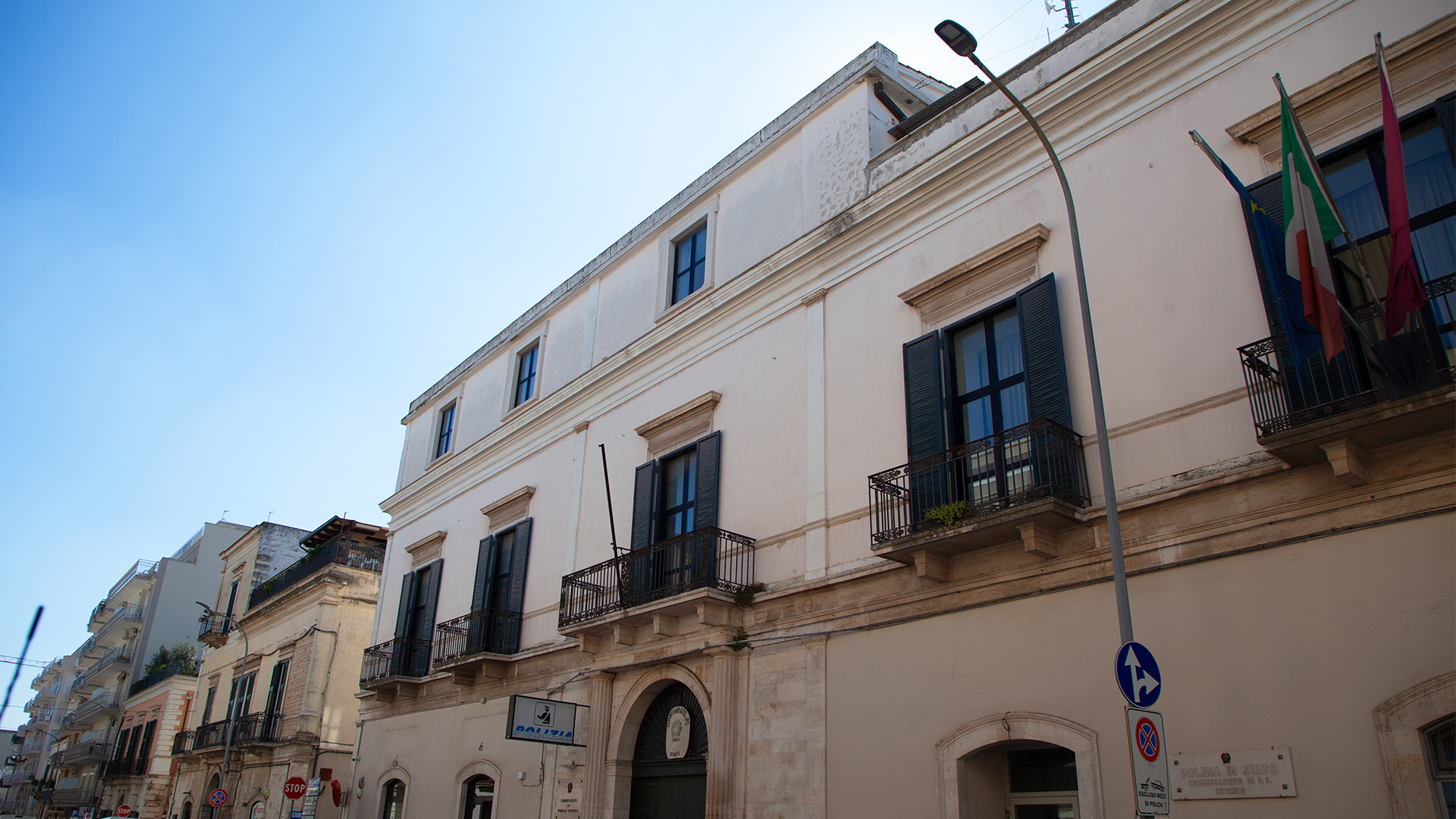
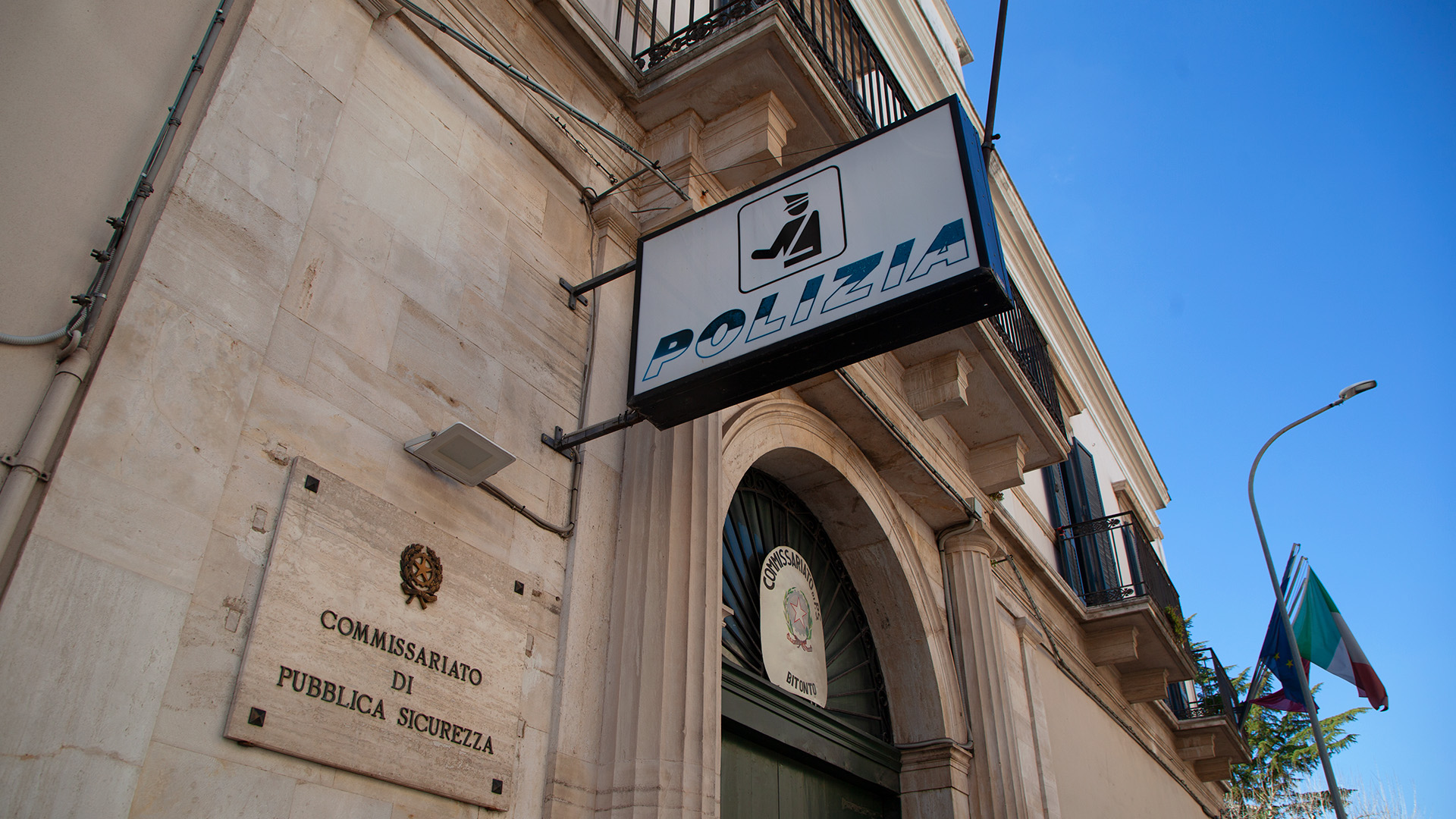
This one-story building has a simple yet refined appearance. Architect Luigi Castellucci designed it with a balanced and orderly layout. The main front is divided into two levels and three sections: a narrower central part and two wider side sections framed by pilasters. The large central doorway on the ground floor is topped by a round arch and flanked by two elegant Doric-style half-columns. These are framed by vertical stone strips, a design repeated on the upper floor to enclose the central window, perfectly aligned with the main entrance.
The side of the building facing Marconi Square houses former storage spaces, a sign of the structure’s dual function—both commercial and residential. The doors here feature low arches and stone jambs, typical of the building’s original merchant use. The windows are plain and undecorated, topped by minimalist frames. On the front, the balconies are more prominent and supported by solid stone brackets, while those overlooking the square are more modest and discreet.
While the exterior may seem reserved, the palace reveals its true character inside. The central courtyard opens onto a beautiful staircase inspired by the architect Sanfelice, known for his dramatic and harmonious designs. The light color of the stone and the white vaulted ceilings enhance the sense of space, creating an airy and solemn atmosphere.
The flooring alternates between rough-hewn stone and large slabs of volcanic rock, producing a refined contrast in texture. The building’s most striking decorative element is found in the ceiling of the entrance hall: the white stuccoes and moldings stand out against the Pompeian red of the frescoed panels. In the four corners of the vault, Ventafridda painted symbolic representations of the four significant arts—painting, sculpture, architecture, and music—each wrapped in laurel branches. It’s a detail that perfectly reflects his eclectic taste and deep artistic sensibility, making Ventafridda one of Bitonto’s most distinguished cultural figures.

Borgo Racconta is a registered trademark of
BweB – PiccolaGrandeItalia.TV
 English
  Italian
  German