
This building stands in the oldest part of Bitonto’s historic center, on a once-occupied site by medieval constructions. Initially, the palace’s façade was hidden behind an intermediate block that housed the city’s mills, built in 1601 and demolished in 1882.
The palace belonged to the Giannone family, an ancient lineage dating back to the 12th century, possibly arriving from Naples in Robert Guiscard's entourage. The original family line ended in the late 15th century, giving rise to a new branch that carried a double surname, marking a fresh chapter in its history.
Construction began in 1694 under the direction of architect Valentino de Valentino, patriarch of a family of master builders and architects from Naples who had relocated to Bitonto. As noted on a plaque beside the main entrance, the palace was completed in 1715.
During construction, the palace was built directly against the apse of the nearby Church of Saint Sylvester, incorporating part of the former cemetery garden and requiring the demolition of the old bell tower. Early 18th-century floor plans reveal a different original layout, with the staircase positioned farther to the left and the interior organized around large reception rooms in these salons that, in the 17th century, the Academy of the Fervent Minds met—a cultural circle founded by Bishop Carafa to foster philosophical and literary debate.
In 1882, engineer Raffaele Comes, a prominent figure in Bitonto’s eclectic architectural scene and the mind behind several projects in the city’s expanding district, renovated the palace.
The modern plaster on the front conceals much of the building’s original refinement, leaving it almost unnoticed today. To the right of the palace, one can still discern traces of the former Church of Saint Mary of the Stairway, once known as the Old Purgatory. A single lancet window set into the stone wall is a surviving element adapted from the earlier medieval church.
The palace’s original portal was likely demolished during the square's redesign in the mid-19th century. The current entrance is a simple round-arched doorway framed by a rectangular molding and topped by a window. To the right, the balconies interrupt the horizontal string course, creating a visual contrast with the otherwise classical harmony of the façade.
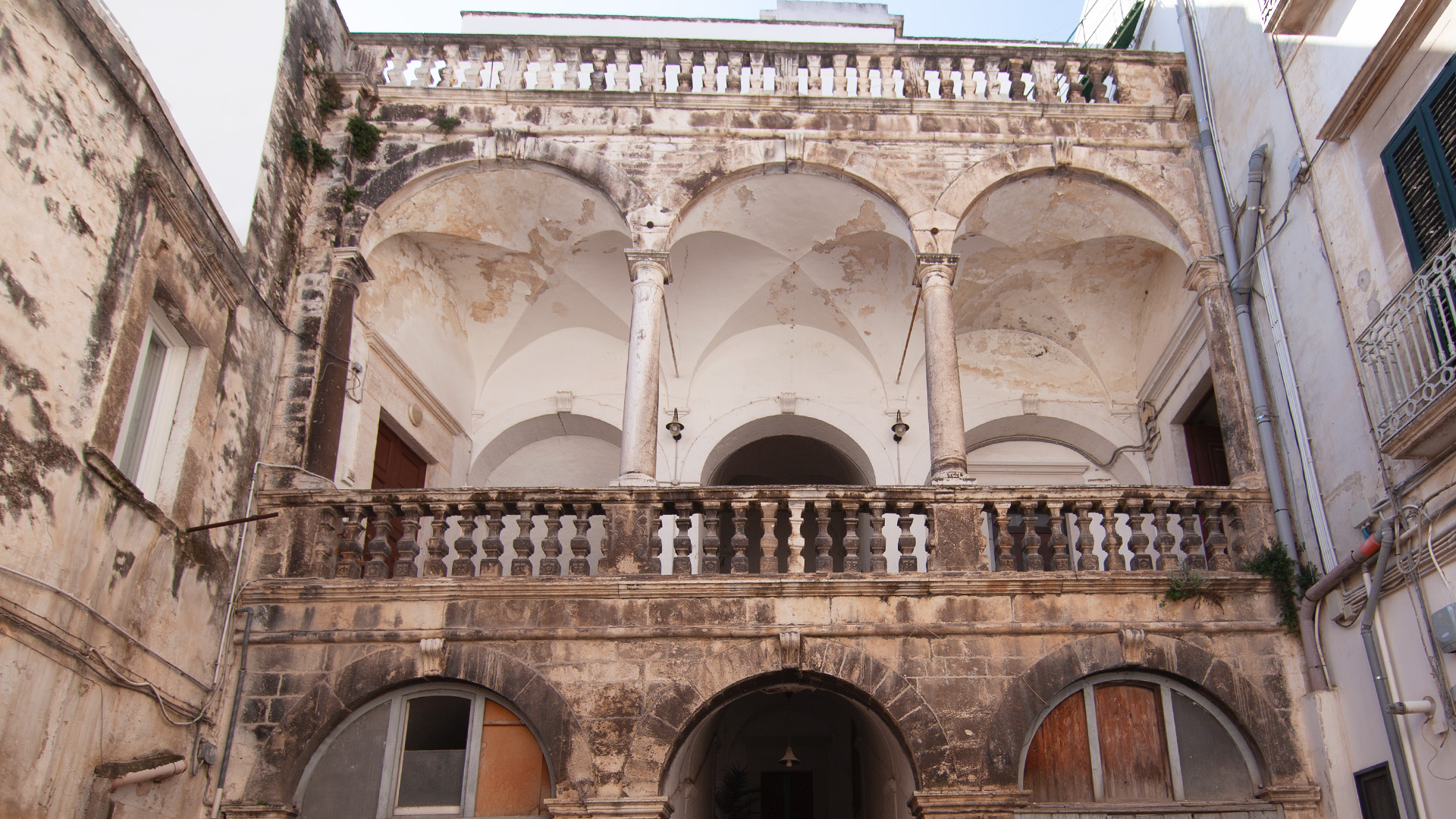
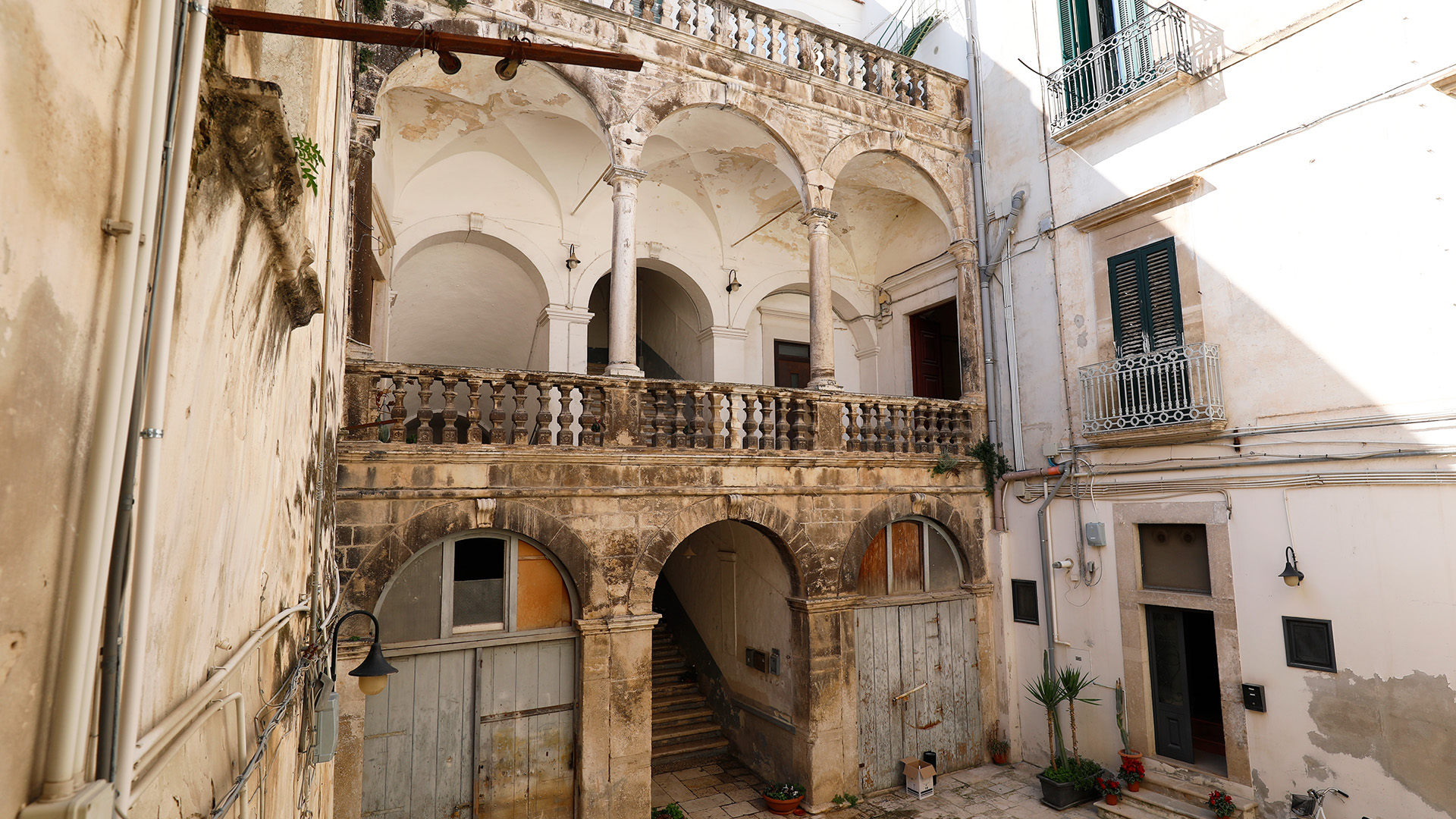
Upon entering the courtyard, visitors encounter a striking architectural display. Three broad, round arches on the ground floor, supported by robust pillars, uphold an elegant upper-floor gallery.
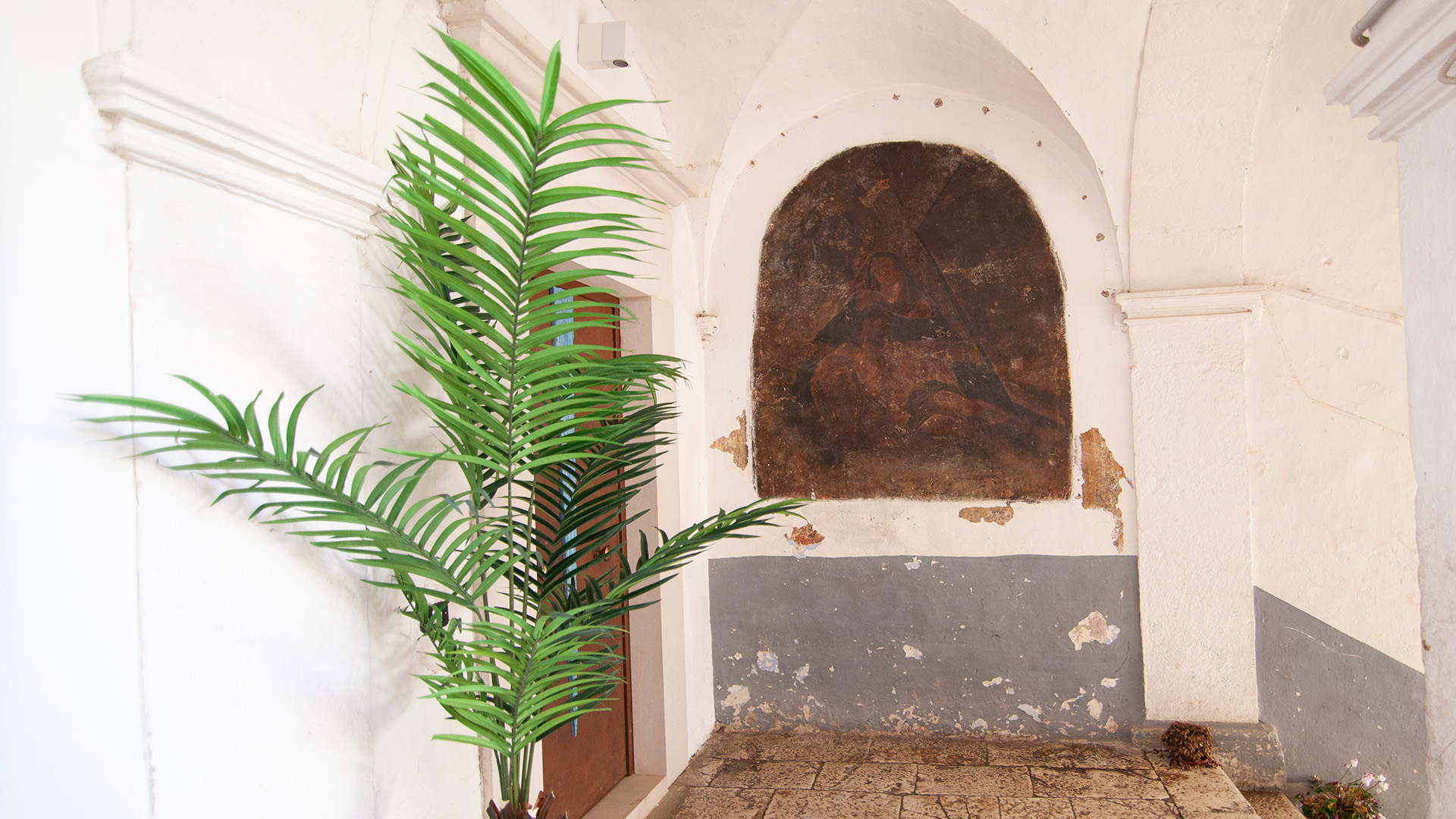
On the first landing, a fresco depicting the Madonna of Mercy, stylistically similar to the one found beneath the vaulted arch of Pinto’s Arch, is on display. Here, the Virgin is shown embracing the body of Christ after the crucifixion.
Part of the fresco has been covered with plaster. Still, it is believed to have also included a depiction of the nobleman Giacomo Giannone Alitti, who was martyred for his Christian faith in Japan in 1663. His image can also be seen in a fresco in an arch near the Sylos-Sersale Palace.
The palace’s appearance dates back to the 1882 renovation, which coincided with the demolition of Mills Road, significantly altering the surrounding urban landscape.


Borgo Racconta is a registered trademark of
BweB – PiccolaGrandeItalia.TV
 English
  Italian
  German