
To the south of the old town once stood a small chapel dedicated to Our Lady of the People, which remained in use until the end of the 16th century. Like many shrines and chapels built outside city walls, it was a place of pilgrimage and heartfelt devotion. Of medieval origin, the chapel housed a fresco of Our Lady of Divine Grace, drawing worshippers from Bitonto and nearby towns.
On this same site, in 1601, a new rural church was erected, preserving the original name.
However, by 1614, the building began suffering from water infiltration, leading to restoration work in 1665.
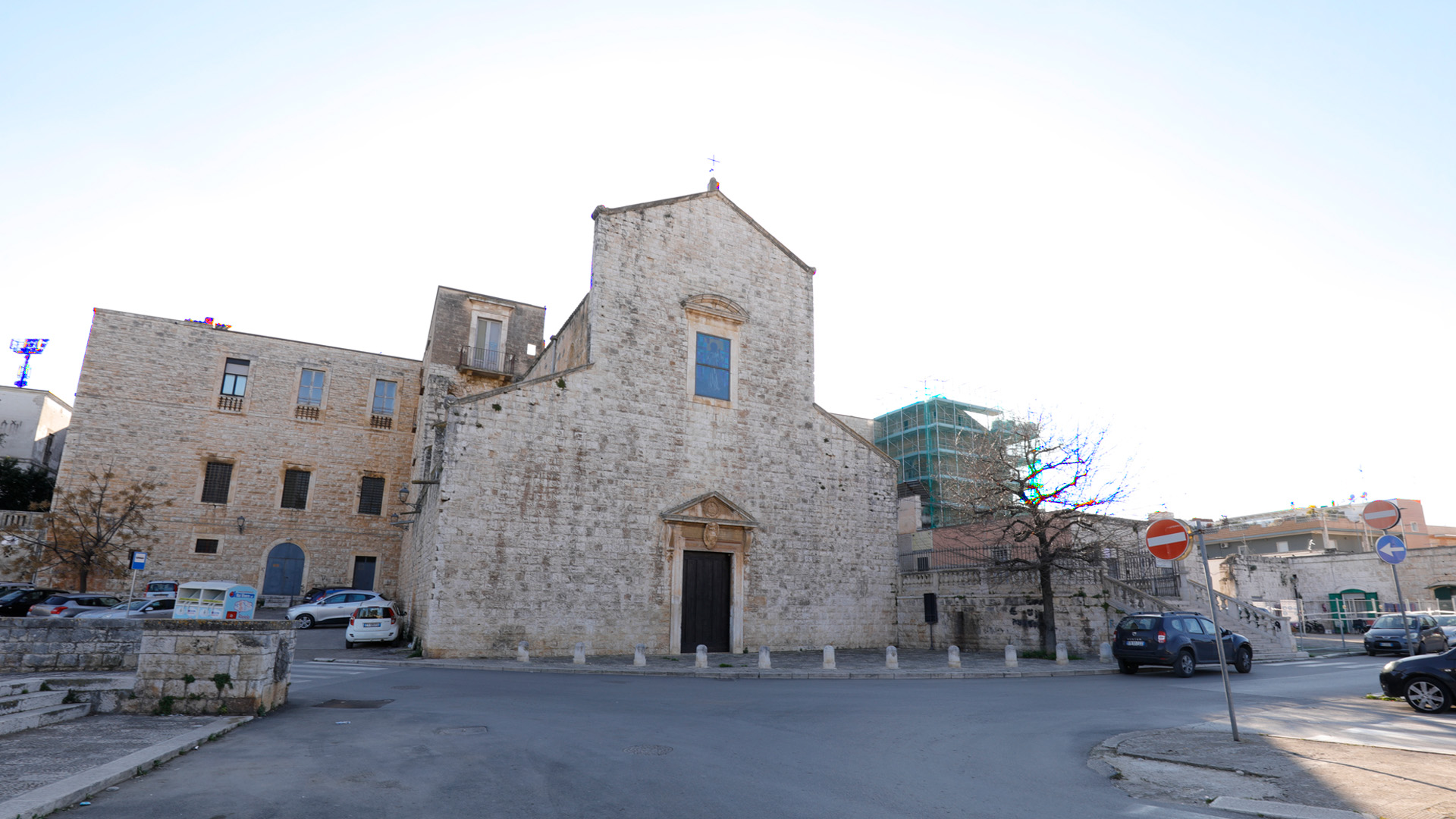
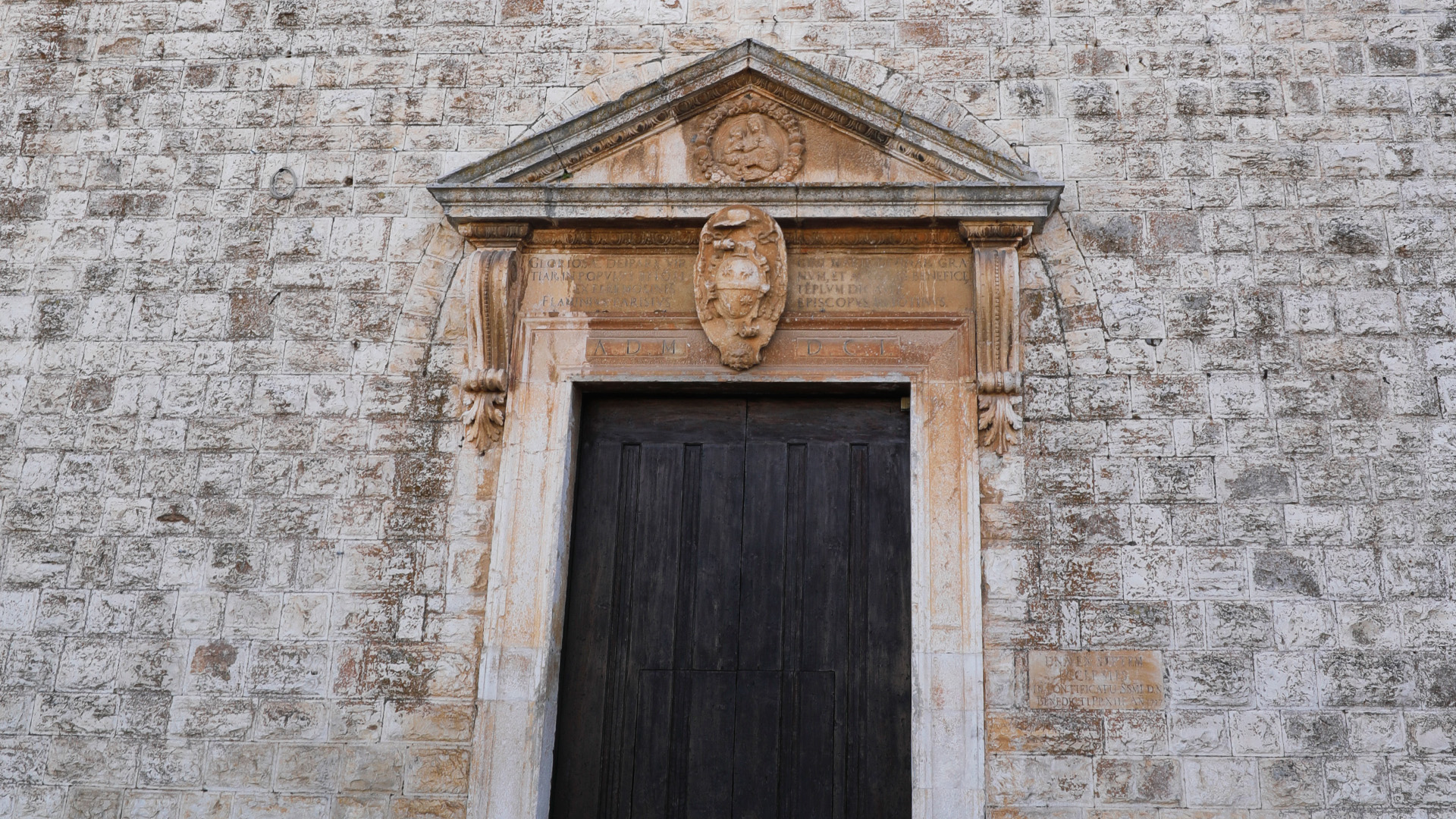
The church’s gabled façade, built of roughly hewn stone blocks, is marked by a classic-style entrance with a triangular pediment. One of its most refined elements is a round stone relief: a sculpted garland framing the image of the Virgin Mary holding the Child. The rest of the façade is simple and austere, punctuated only by the pedimented portal and a curved pediment window above it. The lantern on the central dome and the small bell gable with two openings gently rise above the roofline.
Initially managed by the Cathedral Chapter, the church became home to the Confraternity of the Holy Spirit. 1702, it was entrusted to the Discalced Carmelite Friars of the Order of Saint Teresa of Avila. The friars not only took up residence but also began significant renovations. Around the mid-18th century, they decorated the church interior in a Baroque-Rococo style, marked by elaborate stucco work and ornate detailing.
Stucco work now embellishes the central dome, the transept arms, the nave, and the side altars. Flourishes of acanthus leaves, spirals, volutes, and cherubs blend seamlessly with the church’s architecture, giving it an atmosphere of refined elegance.
The pillars along the central nave—possibly once left bare—were later incorporated into a redesigned interior scheme, while the original wooden trusses were replaced with vaulted ceilings.
The church’s original windows were sealed, making way for new openings designed in keeping with 18th-century aesthetics. The original plan likely included a women's gallery, but this was never built, deemed unnecessary by the Carmelites during their renovations.


Borgo Racconta is a registered trademark of
BweB – PiccolaGrandeItalia.TV
 English
  Italian
  German