
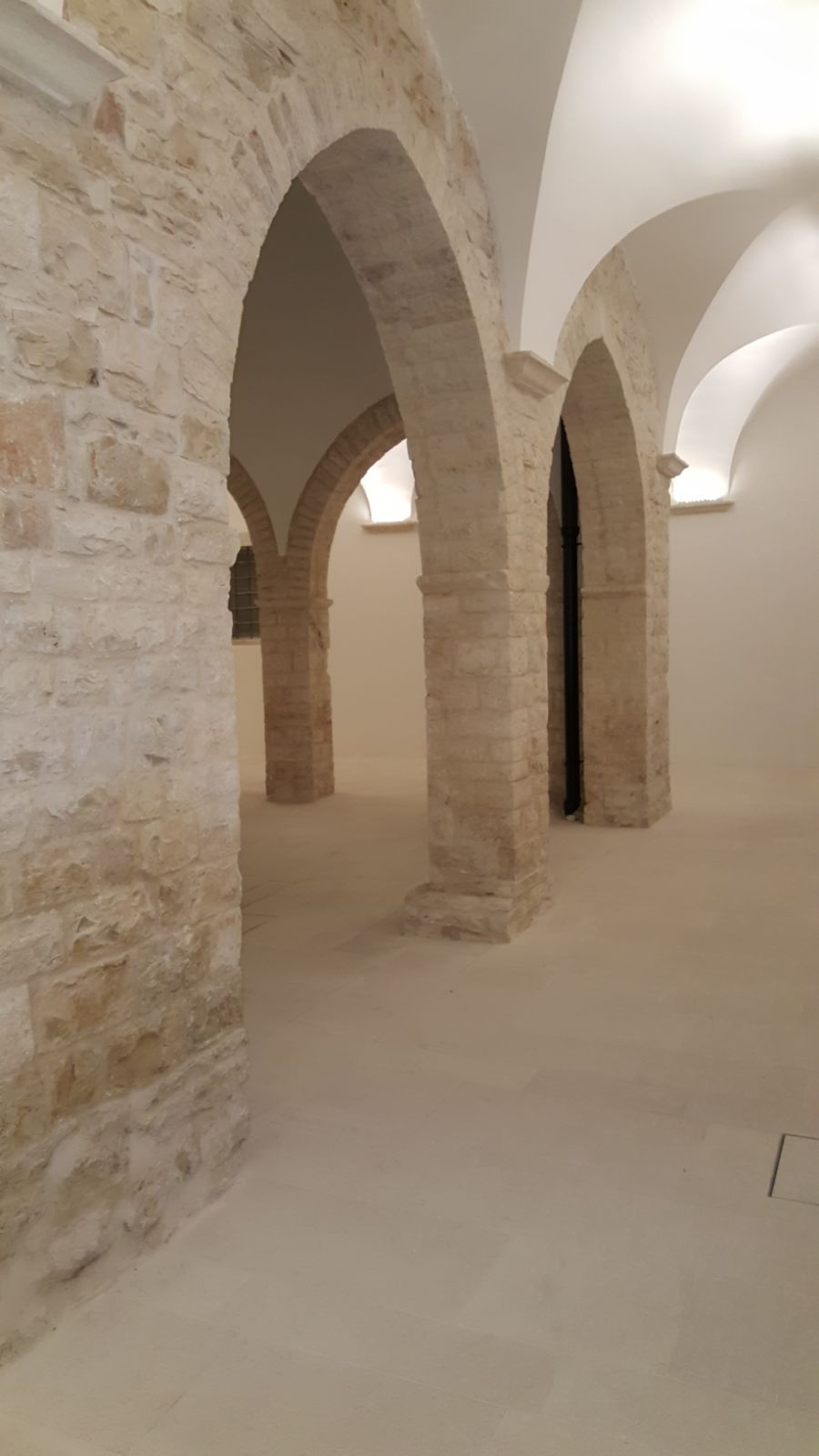
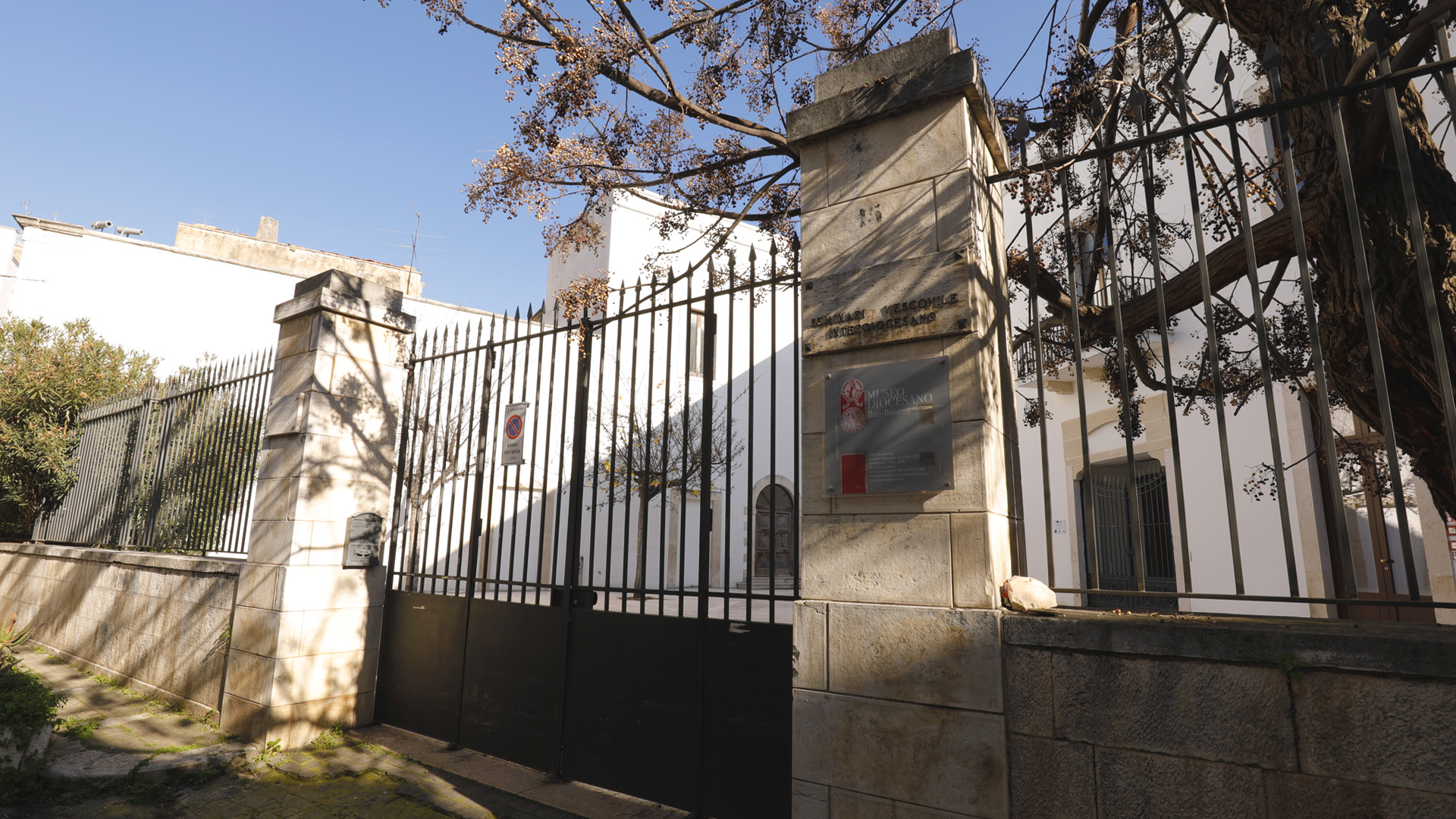
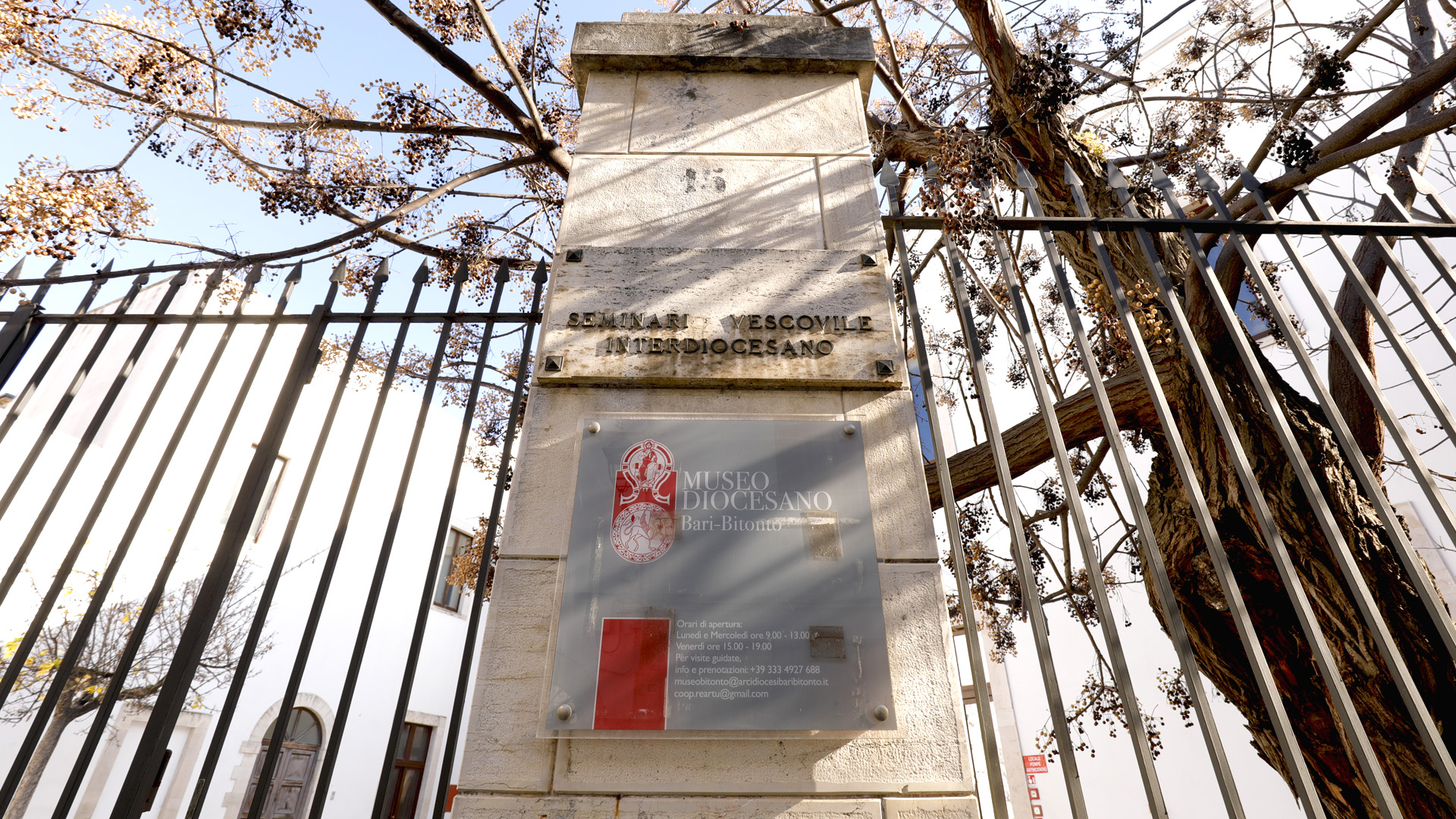
The Monsignor Aurelio Marena Diocesan Museum is housed within the former Convent of the Conventual Franciscan Friars, later used as the Episcopal Seminary, next to the Church of Saint Francis “of the Shoe.” The museum owes its origins to the vision of Bitonto’s last bishop, Monsignor Marena, who sought to gather, preserve, and promote the sacred art of the diocese.
Rather than following a chronological sequence, the museum presents its collection through theological, liturgical, pastoral, and territorial themes. The goal is to bring the diocese's story to life by highlighting the artworks that have accompanied the community throughout the centuries.
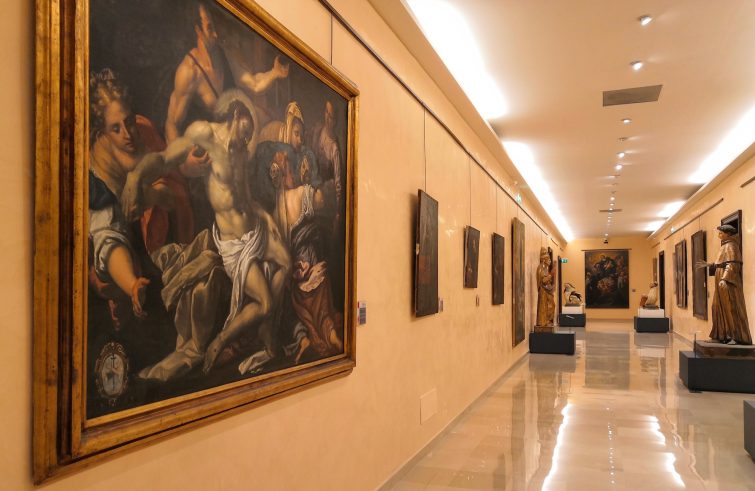
From the moment visitors step inside, they are taken on a journey that begins with the influence of Byzantine art—evident in carved capitals and fragments of painted panels—then moves through the Romanesque period and into the early stages of Italian art. One of the most important works on display is a panel painting of Saint Francis of Assisi, considered unique in southern Italy and an early sign of the Franciscan presence in the region. A vibrant section of the museum focuses on 16th—and 17th-century works, representing a flourishing artistic period in Bitonto’s history. During these years, the spirit of the Catholic Reformation and the reforms of the Council of Trent enormously encouraged local creativity.
Another key area is dedicated to liturgical furnishings, which highlight the most meaningful moments of religious life. Here, one can observe the influence of Naples—visible in the silversmiths’ marks—and the delicate embroidery from the Royal Workshop of San Leucio. These artistic expressions were in constant dialogue with local craftsmanship, including the work of the Benedictine nuns of Bitonto.
The museum also preserves a valuable collection of parchment and paper documents, including papal bulls, liturgical and devotional books, land records, and monastic vows. They offer a vivid portrait of the diocese’s spiritual and cultural evolution.
Just behind the museum, beyond the old convent cloisters, visitors will discover the Hanging Gardens—a secluded, atmospheric space in the heart of the historic center. This elevated area corresponds to the ancient Roman intersection of the Cardo and Decumanus, where the Acropolis of the old castrum once stood. The hill provided natural protection and strategic advantage.
Some sources suggest that this area was a green space linked to the Monastery of Saint Lucy even in the Middle Ages, possibly stretching as far as today’s Tommaso Traetta Municipal Theater. The gardens were built over the Norman city walls and once flanked by towers and walkways, serving a decorative and defensive purpose.
Over the centuries, the gardens have undergone many transformations. Their function evolved along with the building itself—first a convent, then a military facility, and later a seminary—but their original layout can still be traced.
Today, following a careful restoration, the gardens have regained their splendor. They now host art exhibitions and cultural events, all in harmony with the historic and natural setting. From this quiet green space, visitors enjoy a breathtaking view over the old town’s rooftops, domes, towers, and courtyards—a silent conversation between nature and architecture.



Borgo Racconta is a registered trademark of
BweB – PiccolaGrandeItalia.TV
 English
  Italian
  German