
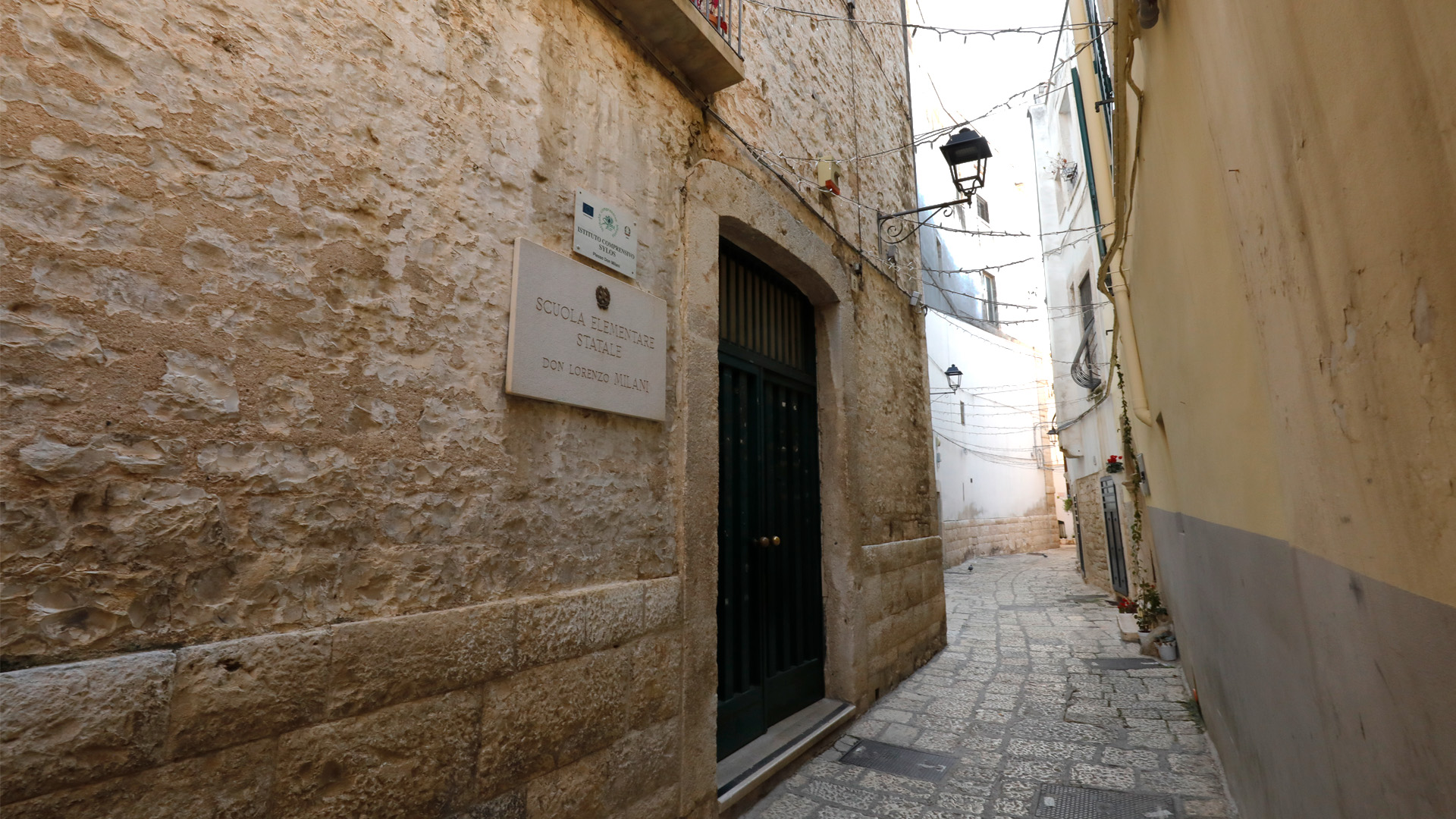
This expansive block in the historic center, now home to a kindergarten and primary school, was occupied until 1922 by the cloistered Benedictine nuns of the Sacred Mount of Olives. Adjacent to it stood the Church of Saint Peter the New.
The church has medieval foundations, with documents confirming its existence as early as 1270.
Abbot Antonio Giannone established the monastery around 1535, and the church was rebuilt simultaneously. The 16th-century entrance portal, still well-preserved, is topped by a pediment holding a statue of Saint Peter, depicted holding the keys to paradise. Aligned with the portal are a window and a small rose window, likely remnants of the earlier medieval structure.
The church interior, with its single nave, was elevated in the mid-1600s and adorned with a coffered, gilded ceiling featuring a large painting attributed to Carlo Rosa.
The painting depicts Christ blessing the Olivetan monastic order. Saints Peter and Paul are identifiable at the center of the composition, while the lower portion bears the coat of arms of the Planelli family, who commissioned the work.
Young noblewomen entering the convent were required to bring a dowry consisting of precious objects and works of art, enriching both the church and the monastery. Only members of the Giannone family were exempt from this requirement—a testament to the deep ties between the monastery and the noble house. Many artworks initially created for the church are now housed in the Diocesan Museum, where the coats of arms of the original patrons are still visible.
Near the entrance is a fresco of Our Lady of Grace, clearly influenced by Byzantine style. A statue of Saint Cyrus, dating back to the church’s 16th-century reconstruction, is of notable historical value. The majolica-tiled floor of the nave and presbytery was added during decorative renovations in the mid-18th century.
On the upper level, one can still see the cloistered “dove-breast” grilles, typical of 18th-century monastic architecture, through which the nuns attended religious services.
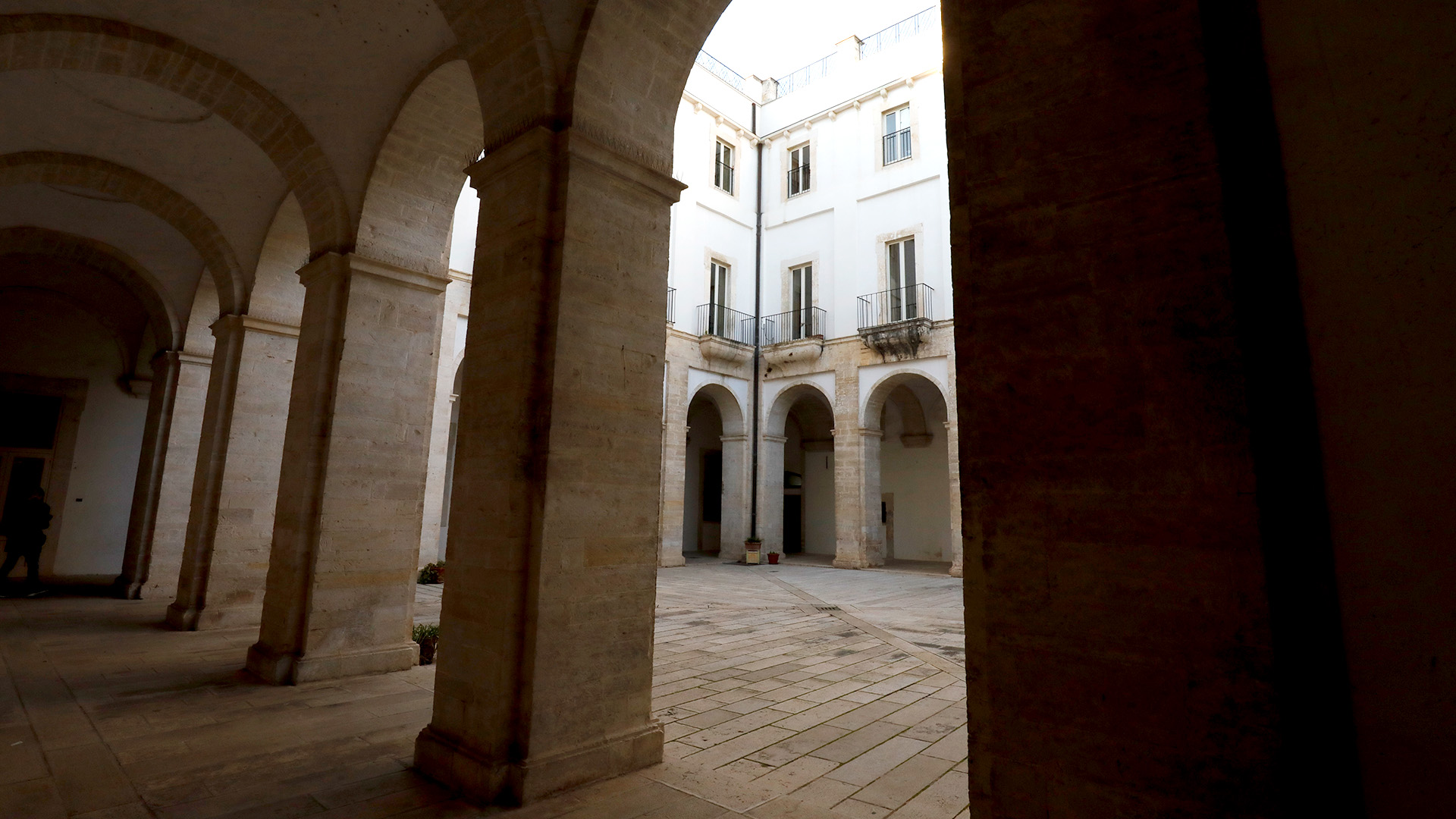
Architect Vito Valentino expanded the building between 1729 and 1740. He is credited with constructing the elegant, open, three-sided portico, distinguished by a series of small balconies with bulging decorative moldings—a hallmark of Baroque architecture.
No longer in use for worship, the former convent and the Church of Saint Peter the New still preserve the marks of their centuries-old history, bearing witness to the prestige of the families who contributed to their construction and adornment.


Borgo Racconta is a registered trademark of
BweB – PiccolaGrandeItalia.TV
 English
  Italian
  German