
The De Ìlderis family ranks among the oldest and most distinguished noble lineages of the Kingdom. According to tradition, the first to arrive in Bitonto was Giovanni, a gentleman from Bohemia who reached the city in 1086 as part of a crusading expedition.
The family would reside in Bitonto for six centuries, from the 13th century until the death of its last descendant, Count Cesare, in 1882. Over generations, the De Ìlderis proudly wore the robes of the Knights of Malta, remaining active members of the Order until the family line ended.
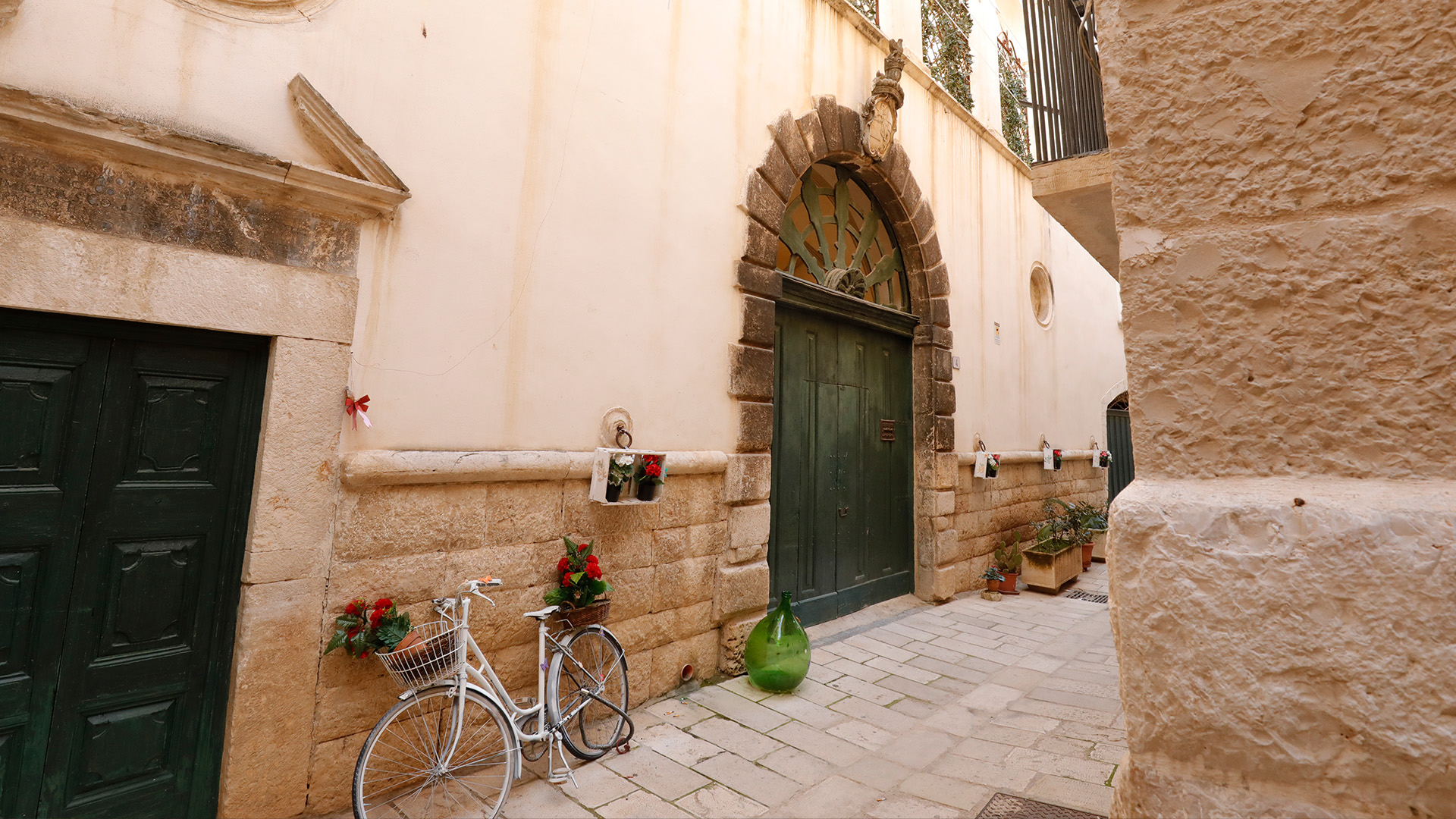
The family’s 18th-century residence stands out for its elegant and restrained lines. Attached to the building is a private chapel, as noted by an inscription on the exterior façade. Commissioned by Cesare De Ìlderis, it was dedicated to Saint Margaret, the family’s patron saint.
The chapel’s façade is marked by a simple rectangular portal topped with a broken pediment and an ovoid window aligned symmetrically with another opening to the right of the palace entrance. Though modest in size, the chapel’s interior is adorned with refined Baroque decoration. On the left wall sits the altar, framed within an arched recess enriched by ornamental stucco moldings. It once housed a canvas depicting Saint Margaret but is now lost. The barrel-vaulted ceilings are embellished with intricate stucco borders of volutes and acanthus leaves—motifs emblematic of Baroque artistry. To the right of the entrance, a holy water stoop shaped like a scallop shell adds another elegant detail, reflecting the family’s refined aesthetic.
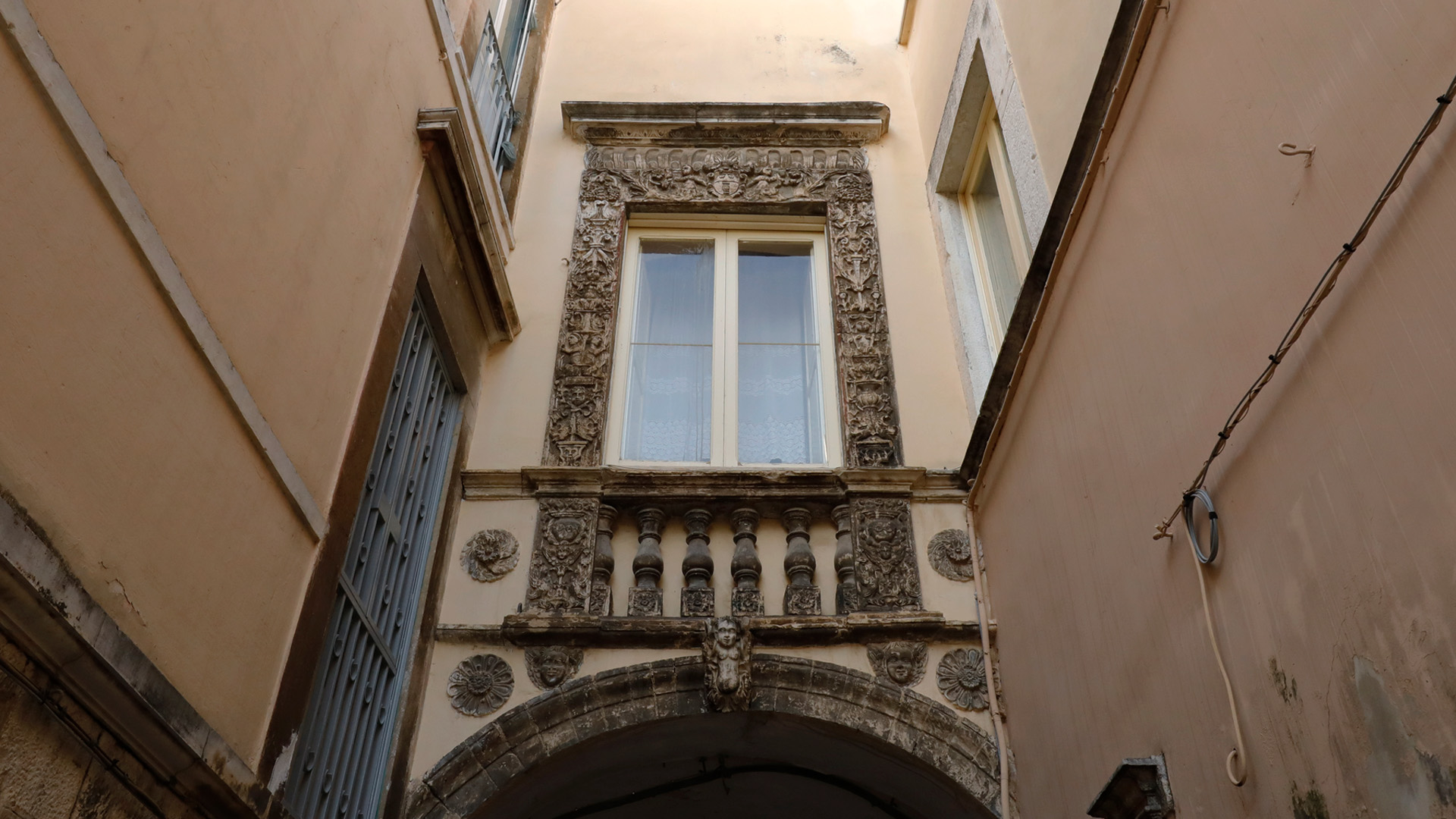
Facing gracefully onto Francesco Saponieri Street, the Agèra Gallery—also known as Agèra Arch—enhances the corner with its sophisticated architecture. Two 17th-century windows, like embroidered panels unfurled over the street, give the whole urban view a poetic elegance.
Construction began in 1586 to mark the wedding of Michelangelo Agera and Perna De Blasio. However, the project was only completed in the early 1600s. Unlike other noble residences, this structure extends over the street in a “bridge-like” layout, with two opposing façades adorned with splendid arcaded galleries. The most elaborate of these is the southern-facing gallery—an exquisite expression of Baroque exuberance.
Its finely sculpted frames feature grotesque masks, garlands of acanthus, and clusters of fruit, while the broad, lavishly carved jambs are teeming with a variety of decorative elements: winged cherub heads, birds, human figures, and mermaids. At the center of the composition, the heraldic emblem of the Agèra family stands proudly—an enduring symbol of the house’s prestige.
Dating to around 1643, the Agèra Gallery represents a masterful balance of architecture and ornament, a refined showcase of the stylistic richness that defines the Baroque era.


Borgo Racconta is a registered trademark of
BweB – PiccolaGrandeItalia.TV
 English
  Italian
  German