
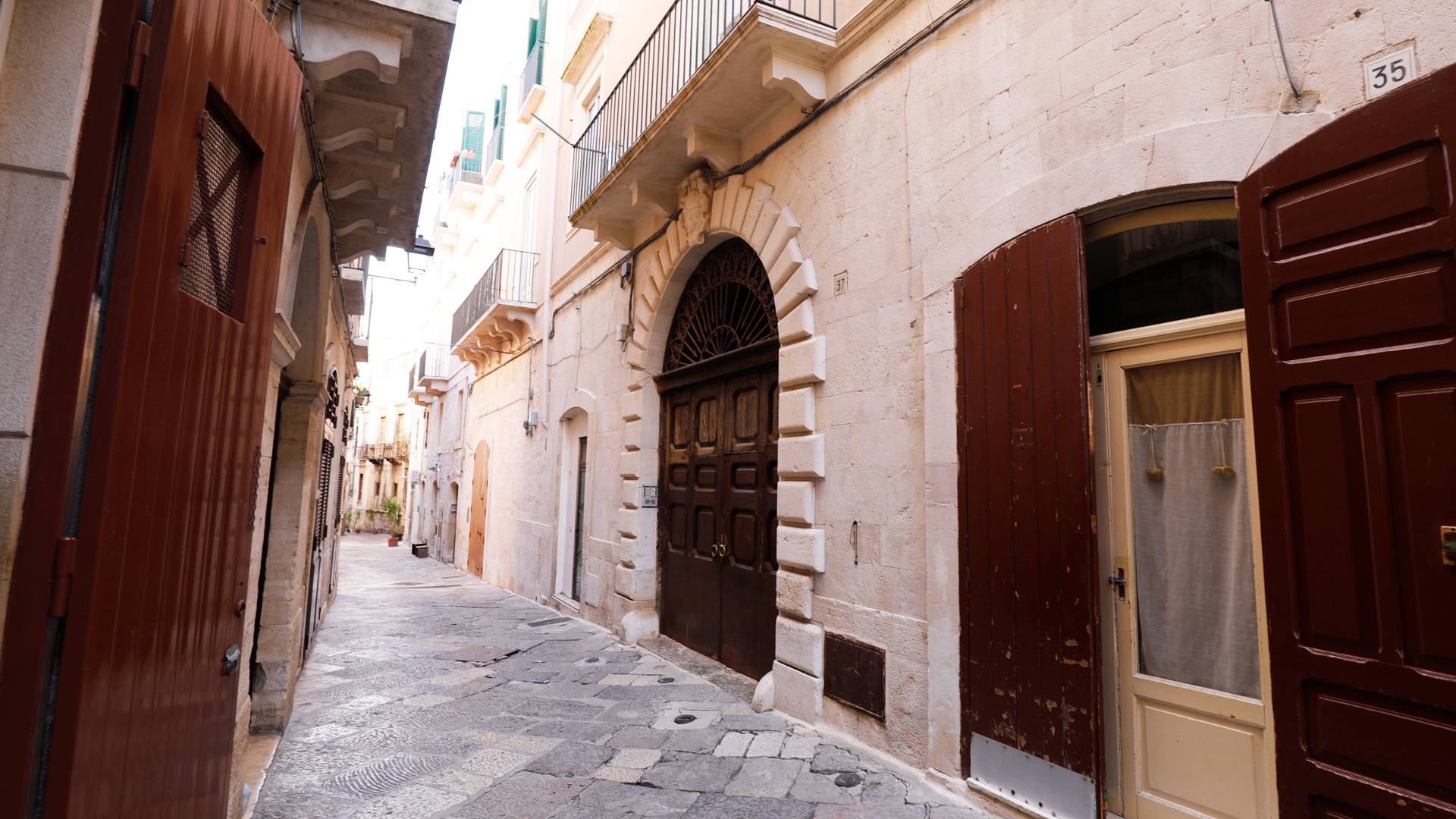
Located along the historic Via Planelli, this noble residence weaves centuries of local history together. Known in popular tradition as the Mint Palace, the building owes its nickname to one of its most remarkable residents: Antonio Planelli (1747–1803), a mathematician, jurist, scientist, and music lover—an emblematic figure of the Southern Italian Enlightenment.
The Planelli family traces its roots back to the 13th century, when Bernardo I, a Catalan nobleman, arrived in Salpi. Over the centuries, family members held distinguished positions in secular and ecclesiastical spheres. Among them, Antonio Planelli stood out for his brilliant education in the humanities and sciences. After losing his parents, he moved to Naples, where he became a chemistry and classical literature professor. A true polymath, he spoke several languages fluently, played the piano, and gained recognition for his expertise in metallurgy. In 1790, King Ferdinand IV appointed him Master of the Royal Mint of Naples—a prestigious role that brought him significant influence.
During his time in Bitonto, the palace was elegant and enriched with refined architectural features and opulent decorations.
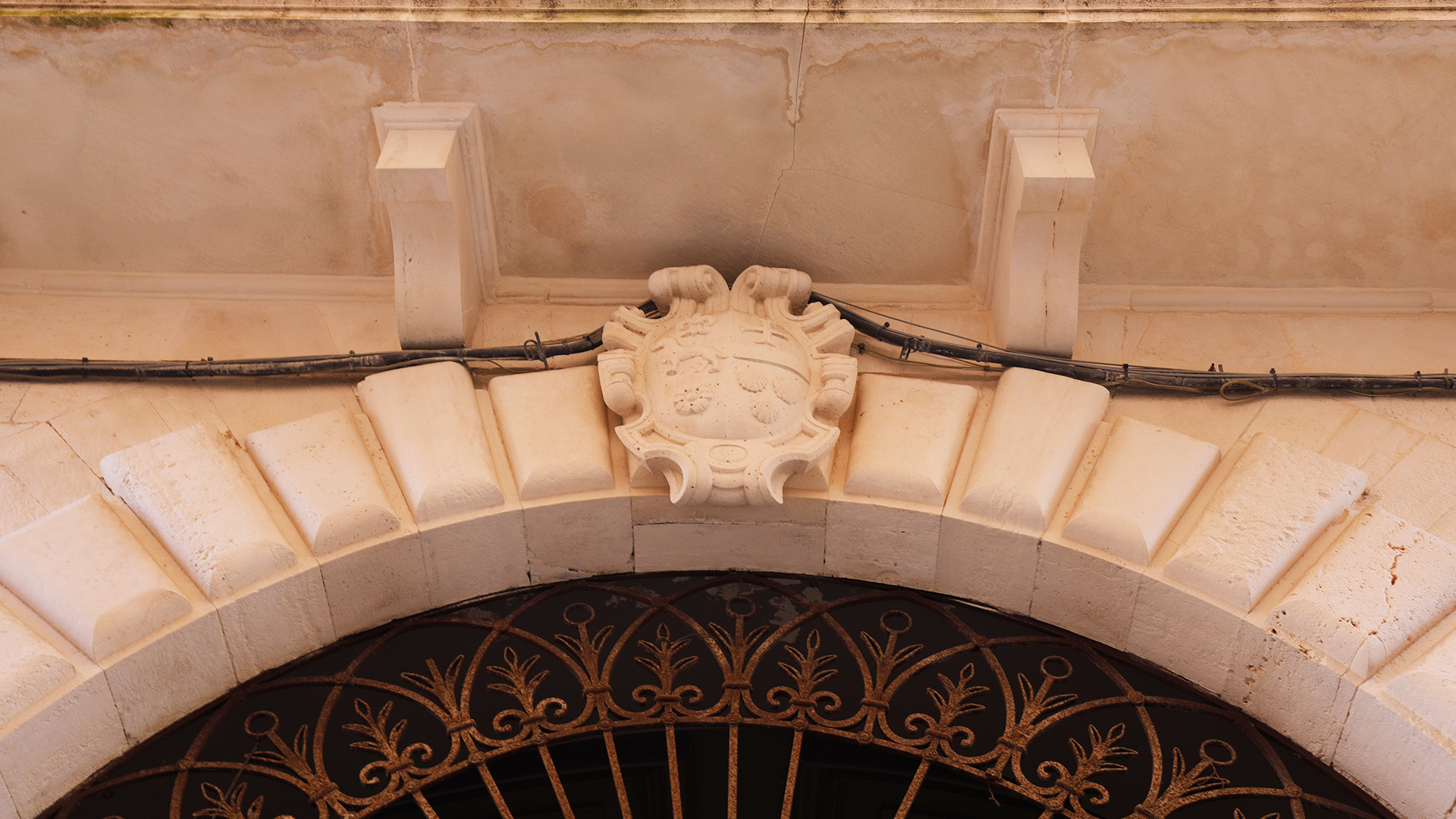
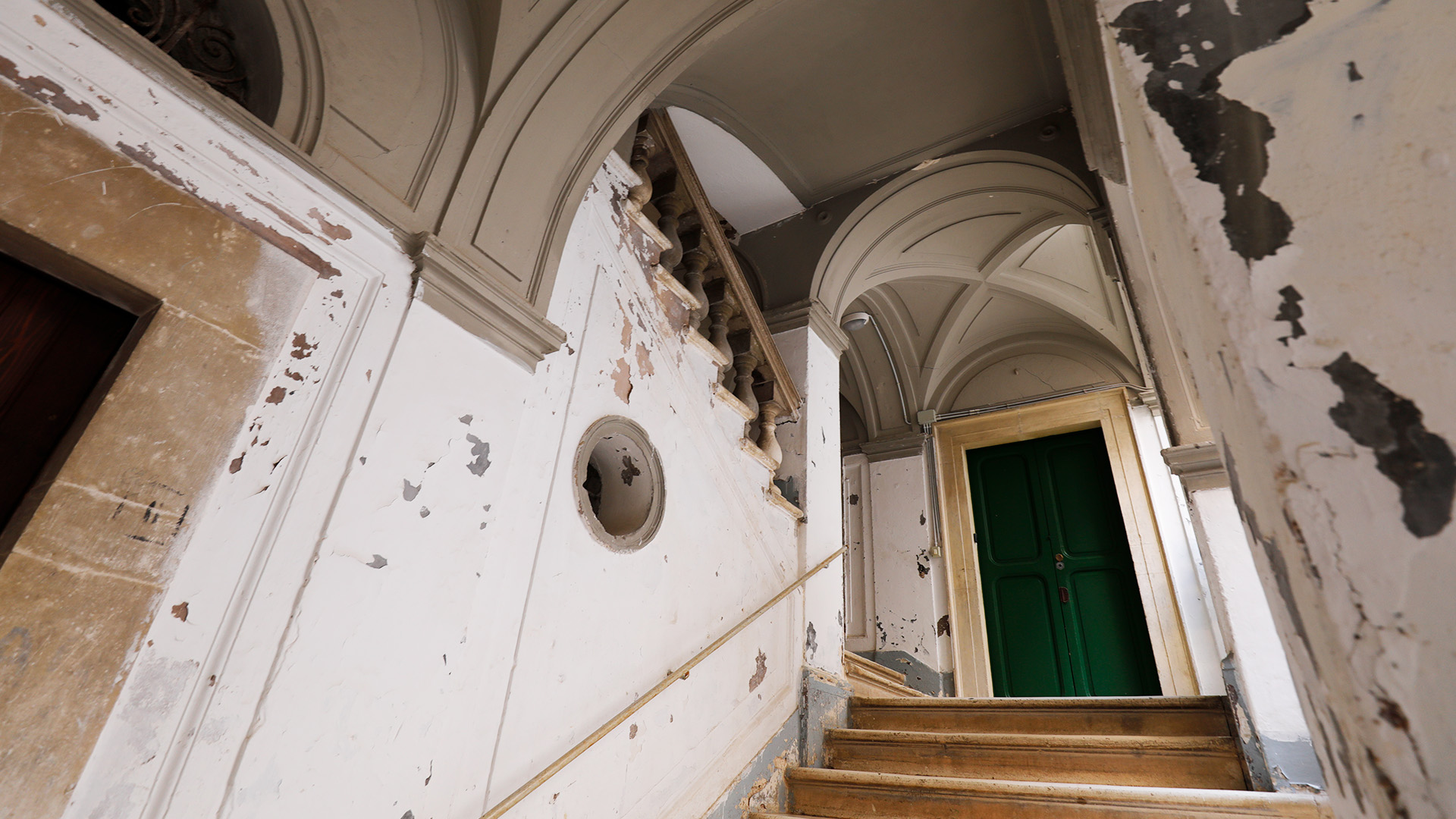
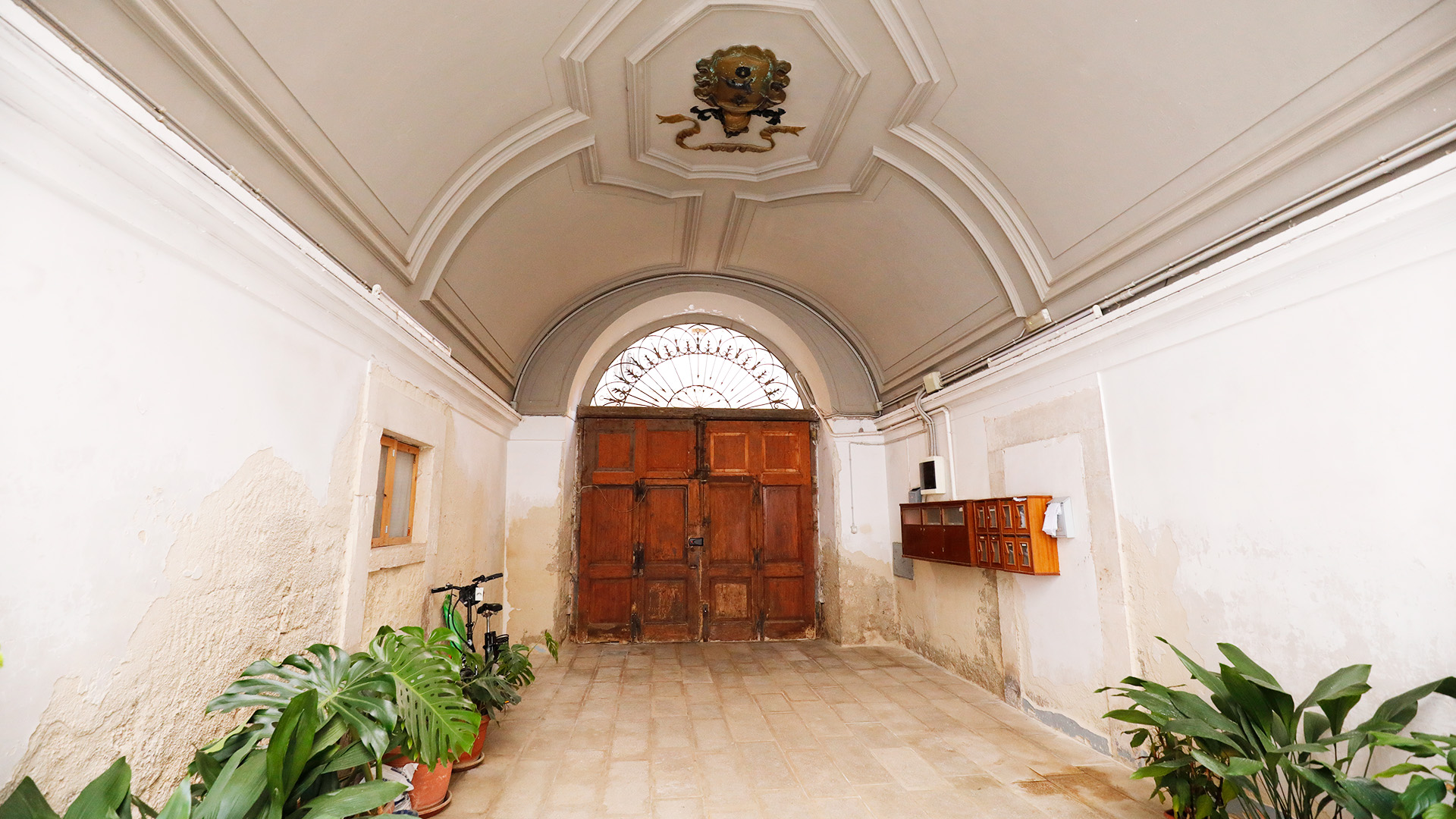
Although the building has medieval origins, the current façade dates from the 19th century. The vast entrance hall opens into a square-shaped courtyard embellished with a grand, multi-flight “romantic” staircase with balustrades, likely designed by the architect Raffaele Comes.
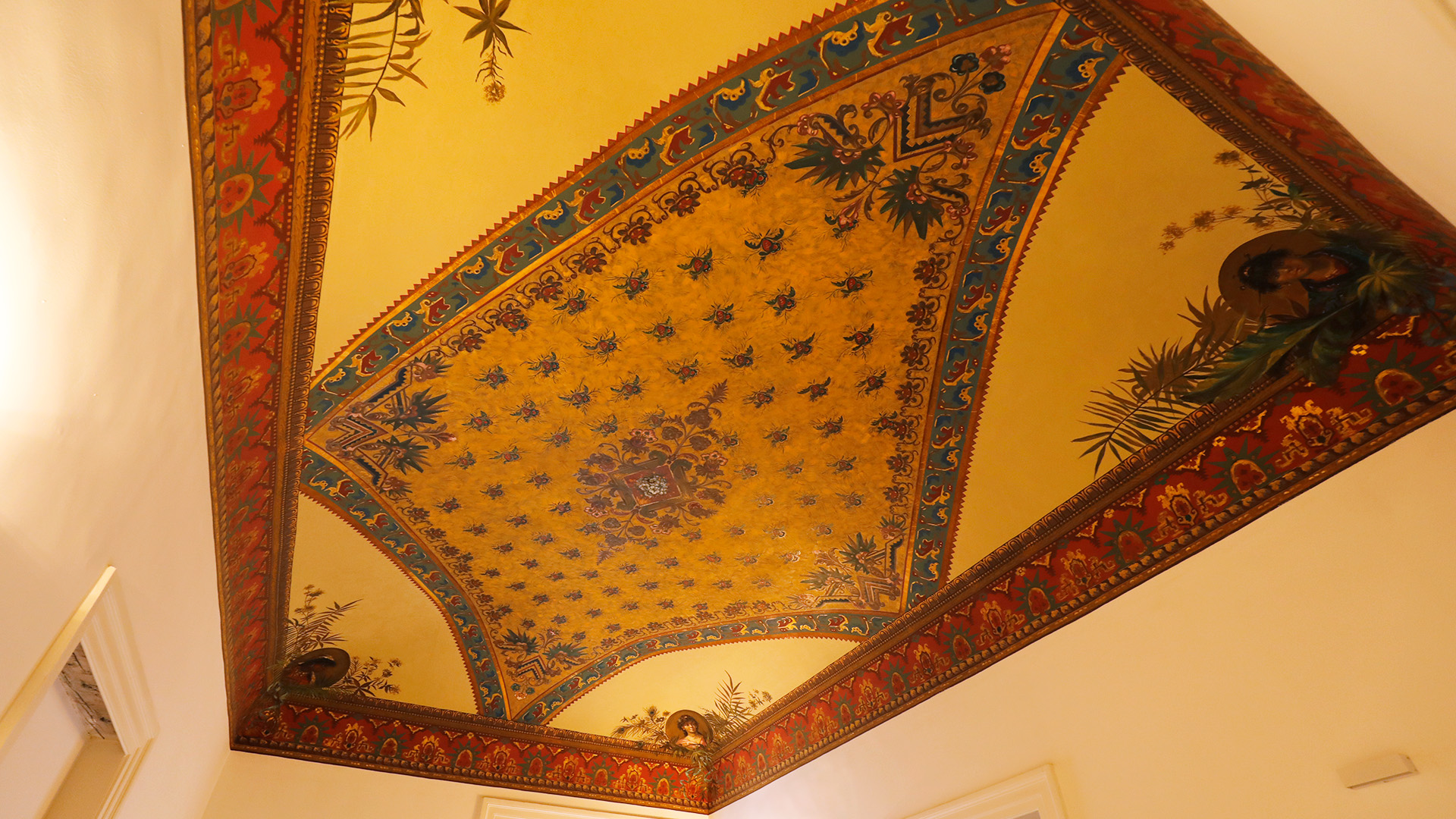
The interiors reflect the refined taste of 19th-century decorative painting. In the first room open to visitors, the vaulted ceiling features a striking mural in tempera: a large, scarf-like oriental motif with four corner medallions, each portraying the face of a young woman of a different ethnicity, framed by floral patterns, peacock feathers, and ribbons.
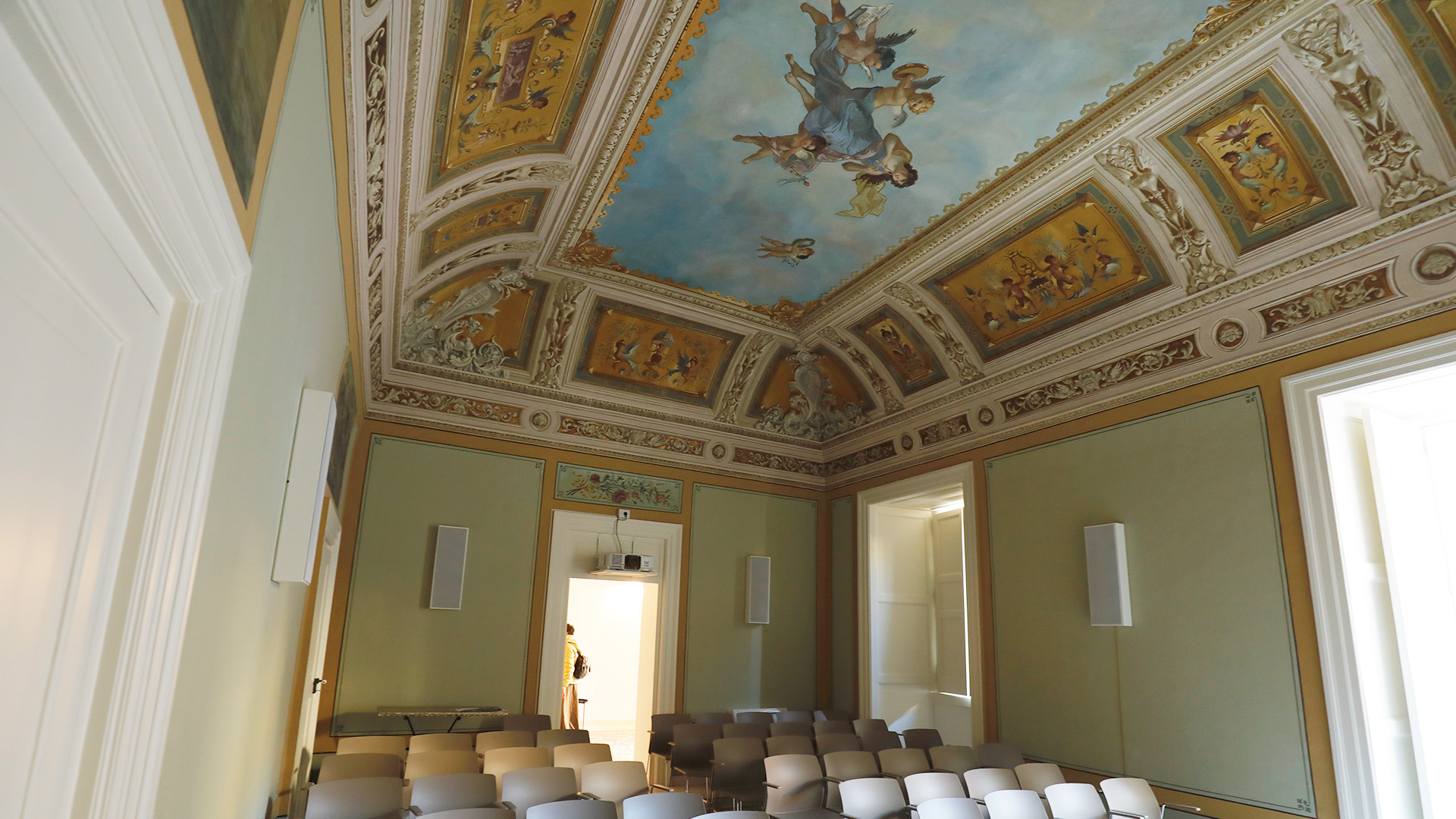
The palace’s main hall, over 43 square meters, boasts a ceiling painting depicting a female figure—likely a goddess—lifted by cherubs as they crown her with a laurel wreath. The ceiling is adorned with faux stucco frames, grotesques, landscapes, and floral motifs, with gilded elements set against a sky-blue background.
Other rooms preserve original decorations from the 19th and early 20th centuries, featuring elegant ornamental designs that testify to the artistic refinement of the time.

Borgo Racconta is a registered trademark of
BweB – PiccolaGrandeItalia.TV
 English
  Italian
  German