
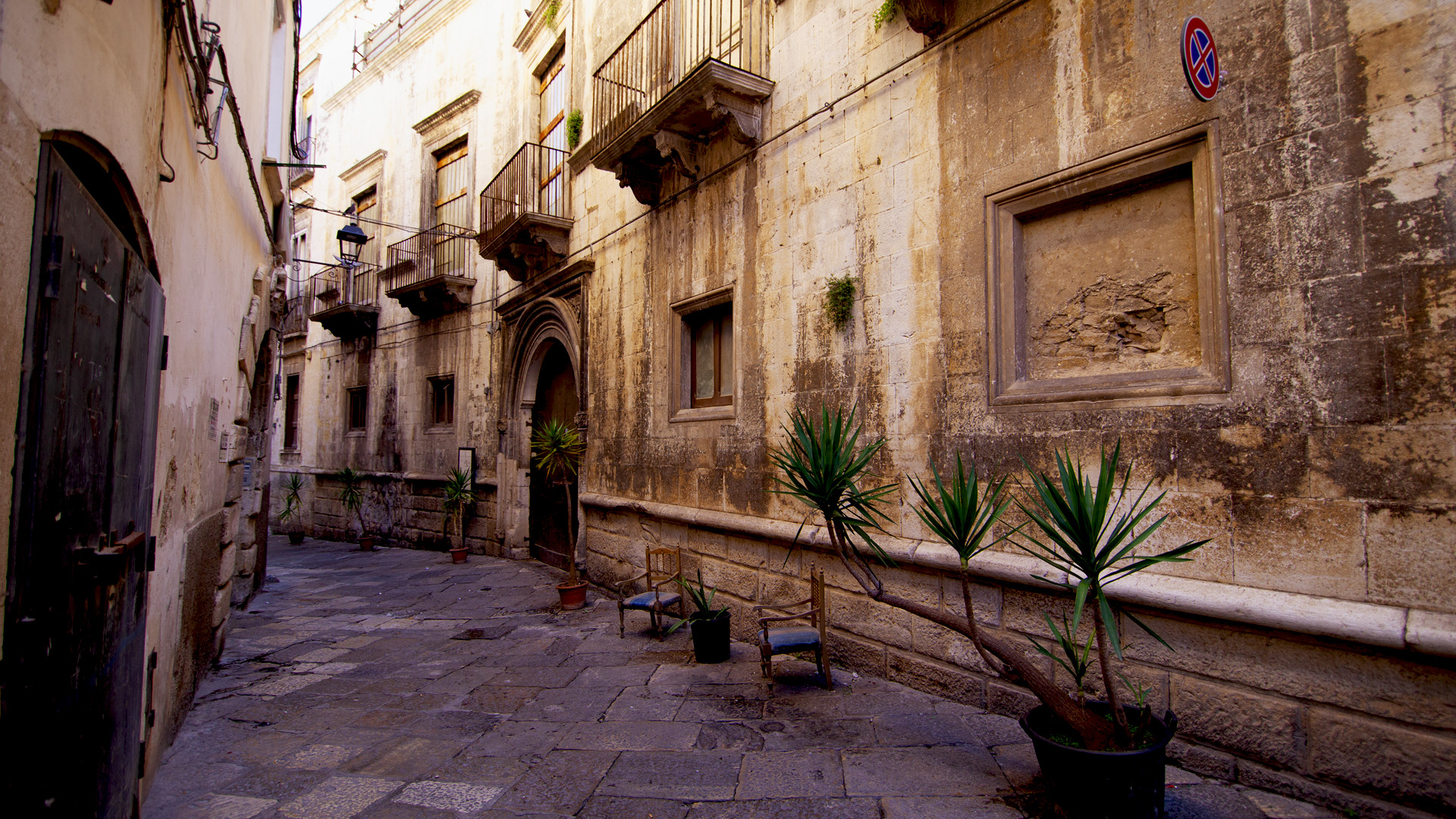
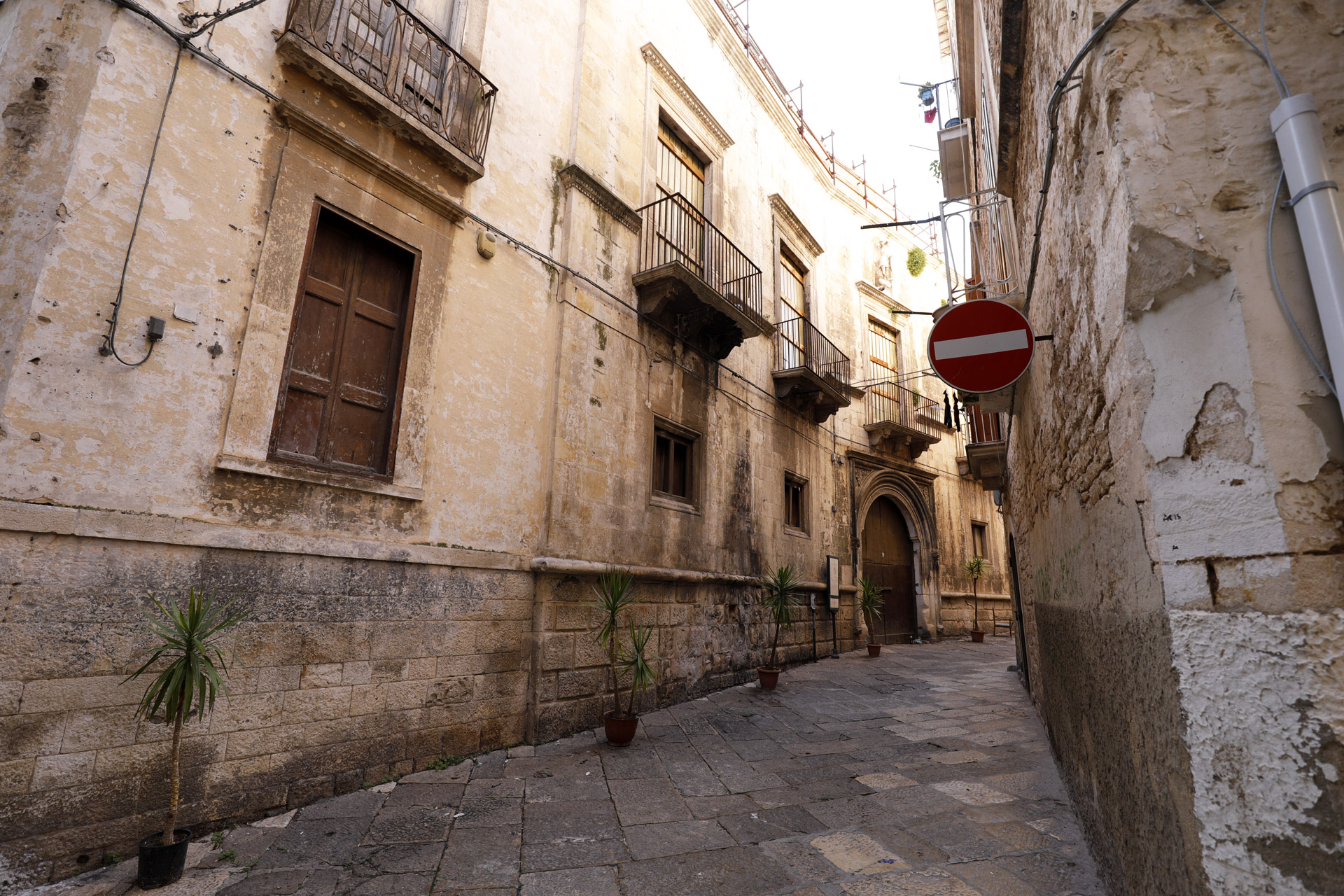
Vulpano–Sylos Palace is one of Puglia's most outstanding examples of Renaissance civic architecture. It was also among the first buildings in the region to be officially recognized as a national monument. Construction began in the late 15th century, commissioned by Vulpano family.
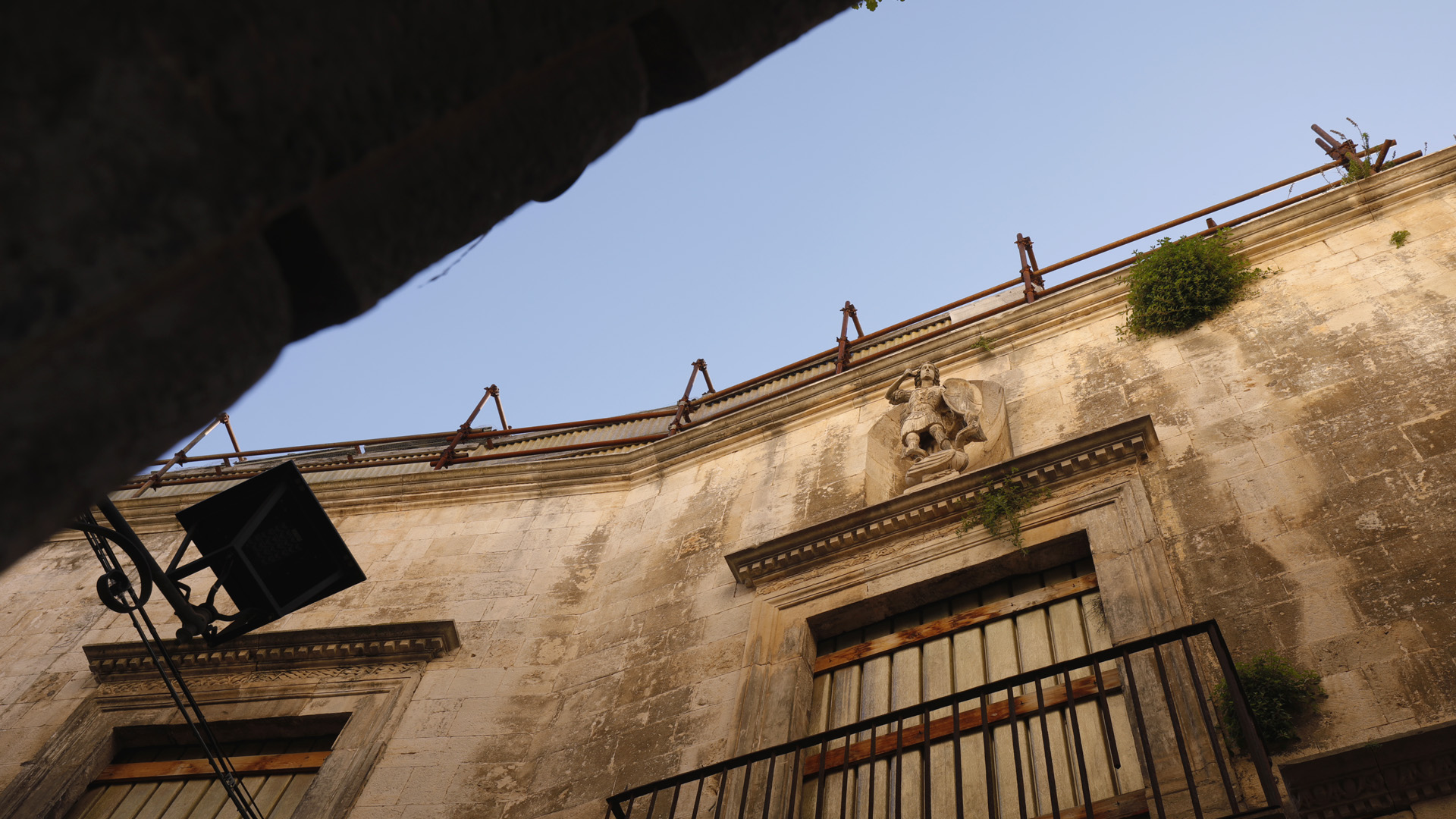
The building is arranged over two floors and stands out for the simplicity of its structure, broken only by a striking Catalan-style entrance portal. Above the doorway sits a niche containing a statue of the Archangel Michael, the family’s patron saint and the dedicatee of the palace’s private chapel. On the right corner of the façade is a sculpted figure of a warrior—symbolizing strength and nobility. The portal, with its arch framed in a rectangular structure, reflects the artistic atmosphere of late 15th-century Naples, where Catalan Gothic and Tuscan Renaissance classicism merged.
The Vulpano family coat of arms marks the entrance corners, decorated with lilies.
From the inner courtyard, one can admire the two-level gallery, divided by a horizontal cornice that accentuates the symmetry of the structure. The lower arcade features three arches supported by Corinthian columns, while the upper gallery mirrors the same arrangement, topped with cross vaults adorned with later stucco decorations. Classical doors and windows enhance the courtyard’s architectural harmony, and a decorative wellhead on the right side is crowned with a floral garland attributed to the sculptor Nuzzo Barba.
A particularly fascinating feature is the palace’s bas-relief, which conveys meaning on two levels.
On the one hand, it is a commemorative monument to the Vulpano family. On the other, it expresses a broader ethical and civic message. The first register displays the busts of the four cardinal virtues: Prudence, Justice, Fortitude, and Temperance. Below the cornice, an inscription by the Roman historian Sallust reads: “In harmony, small things grow; in discord, even great things collapse.”The third register includes mythological and historical figures. At the same time, the center features a commemorative plaque, flanked by the effigies of the Vulpanos and the Sylos family coat of arms.
Recent restoration work has revealed two rooms on the ground floor with frescoed ceilings inspired by classical themes. Here, the central motif is sacred and profane love, explored through four iconic episodes. Dido is shown with a drawn sword, overcome with anguish after being abandoned by Aeneas. Her hair is windswept, her face filled with sorrow, her gesture dramatic and final. Cleopatra is depicted with the asp—the snake symbolizing luxury and decadence—choosing death to avoid the humiliation of Octavian’s triumph after the defeat at Actium. Cornelia, Scipio Africanus's daughter, represents the Roman mother's ideal.After her husband’s death, she refuses to remarry and devotes herself entirely to her children. In the fresco, her pensive gaze reveals the burden of her fate as one child clings to her and another plays, unaware of the family’s destiny. Finally, the tale of Pero and Cimon evokes Roman pietas: the moment when Pero secretly breastfeeds her father, condemned to die of starvation in prison.


Borgo Racconta is a registered trademark of
BweB – PiccolaGrandeItalia.TV
 English
  Italian
  German