
Bove Palace was rebuilt and expanded between 1683 and 1695, incorporating a preexisting structure from the 14th century. The current front results from significant changes to accommodate the widening of Via Mercanti.
The refined entrance portal, now slightly off-center, stands out for its exquisite craftsmanship. The stones are arranged in a radiating pattern, flanked by half-columns supporting a richly decorated entablature. The frieze features swirling acanthus vines intertwined with grotesque masks, while the Ionic capitals adorn elegant garlands. Two outer scrolls crown the portal, drawing the eye toward a graceful two-arched gallery on the façade.
This upper gallery connects to a garden on the opposite side of the building via a raised walkway. The entrance hall—vast and filled with light—is topped by a shallow vaulted ceiling. To the right, a scenic stone staircase with a carved balustrade leads to the upper walkway.
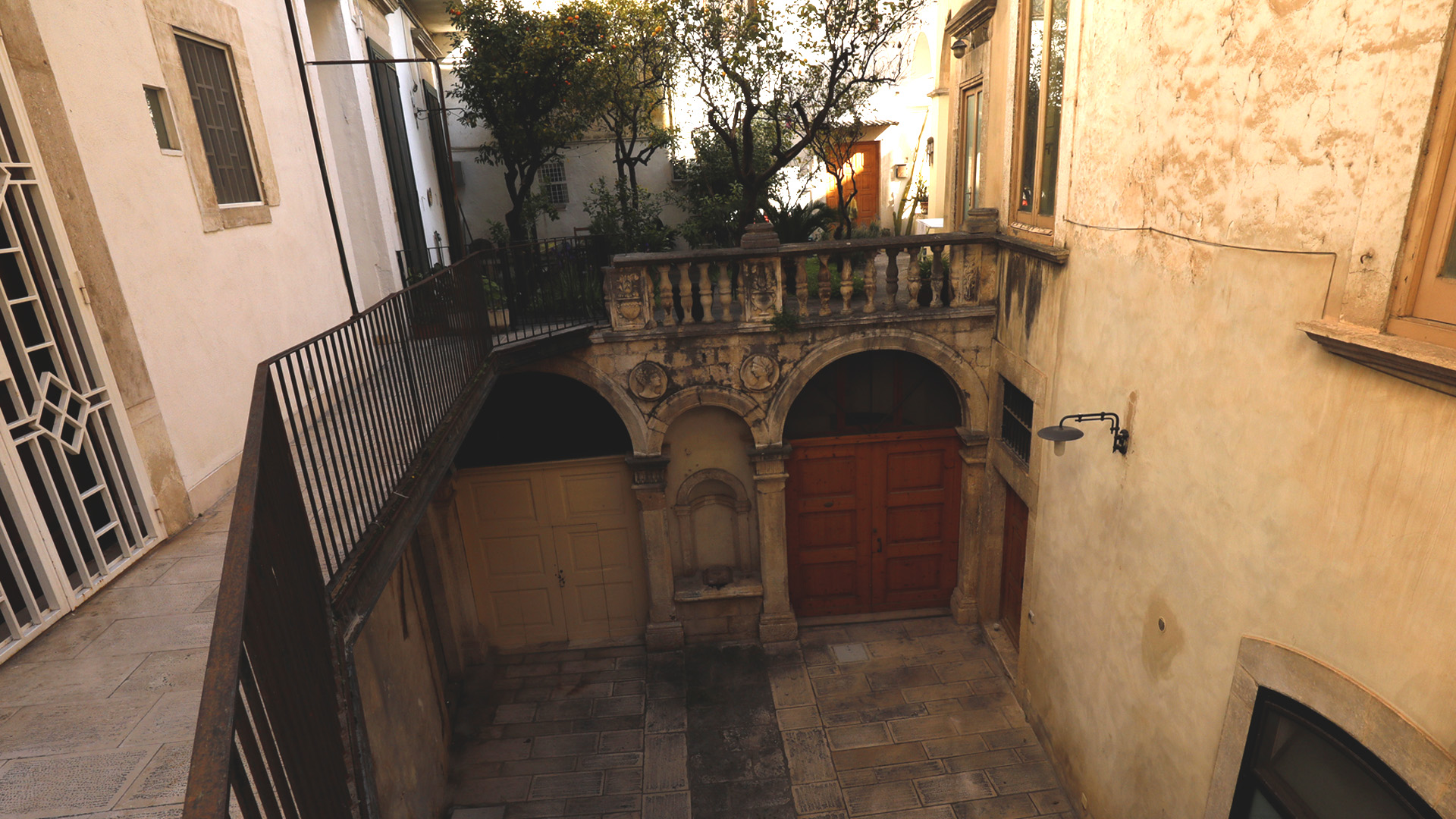
Passing through the hall, one reaches a charming interior courtyard with arcades, which has remained largely intact, at least on the ground floor. Two wide side arches and a smaller central arch define the space. Inside the central arch, a niche houses a small ornamental well.
A hanging garden filled with citrus trees and aromatic plants upstairs adds a natural elegance to the residence. Between the arches, two carved medallions depict the profiles of a man and a woman—likely Scipione Bove and Virgilia Sylos, who were married here in 1687 and counted among the palace’s most notable residents.
An inscription on the north wall identifies the architect and project manager: Valentino de Valentino. Founder of a large family of Neapolitan builders, master stonemasons, and architects, Valentino left a lasting mark on the Baroque architecture of Bitonto, helping to shape the city’s urban landscape with works of incredible beauty and sophistication.



Borgo Racconta is a registered trademark of
BweB – PiccolaGrandeItalia.TV
 English
  Italian
  German