
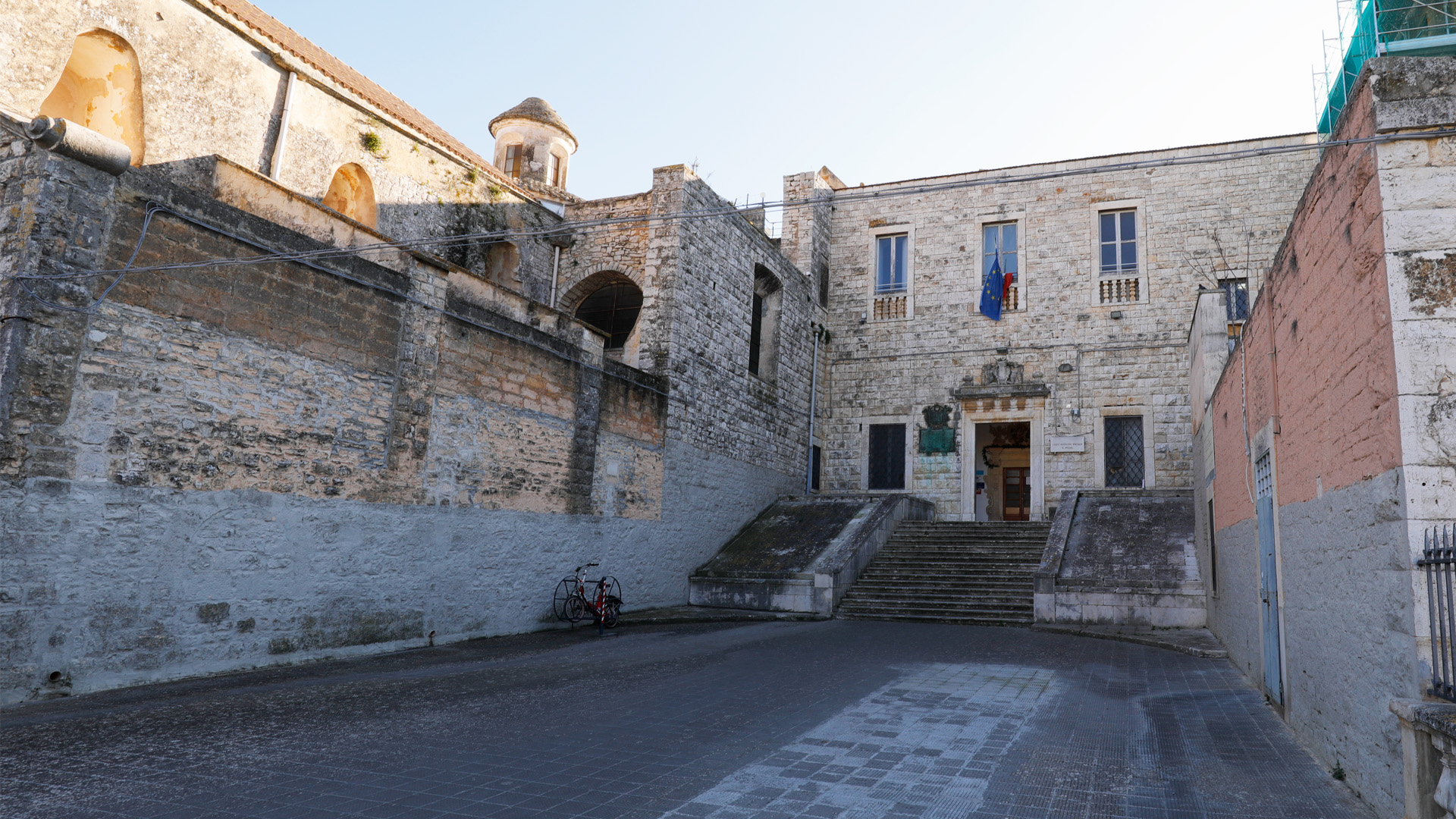
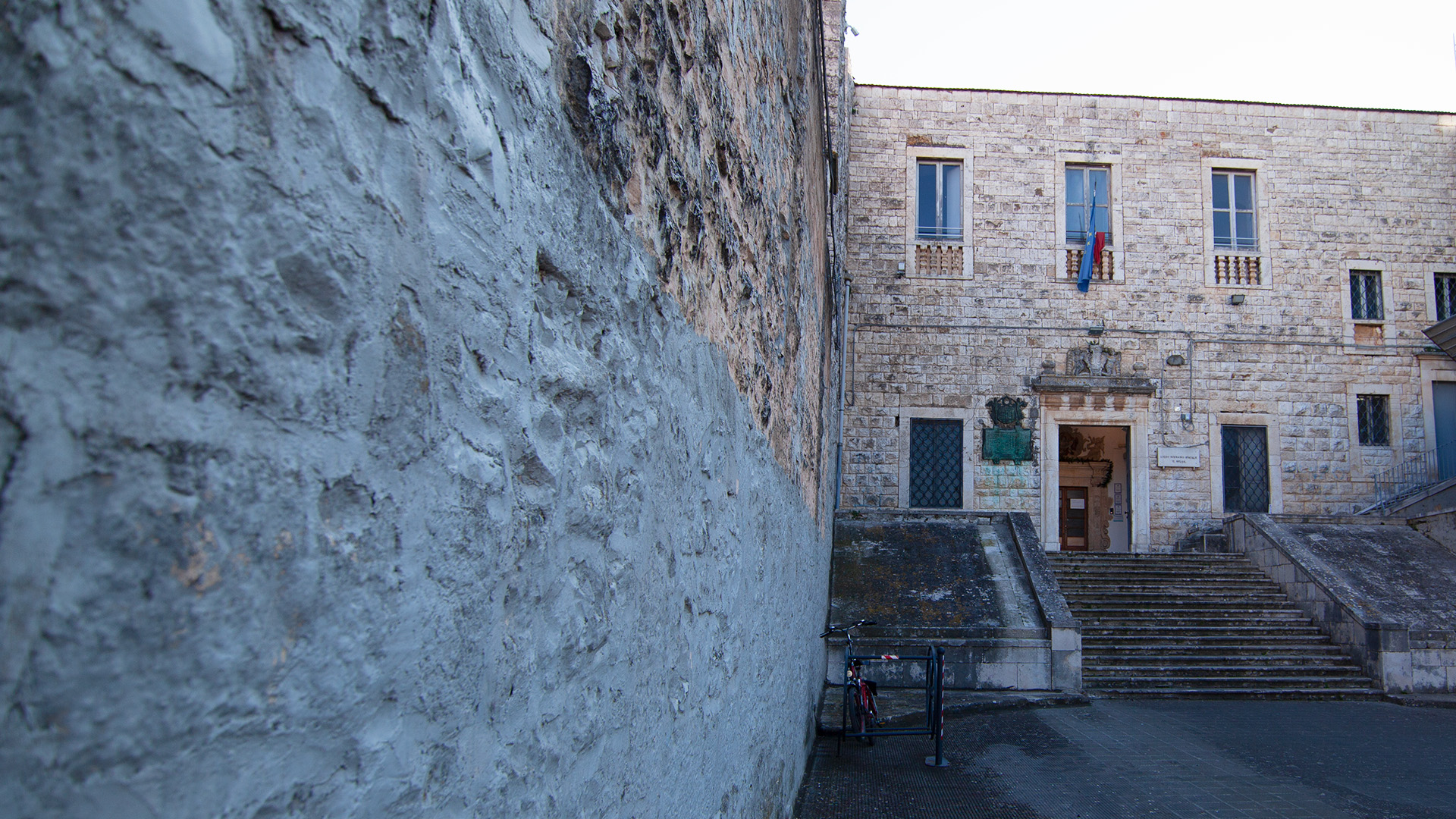
The convent complex next to the Church of Saint Teresa owes its current layout to the Carmelite Order, who completed the structure around 1740, following a design by Neapolitan architect Nicola Pacifico. The building is marked by its austere yet imposing lines, built in rusticated stonework, and features a monumental staircase leading up to the entrance.
The central doorway is adorned with the emblem of the Carmelite Order, flanked by angels holding garlands. In the vestibule, a Baroque stone doorway features grotesque masks. Two Ionic-style pilasters frame a relief of Saint Teresa's ecstasy, depicting the moment an angel pierces her heart arrow.
With its rows of windows, the old cloister still preserves an original wellhead—a reminder of the self-sufficiency once typical of monasteries and convents. Around the courtyard stretch the corridors and classrooms, which echo the layout of the monks' original living quarters.
In the early 1800s, following Napoleon’s suppression of religious orders, the Carmelite friars left the church and convent. In 1819, the complex passed to the Canons Regular of the Lateran, who established a boarding school for public education—destined to become one of the region’s leading cultural institutions.
Today, the former convent is home to the Carmine Sylos Classical High School, officially established in 1865 after the Lateran Canons were expelled and the building and adjacent church were transferred to the local municipality.
Thanks to a distinguished faculty, the school quickly gained renown across the Kingdom of Italy. Education officially began here in 1818, and the school rapidly became one of the most important cultural centers in Southern Italy, shaping generations of intellectuals and scholars.
Canon Luigi della Noce, who became head of the school in 1827, was a central figure in this educational revival. A liberal and democratic thinker known for his studies in antiquity and author of a well-known Latin dictionary, Della Noce not only improved the school's facilities but also innovated its teaching methods by recruiting top-level instructors.
On October 31, 1865, King Victor Emmanuel II signed a royal decree transferring the convent building to a municipal Board of Trustees. The school evolved into a public secondary institution offering both humanities and practical studies. After more than two centuries of academic tradition, the school hosts the Classical High School and the State Language High School, established in 2002.
Many students gave their lives for their country. A bronze plaque to the left of the entrance honors their memory. Among them is Sergeant Major Michele Speranza, a recipient of the Gold Medal of Military Valor, who died in Libya in 1911. A classroom is named in his honor. Canon Luigi della Noce is commemorated with a stone bust in one of the school’s corridors—an enduring tribute to his profound impact on the cultural and educational life of Bitonto.


Borgo Racconta is a registered trademark of
BweB – PiccolaGrandeItalia.TV
 English
  Italian
  German