
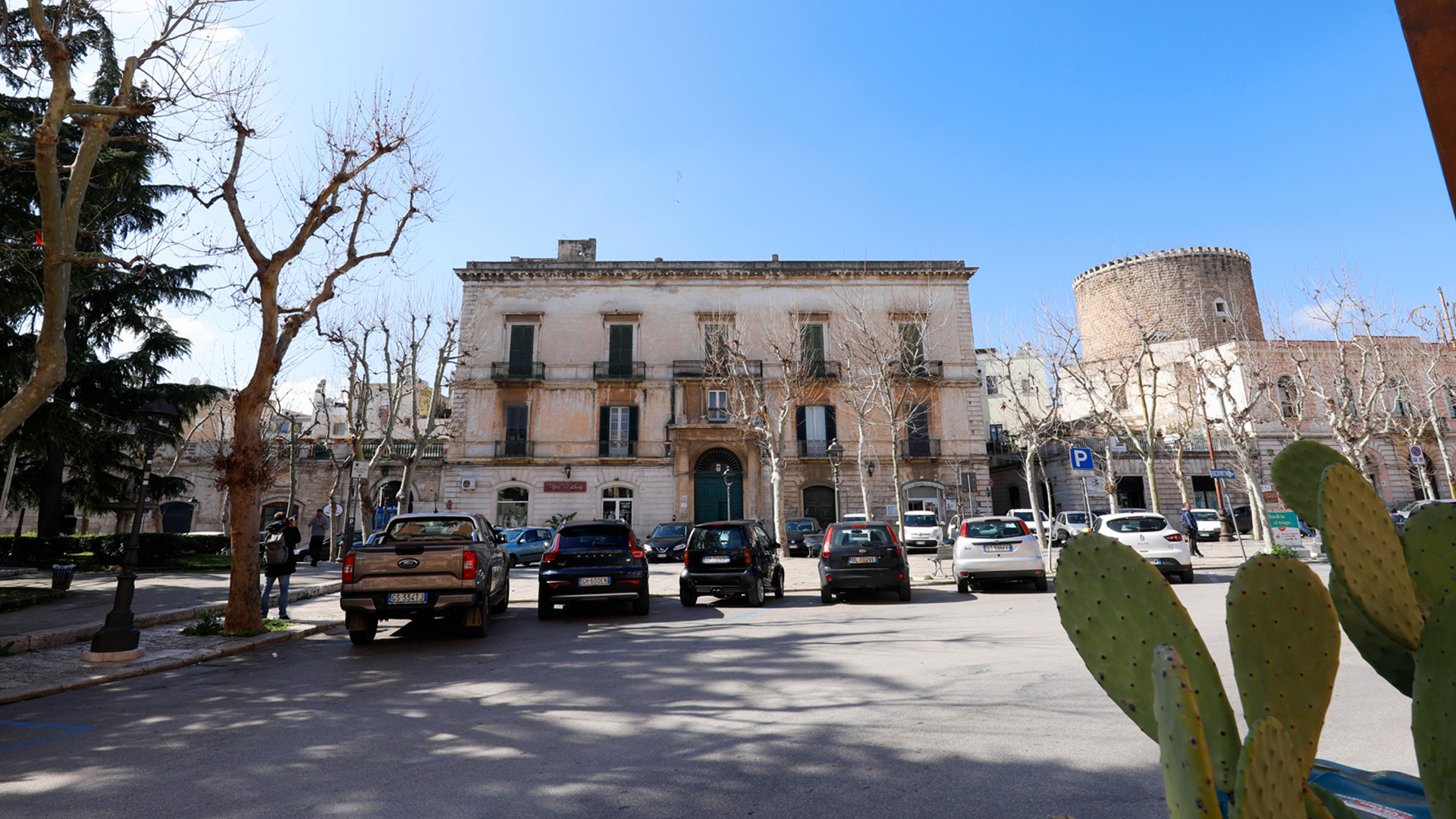
Completed in 1858, the Pannone–Ferrara Palace is a perfect example of an elegant 19th-century middle-class residence. Its location is strategic: it stands along the line of the Angevin Tower and the medieval city wall, right where the Habsburg-era fortifications once rose. Those defensive walls, stretching from the Saint Lucy Church Complex to the tower, once featured scenic hanging gardens. The palace is set in the heart of Bitonto’s 19th-century district, at the convergence point of the main streets that radiate like spokes from the central square.
Between 1834 and 1849, the building’s unusual trapezoidal shape was defined, forming the foundation for later additions. The palace stands out for its experimental architecture—each section showcases distinct design choices, turning the entire structure into a kind of stylistic workshop.
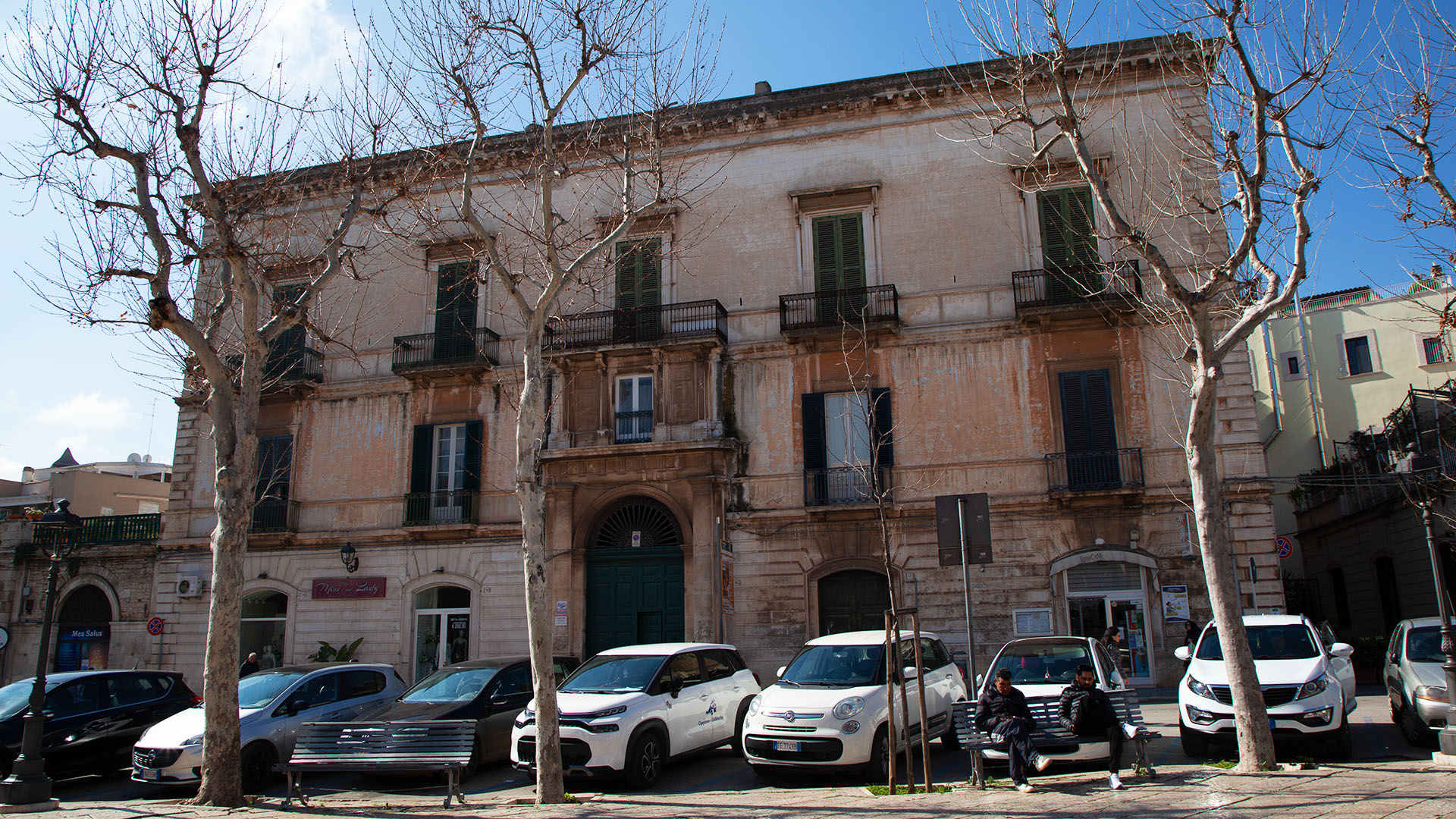
At first glance, the main front may seem simple, but it reveals a wealth of architectural details upon closer look. The cornice, decorated with dentils along the top edge, rests on a base alternating between smooth bands and lightly textured stonework. At the center is a wide arched carriage entrance, which rises beyond the string course and stonework to support a small balcony with a window.
The building’s exterior is covered in a striped plaster technique miming rows of brickwork. The corners are emphasized with slightly protruding stone blocks, while the rest of the façade is defined by a rhythm of five evenly spaced windows.
If the exterior speaks of restrained elegance, the interior is where the palace truly shines. Step through the main door, and you'll find yourself in a grand entrance hall with a coffered ceiling. Here, the warm straw tones of the stone contrast beautifully with the white paving stones made of Trani stone.
The large, airy courtyard evokes the charm of a Renaissance setting, enriched with Neapolitan baroque elements inspired but reimagined through a neoclassical lens. Beyond its elegant design, the staircase was conceived to provide thermal comfort to the rooms above—starting from the courtyard itself—making it beautiful and functional.

Borgo Racconta is a registered trademark of
BweB – PiccolaGrandeItalia.TV
 English
  Italian
  German